
Keywords · KEYWORDSLithuanian Company FormationRegistrų centrasUAB formationJANGISForeign shareholdersCompany Address
Lithuanian Company Formation Process and Required Documents
Lithuanian Company Formation

Lithuanian Company Formation Process and Required Documents

Lithuania Company Registration Process and Documents

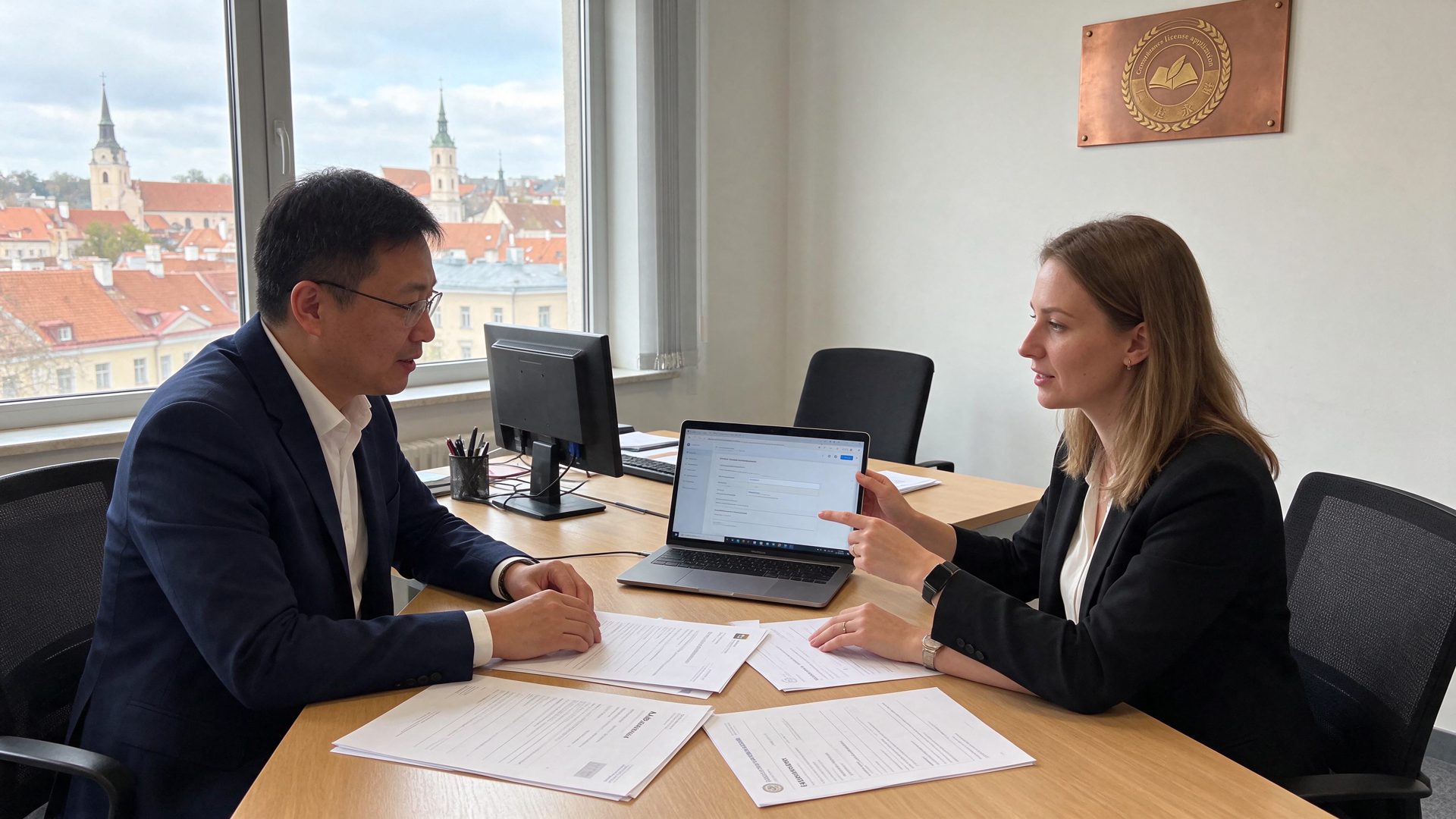
Lithuanian company formation typically involves choosing a name, preparing incorporation documents, arranging a business address and paying in capital before registration with the Register of Legal Entities. Foreign shareholders should also plan in advance for certification, translation and the chain of authorisations.

Registration authority
Registrų centras
Common entity types
UAB
Registered office address
A Lithuanian business address is required
Typical timeframe
A few days once the documents are complete
01

Four matters to confirm before registration

Four Decisions Before Filing

Company registration establishes a legal entity only; it does not automatically confer VAT status, employer status or an industry licence. Before starting a project, determine the legal form, business activities, shareholding and beneficial owners, registered address, and the requirements for future bank account opening.

Entity
UAB, AB, MB, branch, representative office or another form.
Control chain
Shareholders, indirect holders, directors, managers and ultimate beneficial owners.
Address
A registered address in Lithuania, together with the consent of the owner or authorised user.
Scope of business
Activities that generally require no separate authorisation should be distinguished from those requiring a permit from VMI, LB, the gambling authority or another authority.

02

Name, registered office and incorporation documents

  • The name should first be checked for availability in the Register of Legal Entities to avoid confusion with existing names, trade marks or protected names.
  • A registered office address is the legal address for correspondence; it does not mean that all business must be conducted there. Financial licence applications must also demonstrate effective management and operational capability.
  • The owner's consent should match the registered address and the identity of the authorised person; confirm that a shared office or virtual address can receive government and bank correspondence.
  • Ensure that the versions of the establishment agreement, articles of association, shareholder resolution, manager's consent or appointment documents, capital subscription and authorisation documents are consistent with one another.
DocumentsContent usually requiredFrequently asked questions
Establishment agreement/resolutionShareholders, shares or contributions, payment of capital and appointment of managersDiscrepancy between the shareholder's name or identity document details and the certified documents
Articles of AssociationCompany Name, Address, Purpose, Capital, Shares, Governance and Representation RightsUse an outdated template and omit current governance or share provisions
Consent to use the registered office addressAddress, owner/authorised person and signing dateUnable to prove the owner's signing authority
Foreign shareholder documentsProof of registration, articles of association, directors, authorisation chain and UBOApostille, consular legalisation or translation not completed
03

List of required information

Document Checklist
CategoryInformationNotes
Shareholder identityNatural person's passport/ID card, address and tax residency informationProvide information in accordance with registration and bank KYC requirements
Company shareholdersCertificate of incorporation, articles of association, register of directors and shareholder chainUsually a recent version
UBOControl method, shareholding percentage and proof of identityFor JANGIS and bank KYC
NameProposed name and alternative namesCheck availability first
AddressProof of lease or use, owner's consentA registered address in Lithuania is required
Establishment agreementEstablishment agreement signed by the shareholders or sole shareholder resolutionAdjusted to the entity's legal form
Articles of AssociationCurrent articles of associationRemain consistent with the registration application
Capital DocumentsProof of subscribed and paid-up capital and temporary accountUAB/AB with statutory capital requirements
Manager documentsAppointment of a manager/director, consent and identity documentsConfirm authority to represent
Letter of authorisationAuthorisation to complete registration on the company's behalfForeign signatures may require certification and translation
TranslationLithuanian or Acceptable Official-Language TranslationIn accordance with Registrų centras requirements
Electronic SignatureQualified electronic signature or notarisation channelOverseas signatories must confirm that the technology is available to them
Industry informationBusiness description and evidence of licence or notificationIf conducting regulated activities, provide
Tax recordsActivities, projected turnover and VAT assessmentFor subsequent registration with VMI
This checklist is based on common UAB formation requirements; the final requirements depend on the legal form and the registry's checklist.
04

Standard registration steps

01
Determine the entity and name
Confirm whether to use a UAB or another legal form, the shareholder chain, manager and registered activities, and check name availability.
02
Prepare establishment documents.
Draft the establishment agreement or decision, articles of association, shareholder resolutions, manager appointment and authorisation documents.
03
Establish a registered office
Obtain written consent from the property owner or authorised user, and confirm that official government correspondence can be received.
04
Open a temporary account and pay in capital
For forms requiring share capital, open a temporary account and pay in the capital in accordance with banking and registration requirements; the current UAB guidance sets the capital benchmark at €1,000.
05
Signing and certification
Signed online by an authorised person with a qualified electronic signature, or completed through a notarial process where required.
06
Submit to Registrų centras
Submit the application and supporting documents to the Register of Legal Entities, and respond to formal review queries or requests for additional documents.
07
Obtain legal entity registration.
After receiving the legal entity code and registration details, convert the temporary account into a full operating account and organise the company registers.
08
Complete subsequent registration
Depending on the circumstances, complete VMI tax, VAT, JANGIS, Sodra employer and sector-specific licensing/notification requirements.
05

Authentication, apostilles and translations for foreign shareholders

Authentication, Apostille and Translation for Foreign Shareholders

Whether foreign shareholder documents require an apostille, consular legalisation or notarisation depends on the country of issue, applicable treaties, document type and submission channel. Before arranging signatures, confirm the acceptable format for certificates of registration, director authorisations, shareholder resolutions and powers of attorney to avoid documents expiring or a break in the authentication chain.

ScenarioCommon approachKey checks
Public documents issued by Hague Convention member statesUsually consider obtaining an Apostille, followed by translation as requiredConfirm that the issuing authority, signature and seal can be verified
Non-Hague Convention countryConsular legalisation or an embassy/notarial chain may be requiredConfirm in advance with Registrų centras or a notary.
Authorisation of an overseas companyA power of attorney signed by an authorised director or representativeWith a board resolution and certificate of company formation
Documents not in LithuanianProvide a Lithuanian-language version or a translation accepted by the register authority.Confirm translator qualifications and requirements for certification of the translation
Practical challenges for foreign shareholders
Banks will generally require more comprehensive information than is needed for company registration, including the ownership and control chain, source of funds, anticipated transactions and evidence of business activity. Company registration does not oblige a bank to accept an account application.
06

After registration: VMI, VAT, JANGIS and Sodra

MatterWhen to processPractical priorities
VMI tax identificationSet up the company's tax records with VMI after registrationInformation on activities, management, banking and accounting must be consistent
VATWhen past or current statutory conditions are met, or special rules are triggered by cross-border businessStandard rate: 21%; turnover of €45,000 is a common threshold, but different rules may apply to non-residents and cross-border services
JANGISUpdate promptly after registration and following changes to the control structureBeneficial owners must be declared through the Registrų centras system as required.
Sodra employerBefore the first hire and when an employment relationship beginsHandling employer and employee social insurance declarations, contributions and leaver procedures
Industry registration/licensingBefore commencing regulated activitiesFinancial activities must have their authorisation confirmed with LB/ECB and other relevant authorities; ordinary company registration is not a substitute
  • Establish an access-rights matrix for the company's electronic signature, government portals, bank and accounting services.
  • Synchronise information on shareholders, managers, UBOs, addresses and tax residency across banks, VMI, Sodra and JANGIS.
  • Before issuing or receiving an invoice for cross-border services, confirm the place of supply for VAT, reverse charge treatment and whether E. sąskaita/i.SAF requirements apply.
07

Timetable and common delays

Timeline and Common Delays
StageExpected timeframeOverview
Confirmation of name and structure1–3 working daysSubject to the complexity of name conflicts, shareholder chains and scope of business
Preparing foreign documentsSeveral days to several weeksApostilles, consular legalisation, translation and postage will extend the timeline
Bank Temporary Account and Capital ContributionSeveral days to several weeksBank KYC checks may take longer than the registration process itself.
Registration with Registrų centrasUsually a few days once the documents are completeActual processing depends on the online channel, formal review and any requests for supplementary documents
Tax, JANGIS, SodraAfter registration, in accordance with the business arrangementsVAT and employer registration should not be assessed by mechanically applying a single date
  • Where the shareholder chain includes multiple offshore entities or trusts, banks may require a look-through review at each level.
  • Discrepancies in the spelling or dates in the company name, articles of association, directors' authorisations and UBO information.
  • Describe fintech or crypto-asset activities as general consultancy, creating inconsistency with the scope of LB licensing requirements at a later stage.
  • Prepared only the registered capital, without evidence of actual premises, staff, accounting arrangements and operating funds.
Tang Shangyong (Drew), Business Manager
Drew's Note Drew's Note
The aspect of company formation most often underestimated is document consistency, not completing forms. Drew will first prepare a checklist covering the shareholder chain, authorisation chain and business scope, then arrange certification and translation. This helps reduce requests for further documents from Registrų centras and ensures that the information provided to the bank for account opening matches the company registration documents.
Tang Shangyong (Drew) · Business Manager, Rengangyongsheng (Hong Kong) Limited
FAQ

Frequently asked questions

Q01Does Lithuanian Company Formation Require a Local Director?+
There is no generally applicable blanket requirement for an ordinary UAB/AB to have a Lithuanian-resident director. Financial licence projects may entail higher local substance requirements due to effective management, key functions and supervisory accessibility; licence requirements should not be applied to all ordinary companies.
Q02Does company registration automatically provide a VAT number?+
No. VAT registration must be assessed separately based on turnover, place of business, cross-border services and statutory special cases. €45,000 is a common threshold, but different rules may apply to non-residents, cross-border services and platform transactions.
Q03Do documents from foreign corporate shareholders all need to be apostilled?+
Not necessarily. Whether an Apostille, consular legalisation or another notarisation chain is required depends on the issuing country, applicable treaties and document type. Before signing, confirm the accepted format with Registrų centras or the notary, and arrange translation afterwards.
Q04What compliance matters should be addressed first after company formation?+
Usually includes a formal bank account, VMI tax registration, a VAT assessment, JANGIS beneficial owner registration, accounting records, employer registration and checks on sector-specific licences. The practical sequence should be adjusted according to whether you will immediately hire staff, issue invoices or conduct regulated activities.
Tang Shangyong (Drew)This article is by Rengangyongsheng (Hong Kong) Limited Prepared by, and explained by Tang Shangyong (Drew) Professional guidance from a Business Manager· Information updated: November 2026

Need further assistance?

Talk to Our Team
For questions about Lithuanian licences, company formation, bank account opening and tax matters, book a one-to-one assessment with Drew's team.
RGYS
Tell us about your project
Tell us about your project · Free Assessment
Success is displayed only after receipt has been confirmed by the service provider; if email is temporarily unavailable, please contact us via WhatsApp.