Keywords · KEYWORDSP2P lendingP2P PlatformsReal estate P2PConsumer Credit LawECSP scopeLB public registerCrowdfunding
Operators of P2P lending platforms and P2P platforms related to real estate
LT-18 / LT-19 · Credit, foreign exchange and crowdfunding

Operators of P2P lending platforms and P2P platforms related to real estate

Peer-to-Peer Lending Platform Operator and Real Estate-Related P2P Platform

Distinguish between the categories on the LB public list for consumer P2P, property-related P2P and ECSP business lending crowdfunding.

Open for new applications / Public register supervisionLicensing authority: Bank of Lithuania (LB)Prioritisation of market entry
Regulatory Approach
LB public register
Key shareholding reviews
20% or more
Business Lending Crowdfunding
Assess ECSP
Minimum capital
Subject to LB's latest requirements
Legal Basis · LEGAL BASIS
  • Law on Consumer Credit (Law on Consumer Credit) and rules relating to P2P platforms
  • Law on Real Estate Related Credit and rules on real estate-related P2P lending
  • Regulation (EU) 2020/1503 (ECSP), for assessing the scope of commercial lending crowdfunding
Key Summary · AT A GLANCE
Capital: Minimum capital: no uniform fixed amount was verified on the official webpage for this review; confirm with LB based on consumer P2P, property P2P and platform functionality.
Time: The processing times for inclusion on the P2P public list, responsible persons and holders of 20% or more are subject to the latest LB procedures; no fixed approval timeframe should be promised.
State fee: State fee: no fixed amount was verified for this check; refer to the latest LB/LB-VMI charges.
EU Passporting: Inclusion on the P2P public list does not in itself confer EU passporting rights. Securities or loan-based crowdfunding for businesses should be assessed for ECSP authorisation and cross-border notification requirements.
01

Scope of permissions and business boundaries

Permitted Activities & Boundaries

A P2P lending platform operator is a legal entity that manages an information system for matching lenders and borrowers. LT-18 primarily covers consumer credit, while LT-19 covers property-related credit. Platforms must be entered on the Bank of Lithuania's (LB) public list in accordance with applicable law and operate within the scope of approval.

Business scenariosPrioritise assessing the routeKey Reasons
Consumer borrowing or consumer P2PConsumer Credit Law and the P2P public listECSP does not apply to crowdfunding services provided to consumers acting as project owners
Real estate-related P2PReal estate-related credit law and the corresponding registerDetermined by the property, loan purpose and borrower structure
Enterprise commercial lending crowdfundingRegulation (EU) 2020/1503 (ECSP)Commercial project crowdfunding within the scope of ECSP requires an ECSP licence
Crowdfunding involving equity or transferable securitiesECSP or other investment services rulesSubject to the actual services provided by the instruments, investors and platform
The boundary between P2P and ECSP
Do not use P2P and ECSP interchangeably
Business lending crowdfunding does not automatically fall within Lithuania's consumer P2P list simply because it is called P2P. First assess the project owner, lenders, instruments, payment arrangements and marketing methods. Commercial crowdfunding that falls within the ECSP regime should follow the ECSP authorisation route.

02

Applicable scenarios and advantages

Use Cases & Advantages

A P2P model can bring borrowers, investors, risk assessment and servicing processes together on one platform. However, the key issue is not launching a website, but whether the platform actually manages matching, disclosures, fund flows and ongoing services.

  • Suitable for designing a platform-based matching service for clearly defined consumer or property credit scenarios
  • Supervisability may be enhanced through risk stratification, borrower ratings and complaint procedures
  • If the business shifts to crowdfunding for business projects, switch to an ECSP assessment at the product design stage
03

Application and eligibility requirements

Eligibility & Entry Conditions

The applicant entity should explain how the platform matches parties, who the borrowers and investors are, whether it conducts credit assessments, how it charges fees, who provides payment services and how services will continue if the platform defaults. P2P operators, holders of 20% or more, persons exercising decisive influence and senior managers are subject to a fitness and propriety assessment by the LB.

Platform entity
Legal entity managing a P2P lending information system
Consumer P2P
Operate in accordance with consumer credit law and the Bank of Lithuania (LB) public register rules
Real estate P2P
Operate under the laws on real estate-related credit and the relevant public register
Commercial Crowdfunding
Where the activity falls within the scope of ECSP, apply for an ECSP licence rather than presenting a commercial project as consumer P2P lending
04

Shareholders, directors and compliance staff

Shareholders, Directors & Key Persons

The Bank of Lithuania (LB) website expressly requires persons in charge of a P2P platform, and persons who directly or indirectly hold 20% or more of the voting rights or capital, or have a direct or indirect decisive influence, to pass a suitability assessment. The platform should also have a team capable of managing credit risk, investor communications, complaints, AML and IT security.

  • Submit details of the head of administration, directors, and those responsible for risk, compliance, AML and technology
  • Map the platform's shareholdings, voting rights and control chain, identifying indirect holders
  • Future changes to responsible persons and participants must be notified to the Bank of Lithuania in advance
  • New responsible persons may not take office before approval, and new holders may not acquire the relevant shareholding before approval
05

Capital and financial requirements

Capital & Financial Requirements
ProjectsCurrent verification conclusionHow to prepare
Minimum capitalThe LB P2P page does not specify a single fixed figureConfirm according to the specific P2P category, platform functions and latest rules.
Customer/investor fundsPayment and funds custody arrangements depend on the platform structureExplain third-party payments, segregation, reconciliation and exception handling
Ongoing operationsBe able to meet the costs of systems, risk management, complaints handling and servicing existing contractsPrepare stress scenarios, continuity funding and alternative service arrangements
Platform financial and prudential planning
Important considerations
Do not apply the ECSP €25,000 prudential safeguard figure to P2P listings, or describe P2P as having no capital or ongoing risk-control requirements; the two regimes have different legal bases and scopes.
06

Office address and substantive operations

Office & Local Substance

The platform's substantive operations should cover technology systems, borrower and investor onboarding, risk assessment, information disclosure, payment integration, loan servicing, debt collection or referral, complaints and data security. A registered address cannot substitute for operational capacity that can be inspected by the LB.

  • Retain actual management, risk, compliance, AML and technology personnel within an organisation subject to supervision.
  • Explains how platform data, risk models, access rights and logs operate.
  • Set out payment, safeguarding, reconciliation, loan servicing and disaster recovery procedures in the business continuity plan
  • When outsourcing critical technology or debt collection, retain contractual, audit, access, termination and replacement arrangements
07

Required information and documents

Required Documents
  • Platform operator registration certificate, articles of association and organisational chart
  • Description of platform functions, user journey and assessment of business boundaries
  • Information on Borrowers, Investors, Project Owners and Customer Countries
  • Applicable law analysis for consumer P2P and real estate P2P
  • For commercial projects, analyse the ECSP scope and exclusions
  • Three-year business plan, financial forecasts and source of funds
  • Information on shareholders, UBOs, holders of 20% or more, and persons exercising decisive influence
  • CVs of the responsible person, directors, compliance, AML, risk and technology personnel
  • Policies on Borrower Onboarding, Credit Ratings, Risk Categorisation and Disclosure
  • Investor/contributor risk disclosures, complaints and dispute resolution procedures
  • Payment services, fund segregation, reconciliation and customer asset protection arrangements
  • AML/CTF, sanctions, fraud, data protection and record-keeping policies
  • IT security, access controls, vulnerability, incident and business continuity plans
  • Servicing of existing loans, collections, arrears and contingency arrangements for platform termination
Overview
If the platform plans to serve business projects, allow investment-type instruments or make the total project value over 12 months its central marketing proposition, list the ECSP licence, appropriateness and cross-border notification requirements separately in the application documents.
08

Application and process

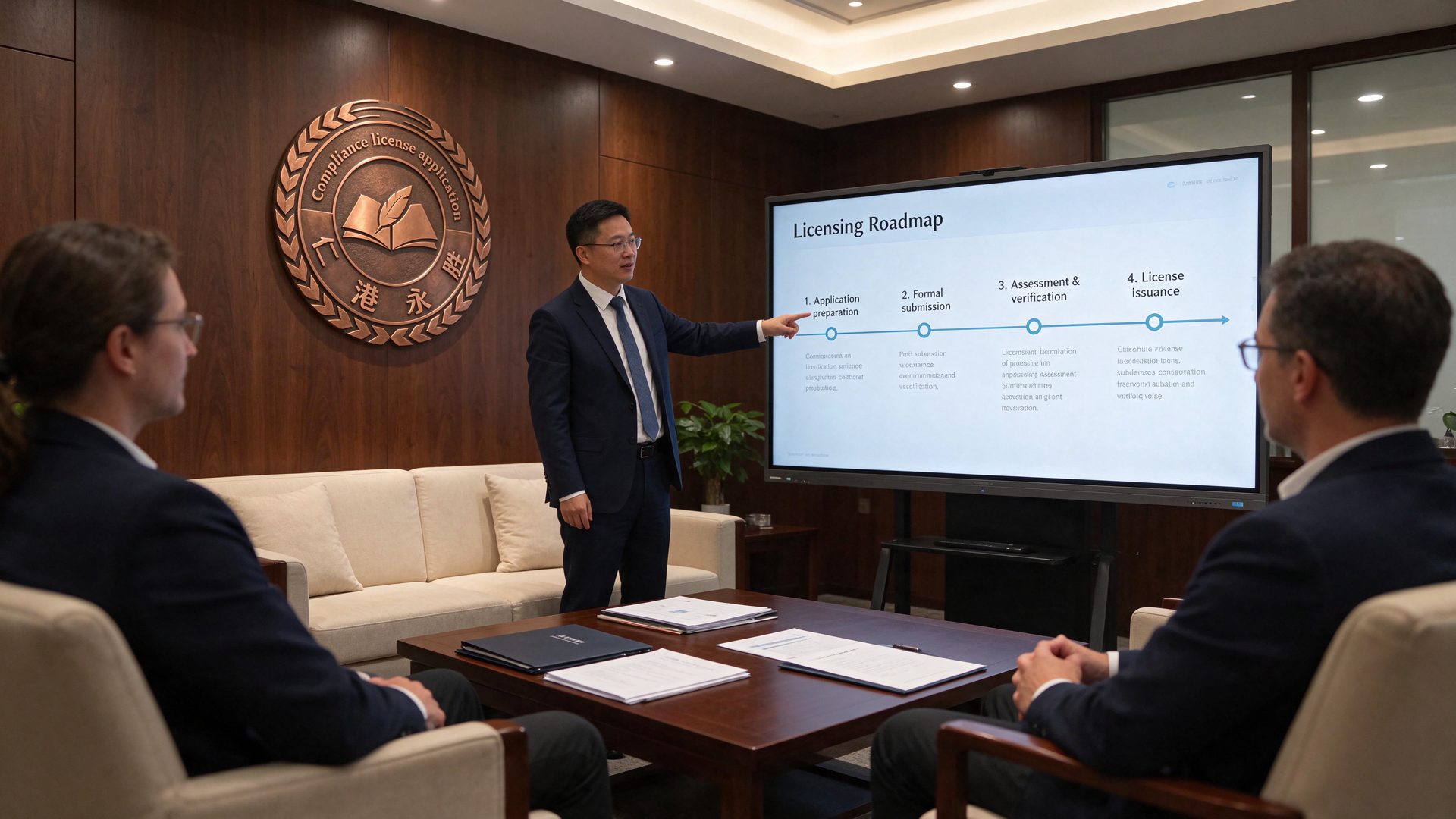
Application Process
01
Break down platform transactions
Confirm the respective legal roles of the project owner, borrower, capital provider, lender, payment institution and platform.
02
Determine whether P2P or ECSP applies
Consumer and real estate-related scenarios follow the relevant national list; assess ECSP for business lending crowdfunding.
03
Design platform controls
Complete the processes for onboarding, ratings, disclosures, funds, complaints, AML and IT security.
04
Confirm Governance Personnel
Determine the persons responsible for management, directors, risk, compliance, AML and technology, and make alternative arrangements.
05
Prepare the list or licence application materials
Submit business plans, shareholding, management, systems and risk information to the LB for the relevant category.
06
Responding to the LB's Review
Explain in particular holders of 20%, decisive influence, platform boundaries, fund flows and existing services.
07
Complete the listing or licensing
Launch only after receiving the LB decision and being entered on the applicable list or obtaining an ECSP licence.
08
Ongoing monitoring boundaries
Reassess the P2P and ECSP classification when the product, project owners, tools or cross-border expansion change.
Overview
Any new corporate project, securities instrument or cross-border market should trigger a review of the P2P and ECSP boundary, with the rationale for the assessment documented.
09

Timeline and key milestones

Timeline & Milestones
StageExpected timeframeOverview
Business classificationInitial project stageFirst determine whether the business is consumer P2P, property P2P or an ECSP
Completeness of documentationSubject to LB's latest procedureClearly explain the platform's scope, 20% holders, responsible persons and system documentation in a single submission
Substantive reviewSubject to notification from LBThe official pages reviewed for this entry did not confirm a standard statutory review period.
Launch preparationAfter obtaining the listing / licenceComplete payment, disclosure, complaints, continuity and user testing
P2P Project Timeline
Important considerations
The minimum capital, fixed state fee and statutory review timeframes for P2P platforms have not been verified against the LB pages reviewed. The ECSP timeframes of 25 working days and 3 months do not apply to the P2P public list.
10

Acquisitions and Material Changes

Acquisition & Material Changes

Acquiring a P2P operator means acquiring the legal entity holding the relevant listing status, and checking the platform code, user funds, outstanding loans, arrears and debt collection, investor complaints, data and outsourcing contracts. The platform status cannot be bought and sold separately from the legal entity.

  • Acquisitions of 20% or more of the shares, or a holding that gives decisive influence, must be notified to LB in advance and receive its approval.
  • Conduct targeted due diligence on borrowers, investors, existing projects, fund flows, data and unresolved complaints.
  • Changes to the responsible person, directors and key personnel must be notified in advance and await the Bank of Lithuania's consent
  • If the business shifts to business crowdfunding after the acquisition, repeat the ECSP authorisation and scope analysis before completion
Important considerations
Acquiring a P2P list cannot be used to circumvent ECSP. Changes to the business activity, instruments or project amount may make the original national-list route inapplicable.
11

Ongoing maintenance and compliance

Ongoing Compliance & Maintenance

Key areas of ongoing compliance include ensuring the platform does not exceed its approved scope and can continue servicing existing loans and handling customer complaints if the platform or a partner experiences a failure. If the business expands into corporate crowdfunding, securities or other EU markets, the licence must be reassessed.

  • Maintain information on LB public registers, shareholders, UBOs, responsible persons and management
  • Ongoing monitoring of borrowers, projects, contributors, credit risk and arrears
  • Retain platform logs, transaction records, risk warnings, complaints, debt collection records and client communications
  • Regularly test controls for payments, data, disaster recovery, outsourcing, fraud and AML/CTF
12

Application status

Application Availability

Consumer P2P and real estate-related P2P can still be planned as new applications under the LB public list route. Business lending crowdfunding should instead be designed primarily under the ECSP rules; the P2P label should not be treated as a regulatory exemption.

Newcomer Programme
We recommend bringing a platform flowchart, the types of project owners, financing instruments, fund flows and intended countries of operation to preliminary discussions under the LB Newcomer Programme. This programme does not replace public register entry or a formal ECSP application.
Tang Shangyong (Drew), Business Manager
Drew's Note Drew's Note
Drew's Note: The most important first step for a P2P project is not choosing a familiar-sounding licence name, but mapping the funds flows and contractual flows. Consumer lending, real estate-related lending and business crowdfunding may fall under different national lists or ECSP. Business lending in particular requires careful boundary testing under ECSP where the project owner is a business and the platform facilitates crowdfunding. This helps avoid discovering only after launch that the P2P route is not applicable.
Tang Shangyong (Drew) · Business Manager, Rengangyongsheng (Hong Kong) Limited
FAQ

Frequently Asked Questions About This Licence

Frequently Asked Questions
Q01Do all P2P platforms apply for the same status?+
No. The LB framework distinguishes at least between general P2P lending platforms and P2P platforms relating to real estate. They are subject to the Consumer Credit Law or the Law on Credit Relating to Immovable Property and the corresponding list rules respectively. The applicable requirements depend on the borrower, loan purpose and platform functions.
Q02Can Business Lending Crowdfunding Use the P2P List?+
This cannot be handled on that basis alone. Commercial lending crowdfunding for business projects should be assessed against the ECSP authorisation requirements under Regulation (EU) 2020/1503. ECSP does not apply to crowdfunding services where consumers are project owners.
Q03What should be checked most carefully when acquiring a P2P operator?+
Check the public register status, shareholdings of 20% or more and approval of persons in charge, platform code, payments and segregation of funds, outstanding loans, overdue debt collection, data, outsourcing and client complaints. Completion of a share transfer does not automatically mean that the scope of business continues unchanged.
Q04Is there a uniform minimum capital requirement for the P2P public list?+
The Bank of Lithuania (LB) page reviewed does not specify a uniform fixed minimum capital requirement or confirm a fixed fee or statutory review period. Confirm these based on the specific category, platform functions and latest LB requirements; do not apply figures for ECSP or other licences by default.
Tang Shangyong (Drew)This article is by Rengangyongsheng (Hong Kong) Limited Prepared by, and explained by Tang Shangyong (Drew) Professional guidance from a Business Manager· Information updated: November 2026

Enquire about P2P Lending Platform

Book a Free Assessment
Tell us about your business model, target markets and shareholders. Drew's team will advise whether a new application or acquisition is more suitable, how to structure your capital and staffing, and the expected timeframe and budget.
RGYS advisory meeting
RGYS
Tell us about your project
Tell us about your project · Free Assessment
Success is displayed only after receipt has been confirmed by the service provider; if email is temporarily unavailable, please contact us via WhatsApp.