Keywords · KEYWORDSLithuanian Life Insurance LicenceLife Insurance UndertakingSolvency IISCRMCRBank of Lithuania
Life insurance company licence
LT-53 · Insurance and Pensions

Life insurance company licence

Life Insurance Undertaking

Authorisation for a Lithuanian life insurance company covering long-term life insurance, annuities and related insurance risks, subject to ongoing prudential supervision by LB under Solvency II.

Available on application · High capital and review thresholdsLicensing authority: Bank of Lithuania (LB)Prioritisation of market entry
Share capital
€1,000,000 paid-up in cash
MCR absolute minimum
€4,000,000
Statutory review period
6 months
State fee
€2,904
Legal Basis · LEGAL BASIS
  • Lithuanian Law on Insurance
  • Solvency II Directive 2009/138/EC
  • Commission Delegated Regulation (EU) 2015/35 and applicable implementing technical standards
  • Lithuanian Law on Companies and Law on the Prevention of Money Laundering and Terrorist Financing
Key Summary · AT A GLANCE
Capital: LB's insurance company authorisation guide states that registered capital must be at least €1,000,000, with shares fully paid up in cash. This is only the establishment capital threshold; the SCR and MCR under Solvency II must also be met on an ongoing basis. Under Article 129 of Solvency II, the absolute floor for the MCR of a life insurance undertaking is €4,000,000; the SCR and eligible own funds must still be calculated according to the risks and scale of the business.
Time: The statutory decision period is 6 months from submission of a complete application; LB first conducts a formal completeness check taking approximately 5 working days. After supplementary information is submitted, the period is recalculated from the date the required information is received. The period may be suspended if there are suspicions that the source of funds is unlawful.
State fee: The state fee for an insurance company licence is €2,904, payable into the account designated by the Lithuanian State Tax Inspectorate (STI). The annual supervisory fee is separate from this fee and should be confirmed in accordance with the latest LB requirements.
EU Passporting: After obtaining local Lithuanian insurance authorisation, you may conduct authorised life insurance business in the EEA under the notification and supervisory cooperation framework in Solvency II. Home–host supervisory notifications must still be completed before cross-border operations begin; authorisation does not automatically cover every product.
01

Scope of permissions and business boundaries

Permitted Activities & Boundaries

A life insurance company underwrites life, annuity, mortality, longevity and other authorised life insurance risks under insurance contracts, and fulfils its obligations to policyholders through technical provisions and other assets. Specific products, risk classes and ancillary activities should be set out in the business plan and fall within the relevant scope of authorisation.

  • Can design life, annuity and long-term protection products related to life insurance within the scope of authorisation.
  • Distribute through direct channels or insurance intermediaries, subject to Solvency II, product governance, disclosure and consumer protection requirements.
  • Life insurance authorisation does not automatically grant permission to offer non-life insurance, reinsurance, investment services or payment services. New activities generally require an extension of authorisation or a separate licence.
  • To provide services in other EEA countries, notify the competent authority under the applicable passporting procedure and comply with the host state's rules of general interest.

02

Applicable scenarios and advantages

Use Cases & Advantages

Life insurance business involves long-term liabilities and customer relationships, making it suitable for building a portfolio of annuity, protection and retirement planning products. Lithuanian authorisation falls within the EU regulatory framework, supporting the planning of cross-border EEA business under a harmonised prudential regime.

Long-term product capability
Build product lines around protection, annuities and long-term savings needs
Regulatory predictability
Solvency II establishes a harmonised framework for capital, governance, disclosure and risk management.
Cross-border potential
Once notification is complete, provide EEA services within the approved scope
Regulatory Engagement
The LB encourages discussion of the business plan and document checklist before submitting a formal application
03

Application and eligibility requirements

Eligibility & Entry Conditions

The applicant must be a legal entity established, or to be established, in Lithuania and capable of meeting insurance obligations. The LB does not merely review registration documents; as part of authorisation, it also assesses whether the applicant is ready to operate as a going concern insurance undertaking, with the necessary capital, governance, systems and operational capacity.

  • Submit an actionable business plan setting out the product, actuarial assumptions, reinsurance, underwriting, claims, investments and financial projections for three or more years.
  • Demonstrate that the registered capital has been fully paid up in cash and that the source of funds is clear and lawful, with no reliance on borrowing or unexplained third-party funds.
  • Establish risk management, compliance, internal audit, actuarial and information security arrangements, and ensure that SCR, MCR and technical provisions can be calculated on an ongoing basis.
  • Shareholders, controllers and management must be of good repute and have appropriate experience and qualifications. Complex groups must also explain why close links do not prevent the LB from exercising effective supervision.
04

Shareholders, directors and compliance staff

Shareholders, Directors & Key Persons

LB reviews the suitability of the board, supervisory board or other management body, as well as individuals responsible for key functions. The number of roles should not be determined by mechanically applying a standard template; actuarial, risk, compliance, internal audit, AML and IT security responsibilities should be allocated in line with the scale and risks of the life insurance business.

  • Submit CVs, criminal record or reputation information, proof of qualifications and division of responsibilities for directors, supervisory board members and the head of administration.
  • Make a prior notification for qualifying holdings involving direct or indirect ownership of approximately 10% of capital or voting rights, or the ability to exercise significant influence; subsequent material increases generally focus on the 20%, 30% and 50% thresholds.
  • Explains UBOs, control chains, sources of funds and intra-group transactions to ensure that close links do not impair the LB's ability to supervise.
  • Notify LB or obtain non-objection under the applicable procedure before replacing a director, administrative manager or key function holder; do not make the change first and report it afterwards.
05

Capital and financial requirements

Capital & Financial Requirements
ProjectsCurrent verification requirementsPractical implications
Share capitalAt least €1,000,000; shares fully paid up in cashThis is the minimum capital requirement for establishment under the LB authorisation guidelines; it does not replace ongoing prudential capital requirements
MCR absolute minimumLife insurance undertaking: €4,000,000Article 129 of Solvency II is shown on the current page; the MCR is also subject to a range of 25% to 45% of the SCR.
SCRMeasured according to risk and maintained on an ongoing basisMust be covered by eligible own funds; proof that the registered capital has been fully paid up is not sufficient on its own
Hybrid BusinessIf life and non-life insurance are carried on together, separate management and the corresponding minimum requirements applyLife insurance capital arrangements cannot be used to conceal non-life risks.
Share capital, MCR and SCR are distinct concepts; the application budget should model them separately.
Capital Basis
€1,000,000 is the minimum share capital specified in LB guidance, while €4,000,000 is the absolute minimum life insurance MCR under Article 129 of Solvency II. The final SCR, MCR and own funds must still be calculated based on the products, technical provisions, reinsurance and asset risk; these figures should be rechecked if the legislation is amended or EIOPA updates its guidance in future.
06

Office address and substantive operations

Office & Local Substance

A life insurance company should establish actual management and operational capacity in Lithuania that can be continuously supervised by LB. A registered address or outsourcing contract alone is insufficient to demonstrate that insurance business is substantively conducted locally.

  • Maintain a verifiable registered office address in Lithuania, insurance records and regulatory contact channels.
  • Underwriting, reserving, investment, claims and risk decisions made locally by capable management, with decision records retained.
  • Establish, or effectively oversee, actuarial, risk, compliance, internal audit, AML, IT security, business continuity and complaints-handling functions.
  • Outsourcing of critical or important functions requires a written contract, service levels, access rights, exit arrangements and an audit trail that can be inspected by the Bank of Lithuania (LB).
07

Required information and documents

Required Documents

The application documents should be organised into a consistent set covering the business plan, source of capital, governance and sustainable operations. LB may request further information, and doing so may affect the statutory decision period.

  • Authorisation application form and registration details of the applicant legal entity
  • Articles of association, formation documents and share structure
  • Description of the life insurance business plan, products and risk classes
  • Financial forecasts, cash flow and sensitivity analysis for three years or the applicable period
  • Evidence of share capital paid up in cash, organisational expenses and bank statements
  • Explanation of the calculation of SCR, MCR, technical provisions and own funds
  • Shareholders, controllers, participating undertakings and UBO structure chart
  • Questionnaires and CVs for the Board of Directors, Supervisory Board, administrative manager and key function holders
  • Governance, risk management, compliance, internal audit and actuarial policies
  • Underwriting, claims, reinsurance, investment and product governance processes
  • AML/CTF, sanctions, customer identification and suspicious transaction management arrangements
  • IT architecture, information security, data protection and business continuity plans
  • Outsourcing contracts, register of important function providers and exit plans
  • EEA claims representative details and regulatory notification arrangements, where applicable
  • Proof of payment of the €2,904 state fee for STI
08

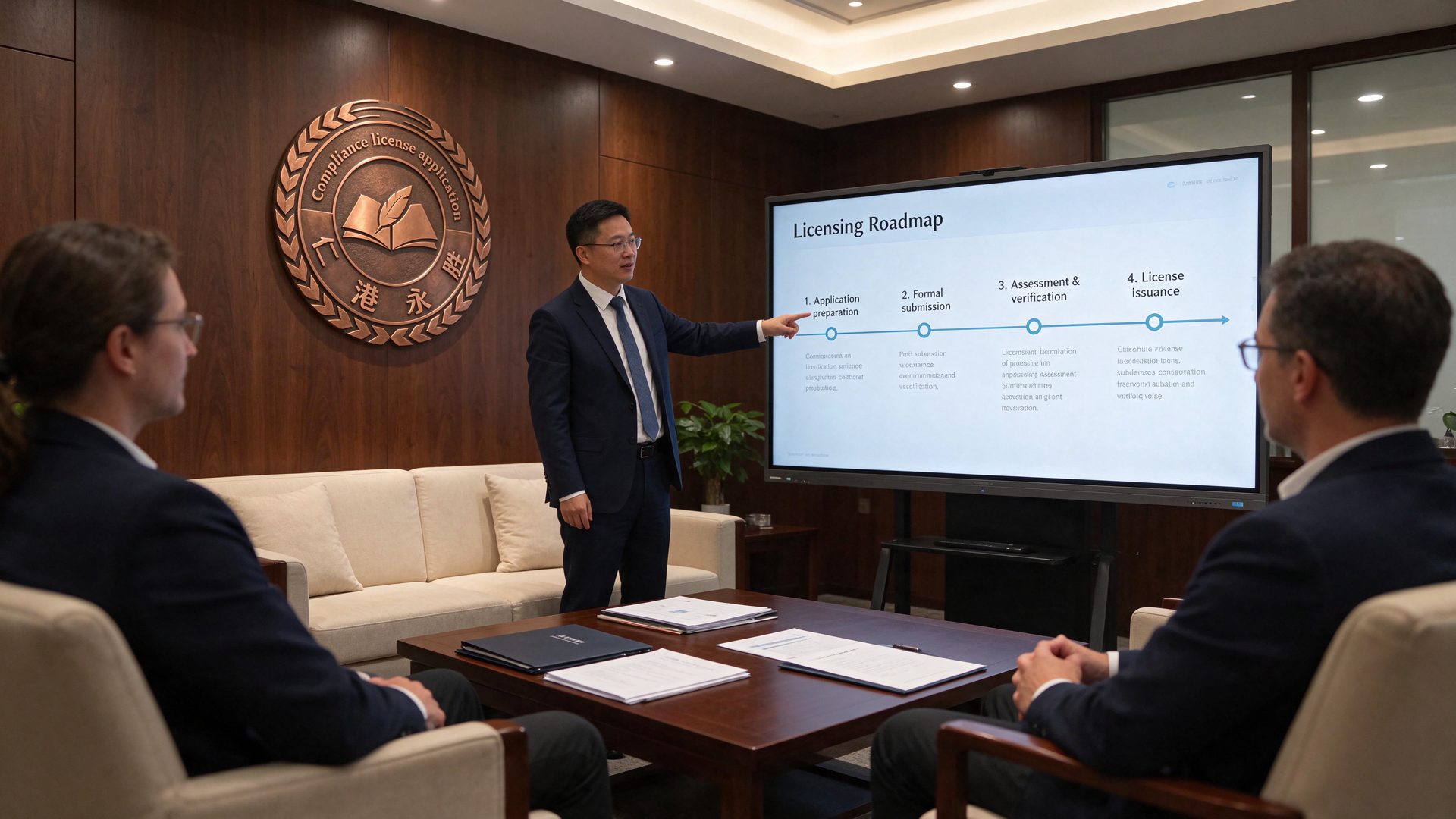
Application and process

Application Process
01
Pre-application communication
Introduce the product, shareholder structure, source of capital and proposed governance model to LB, and confirm the scope of documents to be submitted.
02
Establishment and preparation
Establish the Lithuanian legal entity, office arrangements, personnel and systems, and first prepare evidence of cash capital and own funds.
03
Prepare the application pack
Cross-check the business plan, capital calculations, governance policies, actuarial documents and risk documents against the same business assumptions.
04
Pay the fee and submit
Pay the €2,904 state fee to STI and submit the payment receipt to LB together with the application documents.
05
Formal completeness check
The Bank of Lithuania (LB) usually checks within approximately 5 working days whether any required documents are missing; once this check is passed, substantive assessment begins.
06
Substantive review and requests for further information
The Bank of Lithuania (LB) assesses capital, shareholders, management, the business plan, governance, risk, IT and consumer protection, and may hold a meeting to discuss the application.
07
Decision and subsequent notification
Decide whether to grant or refuse authorisation on the basis of complete documentation; following authorisation, complete registration, reporting and EEA notifications within the approved scope.
Important considerations
Where an application has material deficiencies, the six-month period should not be understood as a fixed approval timeframe. The LB page expressly states that the review period will continue or be recalculated only after supplementary information has been received. The final outcome depends on whether the applicant continues to meet the regulatory requirements.
09

Timeline and key milestones

Timeline & Milestones
StageExpected timeframeOverview
Pre-application and information planningAs arranged for the projectThe LB encourages early discussion of the scope of the application and the business plan
Formal completeness checkApproximately 5 working daysConfirm that the required documents are complete; this does not mean substantive approval has been granted
Substantive review of a complete applicationWithin the statutory period of 6 monthsCalculated from the date on which the application and all required documents and information have been received
Supplementary documents or source-of-funds checksMay be extended or suspendedCalculated from receipt of the necessary materials following further information; may be suspended if there is suspicion of illicit funds
Commence operations following authorisationIn accordance with the approval conditionsComplete registration, system launch, reporting and any required cross-border notifications
The timeline combines statutory milestones and project experience; it is not a promise of approval.
Practical recommendations
Finalising actuarial assumptions, reinsurance arrangements, key function holders and capital evidence early is generally more effective in reducing rounds of requests for further information than simply bringing forward the filing date.
10

Acquisitions and Material Changes

Acquisition & Material Changes

An insurance licence cannot be bought or sold separately from its legal entity. What is described as an acquisition is usually the acquisition of shares in, or control of, a licensed insurance company. Before completion, the proposed qualifying holding, source of funds, ownership and control chain, and new management arrangements must be submitted to LB for review. A licence cannot be treated as an independently transferable asset.

  • First verify the target company's licence scope, SCR/MCR shortfalls, technical provisions, material complaints, regulatory measures, reinsurance and outstanding claims.
  • Before acquiring or increasing a qualifying holding, notify the LB under the applicable procedure and await regulatory approval or confirmation of no objection; key thresholds typically include 10%, 20%, 30% and 50%, as well as significant influence.
  • Review the new shareholder's UBOs, source of funds, sanctions and tax information, and ensure the transaction does not create close links that could impede effective supervision.
  • Changes to directors, executive officers and key function holders should be discussed with LB in advance and accompanied by fitness and propriety information; a share transfer closing cannot replace personnel approval.
  • After completion, update the company, UBO, governance, outsourcing, business plan and regulatory reporting information; apply separately for a variation or passporting notification if planning to expand products or territories.
11

Ongoing maintenance and compliance

Ongoing Compliance & Maintenance

Authorisation is only the start of ongoing supervision. A life insurer must embed capital, technical provisions, governance and consumer protection requirements into its day-to-day operations, and be able to explain changes in risk to the LB through reports and records.

  • At a minimum, calculate and report SCR, MCR, own funds, technical provisions and any capital shortfall at the applicable frequency.
  • Operate ORSA, risk appetite, stress testing, asset-liability management and reinsurance concentration monitoring.
  • Maintain the Solvency and Financial Condition Report, regulatory returns, financial statements and audit trails.
  • Ongoing implementation of AML/CTF, product governance, sales conduct, complaints, claims, fair treatment and data protection controls.
  • Report material outsourcing, management changes, changes to capital or control structure, and changes to the scope of business to LB, or seek approval, as required by the applicable rules.
12

Application status

Application Availability

The Bank of Lithuania (LB) is currently accepting new applications for insurance company authorisation and expressly encourages prospective applicants to take part in pre-application discussions before making a formal submission. The Newcomer Programme or direct pre-application discussions with the LB are intended only to clarify regulatory issues; they are not a licence, a commitment or a substitute for formal assessment.

Current status
Can submit an insurance authorisation application for a newly established or existing eligible entity
Suitable applicants
Applicants with clearly defined life insurance products, sources of capital, actuarial arrangements and local management plans
Key thresholds
€1,000,000 cash capital, €4,000,000 absolute minimum MCR, SCR and full governance arrangements
Next steps
Prepare a business plan summary first, then discuss the application scope and key function arrangements with LB
Tang Shangyong (Drew), Business Manager
Drew's Note Drew's Note
Drew's Note: In life insurance projects, the most common mistake is to treat €1,000,000 in registered capital as the entire capital requirement. In practice, the review considers the MCR, SCR, technical provisions, actuarial assumptions, reinsurance and long-term cash flows together. We recommend modelling capital and liabilities under different scenarios before defining the product scope and shareholder contributions. Do not acquire a shell first and try to establish regulatory substance later.
Tang Shangyong (Drew) · Business Manager, Rengangyongsheng (Hong Kong) Limited
FAQ

Frequently Asked Questions About This Licence

Frequently Asked Questions
Q01Does the €1,000,000 for LT-53 correspond to the minimum operating capital of a life insurer?+
No. €1,000,000 is the minimum share capital stated in LB guidance. A life insurance undertaking must also continuously cover its SCR and MCR under Solvency II; Article 129 sets the absolute minimum MCR for life insurance at €4,000,000. The final capital requirement must also take account of business risks.
Q02How long does it usually take for a life insurance company to receive a decision on its application?+
The statutory timeframe stated by LB is a decision within 6 months of receiving the application and all necessary documents. An initial formal check of around 5 working days comes first; if further documents are requested, the period runs from receipt of the necessary information and may also be suspended if there are suspicions of an illegal source of funds.
Q03Can a life insurance company be acquired by purchasing only its licence?+
No. The licence attaches to the licensed legal entity, and transactions generally involve the acquisition of shares or control. Changes to qualifying holdings, UBOs, source of funds, directors and key function holders must follow the applicable procedures for LB consent, notification or no-objection.
Q04Does Lithuanian life insurance authorisation allow you to sell automatically across the EU?+
Not all products can be sold automatically. Cross-border services within the EEA may be provided within the authorised scope of business through the Solvency II passport notification mechanism, subject to host state general good, product and consumer protection rules.
Tang Shangyong (Drew)This article is by Rengangyongsheng (Hong Kong) Limited Prepared by, and explained by Tang Shangyong (Drew) Professional guidance from a Business Manager· Information updated: November 2026

Enquire about Life Insurer

Book a Free Assessment
Tell us about your business model, target markets and shareholders. Drew's team will advise whether a new application or acquisition is more suitable, how to structure your capital and staffing, and the expected timeframe and budget.
RGYS advisory meeting
RGYS
Tell us about your project
Tell us about your project · Free Assessment
Success is displayed only after receipt has been confirmed by the service provider; if email is temporarily unavailable, please contact us via WhatsApp.