Keywords · KEYWORDSLithuania EMIFull EMIElectronic Money InstitutionCENTROlinkEU PassportingSafeguarding of Funds
EMI Electronic Money Institution Licence (Full EMI)
LT-05 · Payments and electronic money

EMI Electronic Money Institution Licence (Full EMI)

Electronic Money Institution Licence

Full Lithuanian EMI licence for electronic money issuance, wallets and cross-border payment services.

Open for new applicationsLicensing authority: Bank of Lithuania (LB)Prioritisation of market entry
Minimum initial capital
€350,000
Statutory review period
3 months
State fee
€1,463
EU Passporting
Available on application
Legal Basis · LEGAL BASIS
  • Law on Electronic Money and Electronic Money Institutions
  • Law on Payments (Law on Payments) and related Lithuanian implementing rules for PSD2
  • Law on the Prevention of Money Laundering and Terrorist Financing (AML/CTF Law)
Key Summary · AT A GLANCE
Capital: Minimum initial capital of €350,000; ongoing own funds are calculated using the applicable method for average outstanding electronic money and approved payment services.
Time: The statutory review period for complete documentation is usually 3 months; if documents are deficient, the time limit may restart after supplementary information is provided.
State fee: State fee €1,463 (subject to the latest LB/VMI fees at the time of submission)
EU Passporting: Apply for permission to provide cross-border services in the EEA, subject to meeting notification, organisational and ongoing compliance requirements; a licence does not itself confer automatic authorisation to operate in every Member State.
01

Scope of permissions and business boundaries

Permitted Activities & Boundaries

A Full EMI may issue and redeem electronic money and provide payment services within the scope specified in the authorisation decision. Products such as e-wallets, payment accounts, cross-border transfers, merchant acquiring and payment instruments must each be mapped to an approved activity; authorisation cannot be inferred from a product name alone.

Business tierScope that may be coveredScope reminder
Electronic MoneyIssuance, redemption and electronic money accounts/walletsDoes not constitute a bank deposit and is not covered by bank deposit insurance.
Payment servicesPayment accounts, payment transactions, remittances, acquiring and other approved servicesSpecified in the application and licence decision; activities must not exceed the authorised scope
Cross-border operationsCan provide services in other Member States under the EEA passporting regimeNotifications, local requirements and ongoing reporting must be completed
The scope of a Full EMI's licence is determined by LB's final authorisation decision
An EMI is not a bank.
An EMI cannot accept deposits from the public or provide general banking loans directly. Client funds must be safeguarded in accordance with applicable rules, and product marketing should clearly describe the payment and electronic money services offered.

02

Applicable scenarios and advantages

Use Cases & Advantages

Full EMI is suitable for fintech groups seeking to offer their own payment products, e-wallets and cross-border payment services, and to expand across multiple countries. Compared with a restricted licence, it offers greater flexibility in business design and may enable EU passporting for cross-border services across the EEA, subject to completion of the applicable procedures.

  • Design integrated products combining e-money issuance and payment services
  • Access to CENTROlink for SCT, SCT Inst and SDD Core may be assessed
  • Can expand cross-border operations under EEA passporting procedures
  • Suitable for establishing independent compliance, risk management, IT and client funds safeguarding systems
CENTROlink is not automatically included
Eligible EMIs may separately apply for CENTROlink. The public process typically includes an introduction and NDA, document review and decision, and integration testing; obtaining a licence does not automatically confer eligibility for access or a commercial banking relationship.
03

Application and eligibility requirements

Eligibility & Entry Conditions

The applicant should generally be a legal person established in Lithuania with genuine management and operational capacity. The LB assesses whether the application is viable by examining the business model, source of funds, shareholder structure, governance arrangements, risk management, IT security, business continuity and the full AML/CTF framework.

  • Submit a viable business plan, financial projections, and customer and transaction processes
  • Demonstrate that the source of initial capital is clear, traceable and sustainable
  • Establish arrangements for safeguarding customer funds, reconciliation, redemptions and liquidity.
  • Establish AML/KYC, fraud monitoring, complaints handling and data security controls
  • Explain outsourcing, partner bank, payment system and critical technology provider arrangements
Important considerations
LB's five-working-day formal completeness check is only an initial step and does not mean that the application has passed substantive review; requests for further documents or explanations, or adjustments to the model, may affect the actual timescale.
04

Shareholders, directors and compliance staff

Shareholders, Directors & Key Persons

Shareholders, UBOs, directors, senior managers and heads of key functions must be of good repute and have relevant experience and competence. Staffing arrangements should be proportionate to the business scale, customer risk, transaction volume and technological complexity; nominal directors or compliance roles existing only on paper are not sufficient.

RoleExplain at the time of applicationOngoing requirements
Shareholders / UBOOwnership chain, source of funds, reputation and control relationshipsChanges to qualifying holdings notified in advance under the applicable procedures
Director/Administrative OfficerAllocation of responsibilities, experience, time commitment and suitabilityChanges generally require prior notification to LB or its non-objection
MLRO, Compliance, Risk, Internal Audit, CTOIndependence, reporting lines, resources and contingency arrangementsConfigured and kept operational in line with the scale of the business
05

Capital and financial requirements

Capital & Financial Requirements
ProjectsRequirementsPractical guidance
Initial capital€350,000Demonstrate at the time of application that the funds are available and their source is clear
Ongoing own fundsCalculated based on the average outstanding electronic money balance and the payment services methodMust not operate close to the minimum threshold over the long term
Common calculation factorsAverage outstanding electronic money, payment service income/transactions and applicable methodologyThe relevant benchmarks, including 2%, and the methodology must be verified against the LB's latest reporting rules
Safeguarding of customer fundsEstablish safeguarding arrangementsEnsure safeguarded funds are segregated from the institution's own funds and reconciled on an ongoing basis.
Capital, ongoing own funds and safeguarding funds are distinct concepts
Statutory initial capital
€350,000
Own funds approach
Calculated based on the average outstanding electronic money balance and the applicable payment services method, and verified against LB reporting rules
Customer funds
Safeguarding under the Law on Payments and the Law on Electronic Money; funds must not be commingled with the institution's operating funds.
Regulatory considerations
Capital Thresholds, Liquidity, Reconciliation, Safeguarding Accounts and Redemption Capacity
Do not treat 2% as a single fixed answer
References such as 2% of average outstanding electronic money may serve as a basis for calculation only. The final calculation should take account of the authorised payment services, reporting basis and the latest LB rules, with the supporting calculations retained by finance and compliance personnel.
06

Office address and substantive operations

Office & Local Substance

The application documents should demonstrate the actual management and operational capacity in Lithuania that can be supervised by LB, including available office premises, management working arrangements, compliance and risk-management resources, IT operations and business continuity. A registered address or shared mailbox alone is not sufficient to demonstrate substantive operations by a financial institution.

  • Clearly define the locations and responsibilities of the board, executive management and key functions
  • Establish processes for customer service, transaction monitoring, reconciliation and incident response.
  • Retain evidence of IT architecture, access controls, logs, backups and disaster recovery
  • Conduct due diligence on outsourcers and establish contractual controls, service levels and exit plans
  • Prepare policies, records and data inventories that can be inspected by the Bank of Lithuania (LB).
07

Required information and documents

Required Documents
  • Application form and description of the scope of authorisation
  • Business plan, three-year financial forecast and sensitivity analysis
  • Electronic Money Issuance, Redemption and Payment Process Flowchart
  • Evidence of shareholders, UBOs, the control chain and sources of funds
  • CVs and criminal record or reputation information for directors and key function holders
  • Articles of association, organisational structure and allocation of responsibilities
  • Capital Funding, Bank Accounts and Source-of-Capital Documents
  • Customer funds safeguarding policy, account arrangements and reconciliation templates
  • AML/KYC, sanctions screening, suspicious transactions and risk assessment policies
  • Fraud Risk, Transaction Monitoring and Customer Complaints Handling Framework
  • IT architecture, information security, outsourcing and data protection documentation
  • Business continuity, disaster recovery and major incident notification arrangements
  • Accounting, audit, regulatory reporting and internal control manual
  • Proposed wording on cooperation with CENTROlink or other payment systems (if applicable)
Information packKey areas for review
Company and ShareholdingLegal entity identity, UBO, qualifying holdings, source of funds and control relationships
Business and financesRevenue rationale, customer types, transaction volumes, capital and liquidity forecasts
Compliance and TechnologyAML/KYC, safeguarding of funds, IT security, outsourcing and continuity
Personnel and governanceFitness and propriety, responsibilities, independence, reporting lines and actual time commitment
08

Application and process

Application Process
01
1. Define the business boundaries
Confirm the electronic money, payment services, client funds flows and cross-border objectives to avoid including banking activities in the application.
02
2. Newcomer Programme pre-application discussions
Seek guidance from the LB on the business plan and regulatory matters before a formal application, but this process does not replace the formal assessment.
03
3. Entity and Governance Set-up
Prepare the Lithuanian entity, directors and key function arrangements, and complete due diligence on shareholders and source of funds.
04
4. Finalise Risk Management and Technology
Complete documentation covering AML/KYC, safeguarding, IT security, outsourcing, business continuity and regulatory reporting.
05
5. Submit and complete the formal check
Submit the application and fee. LB will usually conduct a formal completeness check first, before proceeding to substantive assessment.
06
6. Additional information and substantive discussions
Provide explanations, revised models or supplementary materials in response to LB queries; deficiencies in the materials may cause the timeframe to restart.
07
7. Licensing decision and go-live preparations
After receiving the decision, verify the approved services and complete pre-launch testing of banking, systems, customer notifications and operational controls.
08
8. Passporting and infrastructure access
If cross-border activity or CENTROlink access is required, complete the separate notification, due diligence, testing and onboarding procedures; do not treat this as an automatic right.
Process benchmark
The statutory review benchmark for a complete application is usually 3 months; complex ownership structures, cross-border outsourcing, client funds arrangements or requests for additional information may extend the actual project timeline.
09

Timeline and key milestones

Timeline & Milestones
StageExpected timeframeOverview
Scheme and pre-application discussionsApproximately 1–3 weeksDetermine the licensing perimeter, shareholding and operating model; consider the Newcomer Programme
Document and system preparationBased on project complexityComplete governance, capital, safeguarding, AML, IT and financial documentation
Formal completeness checkUsually a 5-working-day entry checkConfirms only whether the materials are basically complete; this does not mean approval has been granted
Substantive reviewUsually 3 months after receipt of complete documentationLB assesses shareholders, governance, business, risk and technology arrangements
Further information/recalculation of the periodDepends on the issueIf documentation is defective, the deadline may restart once supplementary documents are submitted
Launch and integrationTo be arranged separately after licensingPassporting, CENTROlink, partner banks and product launches each require separate preparation

The timetable is a planning baseline, not a promise of approval. We recommend running shareholding review, capital funding, recruitment for key roles, banking partnerships and system testing as parallel workstreams, while allowing contingency time for follow-up questions from LB.

10

Acquisitions and Material Changes

Acquisition & Material Changes

An EMI licence cannot be bought or sold separately from the licensed legal entity. When acquiring a Full EMI company, the transaction concerns the shares in that company, together with its business, systems and contracts. Following completion, the parties must still address prior approval for qualifying holdings, changes to the UBO, changes to directors and key function holders, and the transfer of control.

  1. Check the LB licensing decision, approved services, restrictions, and any suspension or remediation records
  2. Identify buyers reaching the qualifying holding threshold directly or indirectly, and any concert-party arrangements
  3. Notify LB and obtain consent or confirmation of no objection before completion, in accordance with the applicable procedure.
  4. Review the history of capital, safeguarding, customer complaints, AML, audits and regulatory submissions
  5. Complete the relevant procedures for changes to directors, administrative managers, the MLRO, compliance, risk and CTO roles.
  6. Make regulatory consent, banking/system partner arrangements and the transfer of key contracts conditions precedent to completion
An acquisition does not mean the licence transfers automatically
New shareholders cannot expand the target company's licence scope to cover services that have not been approved. After the acquisition, complete regulatory change procedures, assess the suitability of personnel and take over the control environment before planning product migration.
11

Ongoing maintenance and compliance

Ongoing Compliance & Maintenance

After licensing, capital and client money safeguards must be maintained on an ongoing basis. Reports on own funds, business activities, audit, AML/KYC, fraud, risk and internal controls must be submitted as required, and licence details, personnel and organisational structure must remain accurate and current.

  • Reconcile client funds and electronic money daily or at a frequency determined by risk
  • Ongoing monitoring of own funds, liquidity, average outstanding balances and redemption capacity
  • Regularly update AML risk assessments, KYC, sanctions and fraud rules
  • Test IT security, disaster recovery, business continuity and major incident reporting
  • Complete prudential, statistical, audit and ad hoc reporting in accordance with the LB calendar
  • Manage outsourcing, agents, partner banks and CENTROlink participation requirements
Focus of Regulatory Inspections
LB's 2025 industry announcements disclosed 15 targeted inspections, 19 sanctions and 91 remediation notices, focusing on AML/KYC, fraud risk, safeguarding of client funds, own funds and internal audit controls.
12

Application status

Application Availability

Full EMI applications are currently open. The LB Newcomer Programme can help applicants present their business plans and understand basic licensing information and regulatory issues before submitting a formal application, but it does not replace the formal application, document review or licensing decision.

  • New application: open, but the latest LB application checklist and forms should be followed
  • Pre-application engagement: the Newcomer Programme may be available to identify material regulatory issues early
  • Cross-border operations: following authorisation, notifications must be made under the passporting procedure and local requirements must be met
  • Infrastructure: CENTROlink requires a separate application, due diligence and integration testing
  • Existing institutions: changes to licences, shareholdings and management must all be notified through the appropriate procedures in a timely manner
Application Status
Website information is intended for preliminary screening and project planning. The final capital formula, document checklist, fees and review requirements are subject to the latest LB rules at the time of submission and case-specific discussions.
Tang Shangyong (Drew), Business Manager
Drew's Note Drew's Note
Drew's Note: The value of a Full EMI lies not only in its €350,000 initial capital, but also in whether safeguarding, AML, IT security, reconciliation and effective management can be built into an operational system that the LB can inspect. If the aim is to provide cross-border payments, treat passporting, partner banks and CENTROlink integration as separate projects. Do not mistake authorisation for automatic access to infrastructure.
Tang Shangyong (Drew) · Business Manager, Rengangyongsheng (Hong Kong) Limited
FAQ

Frequently Asked Questions About This Licence

Frequently Asked Questions
Q01What is the minimum capital for a Full EMI?+
The officially verified minimum initial capital is €350,000. This is only the threshold for applying. The institution must also continuously meet own-funds requirements based on average outstanding e-money and the approved method for providing payment services, and demonstrate that its funds come from clear sources.
Q02Can a Full EMI accept bank deposits directly?+
No. An EMI primarily issues electronic money and provides approved payment services; it is not generally authorised to accept deposits from the public as a bank does. Customer funds must be safeguarded in accordance with applicable law, and this is not equivalent to bank deposit insurance.
Q03Can CENTROlink be used after obtaining a Full EMI?+
Eligible institutions must also apply separately to CENTROlink and complete document review, technical integration testing and an assessment of participation requirements. A licence does not in itself guarantee access or cooperation with a commercial bank.
Q04Can a Full EMI operate in other EU countries?+
EEA passporting can be assessed and applied for, but the applicable notification procedures must first be completed, host-country requirements met, and reporting and consumer-protection obligations fulfilled on an ongoing basis. Passporting should not be understood as unconditional access.
Tang Shangyong (Drew)This article is by Rengangyongsheng (Hong Kong) Limited Prepared by, and explained by Tang Shangyong (Drew) Professional guidance from a Business Manager· Information updated: November 2026

Enquire about Full EMI

Book a Free Assessment
Tell us about your business model, target markets and shareholders. Drew's team will advise whether a new application or acquisition is more suitable, how to structure your capital and staffing, and the expected timeframe and budget.
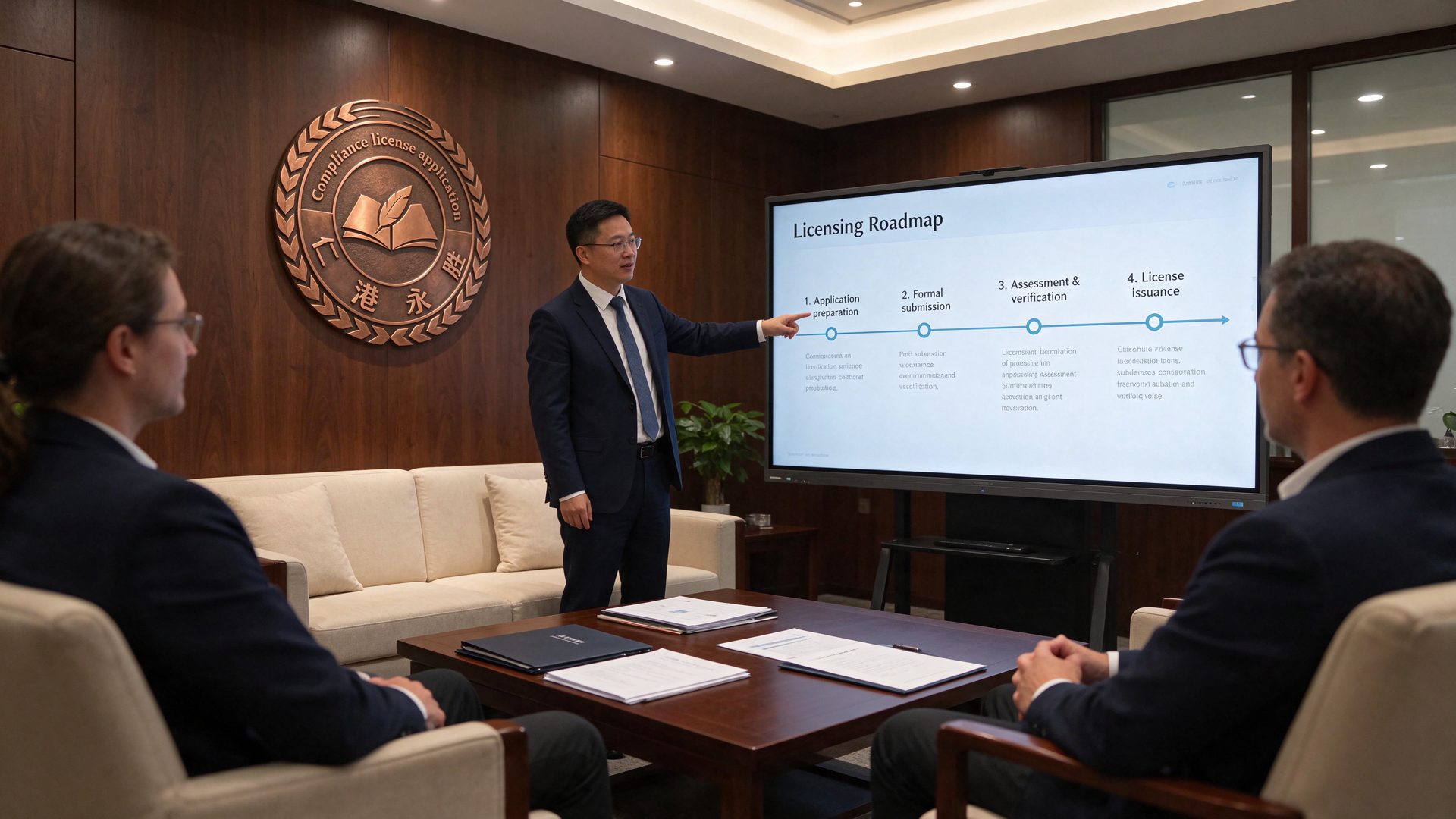
RGYS advisory meeting
RGYS
Tell us about your project
Tell us about your project · Free Assessment
Success is displayed only after receipt has been confirmed by the service provider; if email is temporarily unavailable, please contact us via WhatsApp.