Keywords · KEYWORDSLithuanian Restricted EMIRestricted EMISmall EMI€900,000Electronic MoneyLocal payments
Restricted Electronic Money Institution (Restricted EMI) Licence
LT-06 · Payments and electronic money

Restricted Electronic Money Institution (Restricted EMI) Licence

Restricted Electronic Money Institution Licence

Restricted EMI pathway for small-scale domestic electronic money services in Lithuania.

Available on application · Restricted business activities and scaleLicensing authority: Bank of Lithuania (LB)
Fixed minimum initial capital
None
Average outstanding balance cap
€900,000/month
Review process
Approximately 2 months
EU Passporting
Cannot be used directly
Legal Basis · LEGAL BASIS
  • Law on Electronic Money and Electronic Money Institutions
  • The Law on Payments and rules applicable to limited-scope electronic money institutions
  • Law on the Prevention of Money Laundering and Terrorist Financing
Key Summary · AT A GLANCE
Capital: No fixed minimum initial capital requirement for a full EMI; average monthly outstanding electronic money must generally not exceed €900,000. This is a business-volume cap, not a capital requirement.
Time: The restricted assessment route indicated in LB guidance takes approximately 2 months; deficiencies in the materials or requests for further information may affect the actual timeframe.
State fee: State fee €1,235 (subject to the latest LB/VMI fees at the time of submission)
EU Passporting: Valid only in Lithuania; restricted EMI authorisation cannot be relied upon directly to provide EEA passporting services.
01

Scope of permissions and business boundaries

Permitted Activities & Boundaries

A Restricted EMI may issue and redeem electronic money within the permitted scope and provide approved related payment services, but the licence covers the Lithuanian market only. Its core limitations concern business scale and geographical scope; a restricted licence should not be treated as a lower-cost substitute for a Full EMI.

DimensionRestricted rulesThis cannot be inferred on that basis.
TerritoryLithuania onlyIt cannot passport directly into other EEA countries.
ScaleAverage monthly outstanding e-money is generally no more than €900,000€900,000 is not the capital payable
ServicesProvide in accordance with the LB licence and restricted business planNot all Full EMI/PI services can be commenced automatically.
Obligations after reaching the threshold
If the restricted scale is exceeded, take action promptly upon discovery in accordance with the applicable rules and, where required, apply for the full-licence route within 30 days. Confirm the specific triggers and documentation with the LB.

02

Applicable scenarios and advantages

Use Cases & Advantages

A Restricted EMI may suit teams looking to validate an electronic money or wallet business, customer base and compliance processes in Lithuania first. Its capital threshold structure differs from that of a Full EMI, but governance, AML/KYC, safeguarding of customer funds and supervisory accessibility remain substantive requirements.

  • Validate e-wallet or e-money products in the local market
  • The fixed minimum initial capital threshold for a Full EMI does not apply
  • Build evidence of genuine operations and controls around smaller transaction volumes
  • Provide a business, systems and compliance data foundation for future Full EMI assessments
Overview
If the business plan is aimed from the outset at multiple countries, larger balances or cross-border payments, the geographical and scale restrictions of a restricted EMI may lead to duplicate applications. Business volumes and passporting requirements should be assessed first.
03

Application and eligibility requirements

Eligibility & Entry Conditions

The applicant should demonstrate that its local business plan, funds flows, and electronic money issuance and redemption arrangements are viable and can operate within the applicable size limit. The absence of a fixed minimum initial capital requirement does not mean there are no financial capacity requirements: LB will still assess sources of capital, liquidity, operating funds and customer funds safeguarding.

  • Clearly define the client base, channels and transaction model for operations conducted solely in Lithuania.
  • Establish a methodology for monitoring and alerting on average outstanding electronic money.
  • Submit procedures for issuance, redemption, reconciliation and customer complaints
  • Complete due diligence on shareholders, UBOs, management, AML/KYC and sanctions
  • Describe the arrangements for technology, outsourcing, disaster recovery and data security
Important considerations
Describing "no minimum initial capital" as "zero cost" obscures the costs of operating capital, insurance, technology, staff, audit and safeguarding funds, and may also lead to misunderstandings in regulatory communications.
04

Shareholders, directors and compliance staff

Shareholders, Directors & Key Persons

Shareholders, UBOs, directors and senior managers of a Restricted EMI are also subject to fitness and propriety assessments. There is no single fixed template for team size, but compliance, AML, risk, technology and customer support resources should be proportionate to local customer numbers, product risk and transaction complexity.

Personnel mattersRequirements at the time of applicationChange note
Shareholders and UBOsDescribe the ownership chain, source of funds and reputationChanges to qualifying holdings handled under the applicable procedures
Director/Responsible PersonDemonstrate experience, time commitment and clear delineation of responsibilitiesNew responsible persons are generally subject to prior notification or non-objection
Compliance and AMLDescribe independence, reporting lines and alternative candidatesEven restricted activities cannot rely on nominal role-holders in place of actual capability
05

Capital and financial requirements

Capital & Financial Requirements
ProjectsApplicable requirementsKey areas for review
Fixed initial capitalNo standard minimum amount for a full EMISufficient operating funds and a clear source of funds are still required
Balance sizeAverage monthly outstanding e-money is generally no more than €900,000Establish daily, monthly and stress-scenario monitoring
Customer fundsSafeguarding is mandatoryIndependent account management, reconciliation, redemption and exception handling
Upgrade pathwayAssess Full EMI if the limit is exceededDo not wait until operations are out of control before preparing the application
Capital Threshold
No fixed minimum initial capital requirement, but this does not mean that no funding is required
Scale cap
Average monthly outstanding e-money is generally no more than €900,000
Safeguarding of funds
Customer funds must be distinguished from own funds and reconciled on an ongoing basis
Upgrade triggers
Assess Full EMI in advance when approaching the limit or planning cross-border operations
€900,000 is not capital
This figure describes the limit on the average outstanding electronic money balance; it is not a substitute for share capital, safeguarding funds or ongoing own funds. The basis for calculating balances and the treatment of any excess should be verified against the latest LB guidance.
06

Office address and substantive operations

Office & Local Substance

As a restricted EMI may operate only in Lithuania, the application documents should specify how local management, customer service, transaction monitoring and complaint handling are assigned to specific roles and systems. A registered address, external advisers or cloud services cannot, in themselves, substitute for the institution's effective control capabilities.

  • Prepare office and management arrangements that are available for contact and inspection by LB
  • Clearly allocate responsibility for client servicing, redemptions, reconciliations and escalation of anomalies.
  • Establish monitoring of balance caps, liquidity and customer concentration.
  • Manage outsourced IT, cloud services and KYC providers on an ongoing basis
  • Retain evidence of local meetings, records, training and control testing.
07

Required information and documents

Required Documents
  • Restricted EMI application form and description of business scope
  • Lithuanian business plan and three-year projections
  • Average outstanding e-money calculation and monitoring plan
  • Issuance, redemption, wallet and payment flowcharts
  • Documents relating to shareholders, UBOs, sources of funds and the control chain
  • Information on directors, executive officers and key function holders
  • Articles of association, organisational structure and delegation of authority matrix
  • Operating Funds and Client Funds Safeguarding Arrangements
  • AML/KYC, sanctions, fraud and risk assessment policies
  • Customer complaints, consumer protection and data processing procedures
  • IT architecture, access controls, logs and information security framework
  • Outsourcing, cloud services, business continuity and disaster recovery documentation
  • Accounting, reconciliation, audit and regulatory reporting arrangements
  • Over-limit alerts, upgrade to Full EMI and exit plan
Document categoryKey considerations for a Restricted EMI
Business scaleBasis of balance figures, forecasting assumptions, alert thresholds and stress testing
Local operationsPersonnel, offices, customer service, complaints and regulatory accessibility
Security and safeguardsSafeguarding, reconciliation, redemption, AML/KYC and fraud
Upgrade arrangementsCommunication, transaction limits and the Full EMI pathway as the €900,000 threshold approaches
08

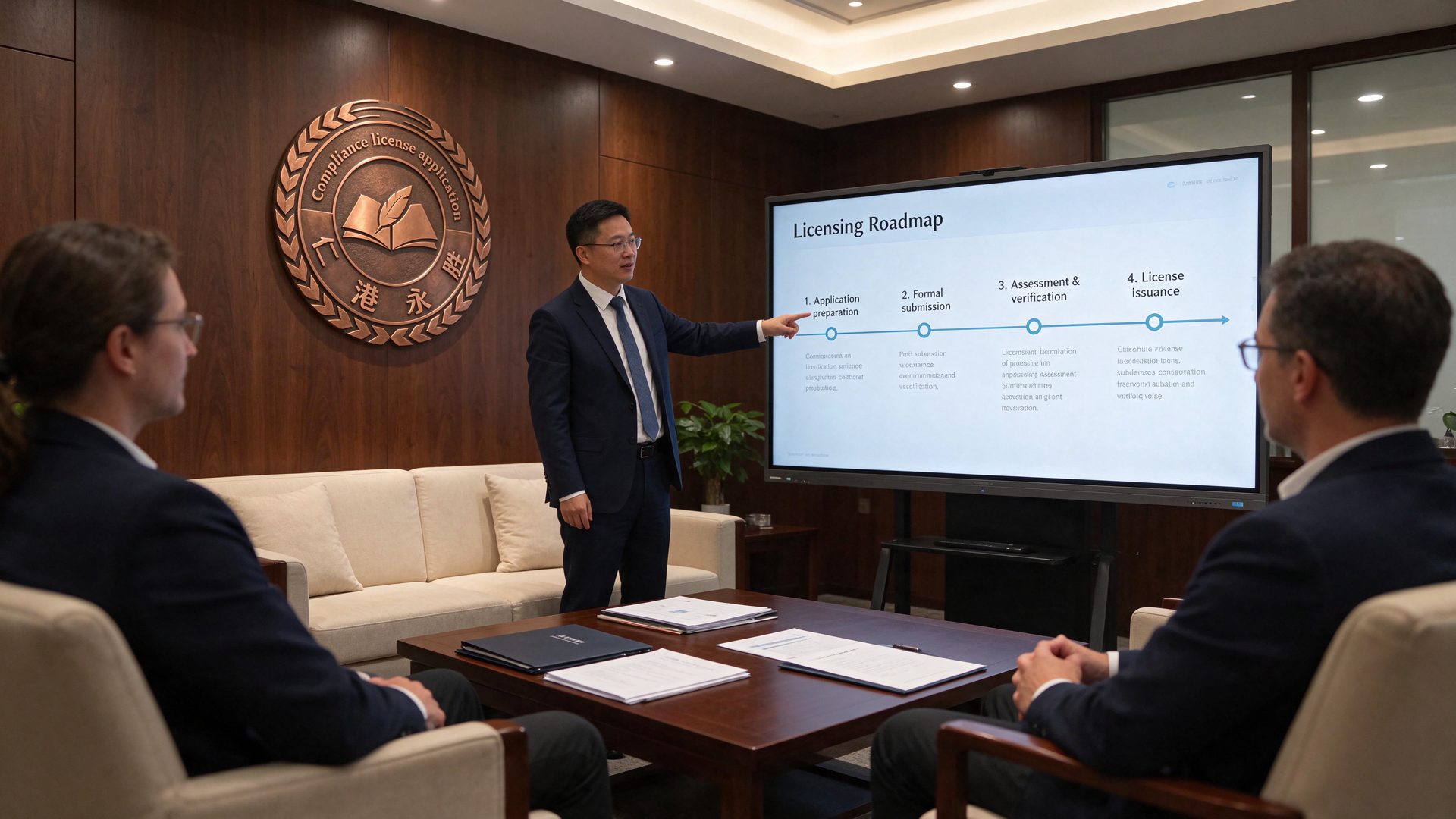
Application and process

Application Process
01
1. Confirm the restricted scope
First confirm that the service is limited to Lithuania, the balance scale and the proposed electronic money services, excluding passporting and business above the applicable limits.
02
2. Pre-application discussions and solution assessment
Where necessary, introduce the business to LB through the Newcomer Programme and check whether the restricted route is compatible.
03
3. Entity and Personnel Due Diligence
Prepare the Lithuanian entity, shareholders, UBOs, directors and key function holders, and organise source-of-funds information.
04
4. Controls Framework Set-up
Complete documentation covering safeguarding, balance monitoring, AML/KYC, IT security, complaints and business continuity.
05
5. Submit the formal application
Submit the application, supporting documents and state fee in accordance with the LB checklist, and undergo a completeness check.
06
6. Substantive assessment and requests for additional information
Respond to the LB's questions concerning the business plan, scale model, governance and control environment.
07
7. Obtaining the decision and preparing to go live
Verify licence restrictions, and complete testing of banks, payment instruments, customer notifications and operations before going live.
08
8. Operations and enhanced monitoring
Ongoing monitoring of the €900,000 limit and cross-border needs, with timely assessment of a Full EMI where necessary.
Overview
Approximately 2 months is the route benchmark set out in LB guidance, not a guaranteed timeframe for every project; complex ownership structures, deficiencies in the documents and requests for further information may extend the project.
09

Timeline and key milestones

Timeline & Milestones
StageExpected timeframeKey Deliverables
Restricted model designApproximately 1–2 weeksTerritory, balances, services, customers and escalation boundaries
Document and system preparationBased on project complexityGovernance, safeguarding of funds, AML, IT, balance monitoring and financial information
LB formal checkPreliminary checksConfirmation that the documentation is substantially complete does not constitute substantive approval.
Restricted pathway reviewApproximately 2-month benchmarkThe Bank of Lithuania (LB) assesses suitability, viability and the control environment.
Further information and decisionDepends on the issueFurther information may affect when the period starts; confirm any restrictions after the decision
Launch monitoringOngoing after licensingBalance levels, geography, redemptions, complaints and escalation alerts

A Restricted EMI project should build balance monitoring and a potential upgrade to Full EMI into its design before launch. If customer balances or cross-border demand are expected to grow quickly, any short-term saving in application costs may be offset by later migration and renewed scrutiny.

10

Acquisitions and Material Changes

Acquisition & Material Changes

Restricted EMI authorisation attaches to the licensed legal entity and its approved restricted activities; a licence cannot be sold separately as a standalone asset. An acquisition requires due diligence on geographic scope, balance caps, customer contracts, safeguarding and remediation history, with regulatory procedures for changes to qualifying holdings, UBOs, directors and key personnel factored in.

  1. Verify whether the target entity remains on the LB list, whether its licence is valid and whether any restrictions apply
  2. Assess whether the buyer's direct or indirect shareholding and control would constitute a qualifying holding change
  3. Submit applicable documents on changes to shareholdings, UBOs, directors and managers before completion.
  4. Check the history of balance limits, breaches, redemption capacity and regulatory remediation.
  5. Confirm whether client-money safeguarding accounts, reconciliations, and banking and technology contracts can be maintained
  6. After completion, reassess local operations and whether an upgrade to a Full EMI is required.
Important considerations
Acquiring a restricted EMI cannot convert a Lithuanian domestic licence into an EEA passport or automatically expand balance or service limits. Any expansion should follow the applicable licensing procedure.
11

Ongoing maintenance and compliance

Ongoing Compliance & Maintenance

Ongoing compliance centres on maintaining geographic and balance limits while sustaining safeguarding, AML/KYC, fraud monitoring, IT security, reconciliation and reporting capabilities. LB's inspections of EMIs/PIs do not lower its expectations for the quality of controls because a licence is restricted.

  • Calculate the average monthly outstanding electronic money balance consistently
  • Set up warning, transaction throttling and management escalation mechanisms as the figure approaches €900,000
  • Ongoing completion of customer funds safeguarding, redemptions and bank account reconciliations
  • Update AML/KYC, sanctions, fraud, complaints and consumer protection controls
  • Test system security, disaster recovery, outsourcing providers and major incident reporting
  • Submit financial, business, risk and internal control reports as required by the LB
Industry inspection signals
The 15 targeted inspections, 19 sanctions and 91 improvement notices reported by the LB in 2025 show that AML/KYC, fraud, client funds, own funds and internal audit remain ongoing supervisory priorities.
12

Application status

Application Availability

Restricted EMI applications remain available, but this is an open route with clearly defined geographic and scale limits. Before applying, model your customers, balances and cross-border plans quantitatively, and confirm whether you should apply directly for a Full EMI.

  • New application: possible, but subject to restricted conditions and local operating boundaries
  • Newcomer Programme: can be used for basic regulatory discussions before a formal application
  • Passporting business: a restricted EMI cannot rely on this licence to operate directly
  • Exceeding the limit: verify the escalation route with LB promptly when approaching or exceeding the threshold
  • Acquiring an Existing Entity: Equity, Personnel, Control and Licence Status Must Still Be Reviewed
Overview
Fees, balance calculations, excess periods and document lists may change as LB rules are updated. Website figures are for preliminary screening; verify them again before submission.
Tang Shangyong (Drew), Business Manager
Drew's Note Drew's Note
Drew's Note: The most common misunderstanding about a Restricted EMI is treating €900,000 as capital or viewing it as a light-touch licence for operating across Europe. It is better suited to a local Lithuanian model where the business has confirmed it will operate only in Lithuania and can keep balances under control. If customers, wallet balances or cross-border plans are likely to grow quickly, it is advisable to build to Full EMI governance and systems standards from the outset.
Tang Shangyong (Drew) · Business Manager, Rengangyongsheng (Hong Kong) Limited
FAQ

Frequently Asked Questions About This Licence

Frequently Asked Questions
Q01How much initial capital does a Restricted EMI require?+
The official route does not prescribe a uniform minimum initial capital for a Full EMI. However, applicants must still demonstrate sufficient operating funds, clear sources of funds, liquidity and the ability to safeguard client funds. This should not be understood as requiring no capital investment.
Q02Is €900,000 the registered capital for a restricted EMI?+
No. €900,000 usually refers to the upper limit on the average amount of electronic money outstanding per month. It is distinct from share capital, operating funds, safeguarding of client funds and ongoing own funds, and should be monitored in accordance with LB requirements.
Q03Can a Restricted EMI passport its services to other EU countries?+
A restricted EMI licence cannot be relied on directly for EEA passporting. If you plan to provide services cross-border, assess a Full EMI or other applicable authorisation and verify the formal route with the LB.
Q04What happens if the restricted EMI limit is exceeded?+
Immediately activate internal alerts and transaction limits, verify the average-balance calculation and whether the limit has been exceeded, and communicate with LB promptly in accordance with the applicable rules. You would usually assess whether to apply for a Full EMI licence within the prescribed period.
Tang Shangyong (Drew)This article is by Rengangyongsheng (Hong Kong) Limited Prepared by, and explained by Tang Shangyong (Drew) Professional guidance from a Business Manager· Information updated: November 2026

Enquire about Restricted EMI

Book a Free Assessment
Tell us about your business model, target markets and shareholders. Drew's team will advise whether a new application or acquisition is more suitable, how to structure your capital and staffing, and the expected timeframe and budget.
RGYS advisory meeting
RGYS
Tell us about your project
Tell us about your project · Free Assessment
Success is displayed only after receipt has been confirmed by the service provider; if email is temporarily unavailable, please contact us via WhatsApp.