Keywords · KEYWORDSMiCA CASPClass 2Crypto-asset custodyFiat currency exchangeCrypto-asset exchangeLithuanian Licences
MiCA CASP Class II Crypto-Asset Service Provider
LT-47 · MiCA Crypto-assets

MiCA CASP Class II Crypto-Asset Service Provider

MiCA Crypto-Asset Service Provider — Class 2

A comprehensive CASP authorisation covering custody, fiat-to-crypto exchange and crypto-asset exchange, in addition to the first category of services.

Open for new applicationsLicensing authority: Bank of Lithuania (Lietuvos bankas)Prioritisation of market entry
Minimum capital
€125,000
Key areas covered
Custody and exchange
Statutory review
25 + 60 working days
EU Passporting
Available on application
Legal Basis · LEGAL BASIS
  • Regulation (EU) 2023/1114 (MiCA), Articles 3(1)(16), 59, 62, 63, 67, 68 and 70, and Annex IV
  • Lithuanian Law on Financial Market Participants, and DORA, TFR and AML/CFT rules
Key Summary · AT A GLANCE
Capital: €125,000 permanent minimum capital; compare this with one quarter of the previous year's fixed overheads and apply the higher amount
Time: 25 working days for the completeness check + 60 working days for assessment after a complete application; requests for additional documents may suspend or affect the calculation
State fee: Subject to the latest Bank of Lithuania state fees and applicable supervisory charges
EU Passporting: Approved services may be provided cross-border in other EU/EEA markets under the MiCA passporting procedure, subject to prior notification
01

Scope of permissions and business boundaries

Permitted Activities & Boundaries

Class 2 applies to the first category of services, as well as the custody and administration of clients' assets, the exchange of fiat currency for crypto-assets and the exchange of crypto-assets for other crypto-assets. Article 3(1)(16) of MiCA lists ten types of services. The application documents must define the scope of services according to their actual functions; it cannot be determined solely by product names or technical architecture.

Services under Article 3(1)(16) of MiCAService BoundariesAnnex IV permanent minimum capital categories
Custody and administrationSafeguarding or controlling crypto-assets on behalf of clients, or controlling access tools such as private keysClass 2 · €125,000
Operation of a trading platform (Operation of a trading platform)Manage a multilateral system that brings together buyers' and sellers' interests and results in contracts for transactionsClass 3 · €150,000
Exchange of crypto-assets for funds (Exchange for funds)Enter into contracts with clients, using its own capital, to buy and sell crypto-assetsClass 2 · €125,000
Exchange of crypto-assets for other crypto-assets (Exchange for other crypto-assets)Enter into contracts with clients, using its own capital, to exchange different crypto-assetsClass 2 · €125,000
Execution of ordersConcluding agreements to buy, sell or subscribe for crypto-assets on behalf of clientsClass 1 · €50,000
Crypto-asset placing (Placing)Marketing and placing crypto-assets with purchasers on behalf of an issuer or its affiliatesClass 1 · €50,000
Reception and transmission of ordersReceive clients' orders to buy, sell or subscribe and transmit them to a third party for executionClass 1 · €50,000
Crypto-asset investment advice (Advice)Make personalised transaction recommendations to clients, either at their request or on your own initiativeClass 1 · €50,000
Portfolio managementManage portfolios containing crypto-assets individually, in accordance with each client's authorisationClass 1 · €50,000
Transfer services (Transfer services)Transferring crypto-assets from one DLT address or account to another on behalf of clientsClass 1 · €50,000
Where a CASP applies for multiple services, the capital requirement is based on the highest tier among the services applied for; one quarter of fixed overheads must still be assessed separately.
High-level
The minimum capital for this class is €125,000. If applying for a higher class of services as well, the requirements for the higher class apply. Class 1 services such as money transfers and portfolio management must still meet their own client-protection and operational requirements.

02

Applicable scenarios and advantages

Use Cases & Advantages

Once authorised, the firm may use the EU passporting regime within the scope of its approved services to provide cross-border services or establish branches in other EU or EEA markets, without having to apply again for the same CASP authorisation in each host country.

  • The scope of services and capital tier can be planned according to the business stage, but authorisation to extend the scope granted by LB should be obtained before expanding services.
  • A harmonised MiCA standard helps explain governance and client protection arrangements to banks, payment institutions, institutional clients and partner CASPs.
  • English-language regulatory engagement and Lithuania's fintech ecosystem may be advantages when establishing an EU presence, but they do not replace genuine local management, personnel and operational substance.
03

Application and eligibility requirements

Eligibility & Entry Conditions

The applicant should be a legal entity authorised to provide crypto-asset services, or another undertaking meeting equivalent safeguards. Its registered office should be in Lithuania, with at least some services provided there; its effective management should be in the EU, and at least one director should reside in the EU.

  • The business model should be mapped service by service to Article 3(1)(16) of MiCA; a technical label cannot be used to circumvent licensing requirements.
  • Shareholders, UBOs, directors and key function holders must undergo checks covering reputation, knowledge, experience, sources of funds and sanctions risk.
  • Must have arrangements for AML/CFT, DORA, ICT security, business continuity, client asset segregation, complaints and conflicts of interest.
  • Do not actively market to EU clients or provide professional services falling within the scope of MiCA before authorisation has been granted.
04

Shareholders, directors and compliance staff

Shareholders, Directors & Key Persons

LB treats the collective knowledge, skills, experience and reputation of the management team, as well as the time they can commit, as core matters for review. The team's composition should be proportionate to the complexity of the services; nominal directors or outsourced consultants cannot substitute for actual management.

  • The Board of Directors is responsible for strategy, risk appetite, customer protection and regulatory communications; at least one director must be an EU resident.
  • The Compliance Officer and MLRO are responsible for AML/CFT, transaction monitoring, suspicious transaction reporting, training and policy maintenance.
  • The risk, finance, information security and operations officers should have clearly defined independence, cover arrangements and reporting lines.
  • Direct or indirect shareholders holding a qualifying holding are subject to an assessment of suitability; subsequent changes in control must be notified to LB in advance.
05

Capital and financial requirements

Capital & Financial Requirements
Permanent minimum capital for this class
€125,000
Ongoing prudential safeguards
The higher of the ongoing minimum capital and one quarter of the previous year's fixed overheads
Form of Protection
Eligible own funds, or qualifying insurance/equivalent guarantee, as specified in Article 67 of MiCA
Project comparisonRequirementsPractical priorities
Class 1€50,000Reception and transmission, advisory, execution, placing, portfolio management and transfer services.
Class 2€125,000Class 1 with custody, fiat currency exchange and crypto-asset exchange.
Class 3€150,000Class 2 licence plus trading platform operation.
Fixed management feeOne quarter of the previous year's fixed overheadsFor a newly established institution, this is calculated using its projected fixed overheads for the first 12 months submitted with the application.
06

Office address and substantive operations

Office & Local Substance

The registered office cannot be a mere nominal address. The applicant must maintain actual office arrangements in Lithuania that are available for regulatory contact and inspection, and keep key management and business decisions within the EU to ensure ongoing supervision by LB.

  • Prepare evidence of the lease or right of use, office equipment, staff presence and record-keeping arrangements.
  • Key systems and data should have accessible EU-based operational, backup and disaster recovery arrangements; ICT third-party risks must be managed when using cloud services.
  • External arrangements for banking, payments, custody, on-chain monitoring and auditing do not replace the applicant's ultimate responsibility.
07

Required information and documents

Required Documents
  • UAB/AB registration certificate, articles of association, LEI, website, contact address and application resolution.
  • Business plan and three-year financial forecasts, setting out each service, customer group, territory, revenue stream and operational process.
  • Shareholder and UBO structure chart, identity of qualifying shareholders, reputation, source of funds and control-chain documents.
  • CVs, criminal record checks, suitability declarations, time commitments and allocation of responsibilities for directors and senior management.
  • Governance framework, organisational structure, three lines of defence, internal controls and risk management policies.
  • AML/CFT, KYC/CDD, EDD, sanctions screening, transaction monitoring and suspicious transaction reporting procedures.
  • A Travel Rule implementation plan setting out how originator and beneficiary information will be collected, transmitted, verified and retained.
  • ICT system architecture, cybersecurity, key management, vulnerability management and DORA risk management documentation.
  • Business continuity and disaster recovery plan, including key suppliers, backups, recovery objectives and testing arrangements.
  • Arrangements for segregating clients' crypto-assets and funds, custody policy, wallet architecture and records in the event of insolvency.
  • Policies for complaint handling, client contracts, fees, risk disclosures, conflicts of interest and market abuse controls.
  • Outsourcing register, critical ICT third-party contracts, exit plan, professional indemnity insurance or evidence of equivalent safeguards.
  • Explanation of the auditor's appointment, accounting system, evidence of capital, bank statements and calculation of fixed management fees.
Overview
Documents must be submitted in English or Lithuanian as required by the LB. The scope of services, capital forecasts, organisational structure and technical processes must be consistent across versions; some documents may require certification, translation or updating.
08

Application and process

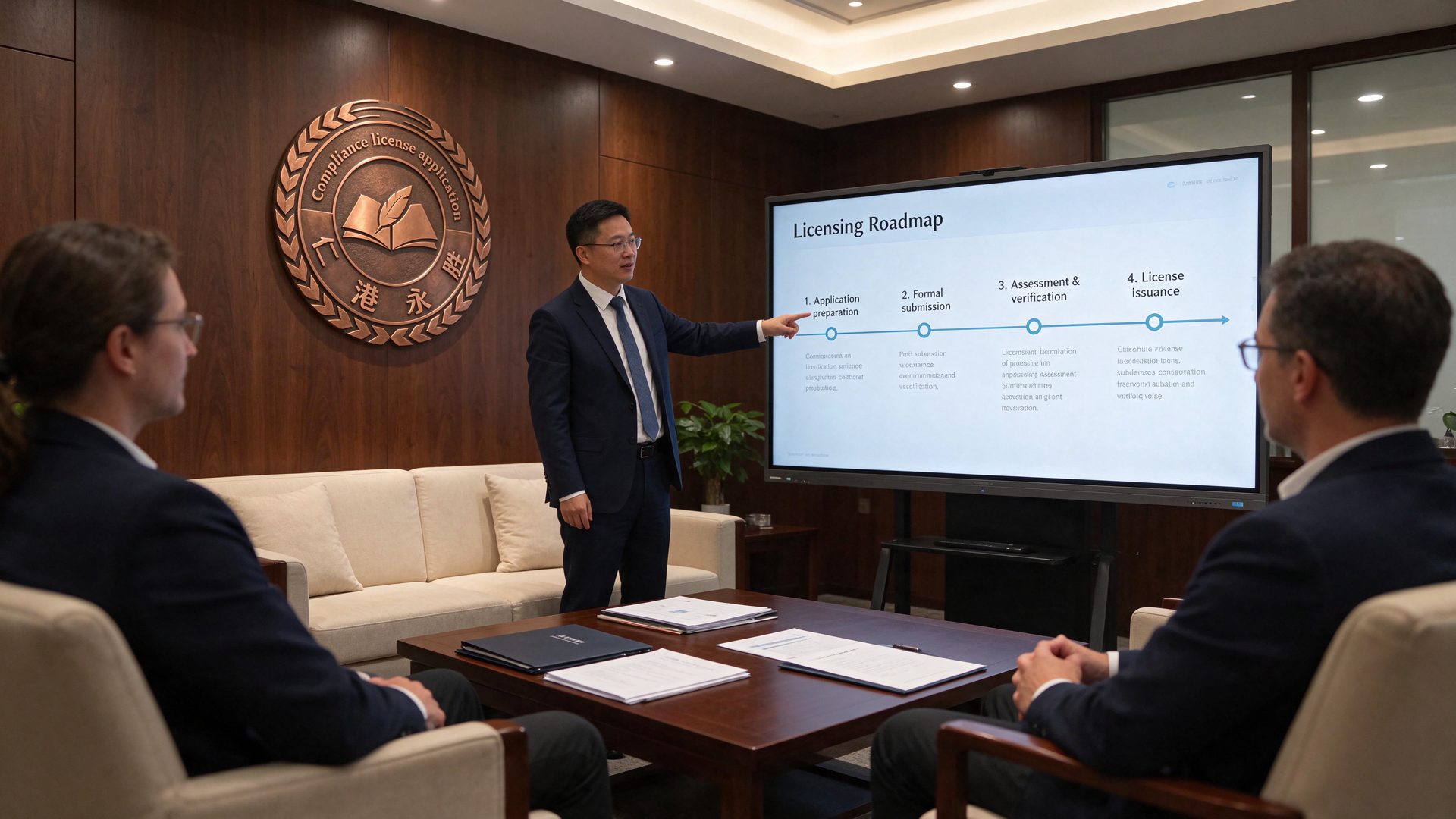
Application Process
01
Confirm the business perimeter
Map each of the ten crypto-asset services individually, determine the highest capital tier and establish whether custody, fiat currency or platform operation is involved.
02
Pre-application engagement and gap assessment
Explain the business model, shareholder structure, key personnel and technology architecture to LB, and identify AML, DORA and client asset risks at an early stage.
03
Establish and build substance
Establish a qualifying legal entity in Lithuania and prepare a physical office address, EU management arrangements, a bank account and local operational records.
04
Determine the governance team
Appoint directors and the compliance officer, MLRO, risk and ICT function holders; complete fitness and propriety, reputation, experience and time-commitment documentation.
05
Prepare the application package
Complete the business plan, policies, technical documentation, proof of capital, client asset segregation and complaints-handling procedures.
06
Formal submission
Submit the application and annexes in the manner specified by the LB, confirming that form, version, signature and translation requirements are all met.
07
Completeness check and assessment
The LB checks completeness within 25 working days; once complete, the application proceeds to a 60-working-day assessment, with the clock suspended accordingly while further information is awaited.
08
Approval and launch
After obtaining authorisation, complete ESMA registration, passporting notifications (if required) and pre-launch testing. Services must not be provided to EU customers before authorisation is granted.
Practical recommendations
Pre-application engagement does not replace a formal application. Preparing review-ready versions of the business plan, AML risk assessment and ICT architecture beforehand is generally more effective than repeatedly providing supplementary documents afterwards.
09

Timeline and key milestones

Timeline & Milestones
StageStatutory or estimated timeframeKey matters
Pre-application engagement, business design and entity preparationUsually 1–3 monthsFinalise the scope of services, shareholders, personnel, office substance and technical arrangements in advance.
Policy, Systems and Documentation DevelopmentUsually 2–4 monthsAML/CFT, DORA, the Travel Rule, custody, complaints and outsourcing documents must be consistent with one another.
Completeness check25 working daysThe LB checks whether the required information has been provided; if the application is incomplete, it will request that missing information be submitted within a specified period.
Substantive assessment of a complete application60 working daysCan submit requests for information; the statutory clock is suspended while supplementary information is being provided, and time spent on supervisory communication and translation is not counted.
Operational readiness following authorisationUsually 2–6 weeksLaunch is appropriate only once registration, passporting notifications, customer contracts, system testing and pre-launch controls are complete.
Important considerations
The 25 working days are for the completeness check and do not guarantee approval; the 60 working days are calculated from when the complete application enters assessment. Requests for additional documents may suspend or affect the timeline, and time should also be allowed for preparation and communication.
10

Acquisitions and Material Changes

Acquisition & Material Changes

CASP authorisation is granted to a legal entity and cannot be separated from the company or resold as an ordinary commodity. An acquisition typically involves purchasing shares in, or control of, a licensed company. Before the transaction, the scope of authorisation, regulatory record, client assets and outstanding remediation matters must be checked.

  • Any direct or indirect acquisition, increase or disposal of a qualifying holding must be notified in advance under MiCA and LB procedures, and the applicant must await the regulator's opinion or approval.
  • Changes to directors, senior management, the MLRO, compliance, risk and key ICT personnel must be accompanied by fitness and propriety information submitted under the applicable procedure before appointment.
  • After the acquisition, expanding the scope of services requires an application to the LB to extend the authorised scope. Existing Class 1 authorisation cannot be relied on to cover custody or a trading platform.
  • The transaction documents should make regulatory approval, change-of-control completion, continuity of client assets and allocation of historical liabilities conditions of completion.
11

Ongoing maintenance and compliance

Ongoing Compliance & Maintenance

After approval, ongoing compliance with MiCA, DORA (Regulation (EU) 2022/2554), TFR (Regulation (EU) 2023/1113), AML/CFT, customer protection and market integrity requirements remains mandatory. Capital, personnel, systems and policies are not one-off documentary requirements; they are ongoing conditions that require enforceable records and regular review.

Ongoing mattersManagement requirements
Own fundsAlways maintain the higher of the Annex IV permanent minimum capital and one quarter of the previous year's fixed overheads.
Client protectionSegregate client assets and funds, and maintain custody records, complaints channels, risk disclosures and compensation arrangements.
AML/TFROngoing KYC, EDD, sanctions screening, on-chain monitoring, and the transmission, verification and retention of Travel Rule information.
DORA/ICTManage ICT risk, major incidents, outsourcing, recovery testing, penetration testing and exit strategies.
White paper responsibilitiesIf you provide placement services or are involved in a token offering, you must meet the white paper notification, publication and updating requirements, and ensure consistency in marketing, under MiCA Title II, III or IV.
Regulatory ReportingReport in accordance with LB, audit, financial and AML calendars; notify the relevant authorities promptly of material changes and serious incidents as required.
12

Application status

Application Availability

Lithuania MiCA CASP authorisation is currently open to new applications, but the LB will closely scrutinise genuine business activity, EU substance, AML/CFT, DORA, client asset protection and the fitness and propriety of key personnel. New projects can begin with pre-application discussions through the Newcomer Programme, but these discussions do not constitute authorisation.

Open for new applications
Before formal authorisation is granted, do not claim to have MiCA CASP rights on the basis of a pending application, an old VASP registration or a partner's credentials.
Tang Shangyong (Drew), Business Manager
Drew's Note Drew's Note
The challenge for Class 2 is not simply increasing capital from €50,000 to €125,000, but demonstrating that private keys, client assets, exchange pricing and fund flows can all be controlled on an ongoing basis. Before applying, turn the arrangements for hot and cold wallets, segregation of access rights, insolvency ring-fencing, fiat payment channels, transaction monitoring and DORA outsourcing exit plans into testable procedures rather than merely submitting policy documents.
Tang Shangyong (Drew) · Business Manager, Rengangyongsheng (Hong Kong) Limited
FAQ

Frequently Asked Questions About This Licence

Frequently Asked Questions
Q01Does a Class 2 licence include Class 1 services?+
For this project's service classification, Class 2 adds custody and administration, exchange between crypto-assets and fiat currencies, and exchange between crypto-assets to the Class 1 services. The authorised scope remains subject to the activities specified in LB's authorisation decision.
Q02What are the most important application documents for custody services?+
Key areas include the custody policy, private keys and wallet architecture, segregation of permissions, records of client assets, insurance or equivalent safeguards, insolvency protection, incident response, outsourcing and client contracts. Regulators will assess whether the processes can be implemented in practice.
Q03Does fiat currency exchange automatically include payment services?+
Not automatically included. Exchanging crypto-assets and funds using own capital is a MiCA service, but payment transactions, payment accounts or other payment services still require an assessment of EMI, PI or credit institution permissions.
Q04Can a Class 2 licence operate a trading platform?+
No. Class 2 alone does not permit the operation of a trading platform. A trading platform falls within Class 3 and requires an application for the corresponding scope of authorisation, as well as compliance with requirements for the order book, market abuse, transparency, system resilience and settlement controls.
Tang Shangyong (Drew)This article is by Rengangyongsheng (Hong Kong) Limited Prepared by, and explained by Tang Shangyong (Drew) Professional guidance from a Business Manager· Information updated: November 2026

Enquire about CASP Class 2

Book a Free Assessment
Tell us about your business model, target markets and shareholders. Drew's team will advise whether a new application or acquisition is more suitable, how to structure your capital and staffing, and the expected timeframe and budget.
RGYS advisory meeting
RGYS
Tell us about your project
Tell us about your project · Free Assessment
Success is displayed only after receipt has been confirmed by the service provider; if email is temporarily unavailable, please contact us via WhatsApp.