Keywords · KEYWORDSLithuanian specialised bankSpecialised Bank€1,000,000 banking licenceArticle 4 of the Law on BanksECBLB
Specialised Bank Licence
LT-02 · Banks and credit institutions

Specialised Bank Licence

Lithuania · EU Financial Licensing

Enter the banking credit business with a lower statutory initial capital, but operate only within the limited business list set out in the Banking Law.

Open for new applications · Scope of business restrictedLicensing authority: The European Central Bank (ECB) and the Bank of Lithuania (LB) cooperate within the SSM frameworkPrioritisation of market entry
Minimum initial capital
€1,000,000
Statutory review period
6/12 months
State fee
€4,157
Recommended priority
5/5
Legal Basis · LEGAL BASIS
  • Law on Banks of Lithuania, in particular Article 4 on the scope of activities of specialised banks
  • Law on Financial Institutions of Lithuania
  • CRR, CRD IV, CRD VI and SSM rules
  • Law on Deposit and Liability to Investors Insurance
  • Applicable AML/CTF, payments, consumer protection and banking regulatory rules
Key Summary · AT A GLANCE
Capital: Minimum initial capital of €1,000,000; although the scope of business is restricted, the other banking authorisation, supervisory and ongoing prudential requirements are, in principle, the same as for a full bank.
Time: A complete application is usually decided within 6 months; the period is recalculated after supplementary information is submitted and must not, in any event, exceed 12 months from the initial application.
State fee: State fee €4,157, payable to the VMI; actual supervisory costs and other ongoing fees are determined separately under the applicable rules.
EU Passporting: As a credit institution, once authorisation and notification requirements have been met, it may apply to provide cross-border services within the EEA under the applicable CRD/SSM rules; restrictions on the scope of business do not automatically fall away through passporting.
01

Scope of permissions and business boundaries

Permitted Activities & Boundaries

A specialised bank remains a bank credit institution. It may lawfully accept deposits and other repayable funds from non-professional market participants and conduct lending business, but the financial services it may provide do not cover the full range offered by a full bank. Instead, they are restricted to the limited list set out in Article 4 of the Law on Banks of the Republic of Lithuania.

  • May conduct banking activities permitted by law, including deposit-taking and lending
  • Must not provide investment services
  • Must not operate a crowdfunding platform or P2P lending platform
  • Activities outside banking services may only be carried out where they are necessary, ancillary or directly related to the provision of financial services
  • Activities not directly related to banking, such as commodity trading, cannot be carried on solely on the basis of professional banking status; each activity must be checked against current law and the business structure
The focus is on a limited list
LB has expressly stated that specialised banks are subject to a closed and narrower list of financial services. The fact that a particular activity is permissible for a full-service bank does not mean that a specialised bank may also provide it; the final position must be based on Article 4(5) of the Law on Banks and the relevant sector-specific legislation.

02

Applicable scenarios and advantages

Use Cases & Advantages

A specialised bank is suitable for banking groups that need to take deposits and provide bank loans, but do not plan to operate investment services, crowdfunding or P2P platforms. Its initial capital of €1,000,000 is lower than that of a full-service bank, but this does not mean that the regulatory requirements amount to a light-touch registration.

Project comparisonFull-service bankSpecialised bankFull EMI
Minimum initial capital€5,000,000€1,000,000€350,000
Public depositsYesYes, within the limited listNot a bank deposit
General bank lendingYesYes, within the limited listDoes not confer general banking lending powers
Investment servicesIn accordance with applicable law and the scope of authorisationMust not provideNo. EMI status alone does not permit the direct provision of
Crowdfunding/P2P platformSeparate compliance with the relevant legislation and authorisation is requiredMust not operateNot an inherent EMI permission
Issuing Electronic MoneyIn accordance with applicable law and business arrangementsNot obtained automatically by virtue of being a specialised bankCan be authorised under e-money legislation
Deposit insuranceApplicableApplicableBank deposit protection does not apply
EEA passportingBanking rulesBanking rules, but subject to the limits of its scopePayments and e-money rules
Specialised bank, full bank and Full EMI comparison
Overview
The table is intended as an initial guide and does not replace legal analysis of the specific services, product structure, client base and cross-border model. Payment, e-money, securities, commodities and platform businesses in particular may trigger a separate licensing requirement.
03

Application and eligibility requirements

Eligibility & Entry Conditions

Applicants for a specialised bank, its shareholders and management, as well as its governance framework, source of funds, business plan and risk controls, should meet bank authorisation requirements. The lower capital threshold changes only the minimum capital figure; it does not change the assessment of safe and sound operation or effective management capability.

  • The business plan must clearly exclude prohibited or out-of-scope activities such as investment services, crowdfunding and P2P lending.
  • Transparent shareholders, UBOs and sources of funds; qualifying holders of shares must be of good repute and financially sound
  • Risk, compliance, AML/CTF, accounting and IT controls commensurate with the limited scope of business
  • Provide verifiable explanations of deposit, lending, liquidity, credit risk and customer protection arrangements
  • Able to demonstrate genuine office premises, effective management, key functions and arrangements for regulatory access
Important considerations
If the business plan describes investment services, commodity trading, platform matching or complex payment products too broadly, it may conflict with the limited list of activities permitted to a specialised bank. Before applying, prepare a table that breaks down the business scope by product, customer and revenue stream.
04

Shareholders, directors and compliance staff

Shareholders, Directors & Key Persons

The management of a specialised bank must have a good reputation, appropriate qualifications and banking experience, and sufficient time to fulfil its duties. At least one executive manager should speak Lithuanian. Supervisors will consider whether the management board, supervisory board and key control functions are genuinely independent and effective.

RoleKey requirementsCommon risks
Shareholders / UBOReputation, financial capacity and transparent source of fundsComplex ownership chains or acquisition financing that cannot be explained
Board of Directors and Supervisory BoardCollective suitability, oversight and conflicts-of-interest controlsComposed solely of business promoters, with no risk-management experience
Administrative officerActual management capability; at least one Lithuanian speakerNominal appointments, excessive concurrent roles or inability to manage in Lithuania
Risk/Compliance/Internal AuditConfigure independently according to scale and enable direct reportingOutsource key controls entirely with no internal capability
Technology and financeSystems security, accounting and prudential reporting capabilitiesCannot generate regulatory data in a timely manner
Key areas of scrutiny for personnel arrangements
Overview
LB's model of a bank organisation with around 10 people can serve as a starting point, but it is not a statutory fixed headcount for a specialised bank. The actual organisational structure should reflect the product scope, loan portfolio, sources of deposits, extent of outsourcing and cross-border business.
05

Capital and financial requirements

Capital & Financial Requirements
ProjectsRequirementsOverview
Minimum initial capitalNot less than €1,000,000A statutory minimum only; it does not represent the capital actually required
Adequate capitalCRR/CRD appliesOngoing capital ratios, buffers and additional regulatory requirements continue to apply
LiquidityLCR, NSFR and other requirements applyDeposit outflow and loan stress scenarios must be established
Recovery and ResolutionApplicable recovery, resolution and MREL frameworksPrepare in accordance with the institution category and supervisory arrangements
Deposit insuranceApplicable bank deposit guarantee schemeEMI safeguarding does not replace bank deposit insurance.
Specialised bank capital and regulatory requirements
Statutory minimum capital
€1,000,000
Regulatory intensity
In principle, the same as ordinary banking authorisation, supervision and ongoing requirements
Ongoing metrics
CRR/CRD, LCR, NSFR, capital buffers and applicable MREL
State fee
€4,157
Important considerations
Lower capital requirements for a specialised bank do not mean that liquidity and risk management can be simplified. Deposit-taking and lending give rise to interest rate, credit, liquidity, concentration and operational risks. Capital adequacy must be validated against the actual balance sheet.
06

Office address and substantive operations

Office & Local Substance

A specialised bank should establish genuine management and operational substance in Lithuania proportionate to the scope of its business. A registered address, company secretarial services or an outsourced team alone cannot demonstrate that the applicant can safely accept deposits, manage loans and meet ongoing regulatory reporting obligations.

  • Lithuanian office and record-keeping arrangements accessible to supervisory staff
  • Staff and systems commensurate with the scale of deposit-taking, lending and customer services
  • Clear segregation of the three lines of defence, internal audit, compliance, risk and IT security responsibilities
  • Locally actionable procedures for loan approval, collections, deposit management and customer complaints
  • Ensure outsourcing, cloud services, disaster recovery and exit plans do not impair regulatory oversight
The narrower the scope, the more enforceable its boundaries must be
A specialised bank should embed prohibited activities in product approval, marketing materials, customer contracts, system permissions and staff training to prevent its actual business from exceeding the limited list of permitted activities.
07

Required information and documents

Required Documents
  • Specialised bank licence application form and legal entity documents
  • Articles of Association, Group Structure Chart, Shareholder and UBO Information
  • Clearly set out the permitted and excluded activities in the three-year business plan.
  • Product description, client types, fund flows and revenue model
  • Capital evidence and source-of-funds documents for amounts exceeding €1,000,000
  • CVs of the Board of Directors, Supervisory Board, administrative manager and key function holders
  • Organisational structure, staffing plan and arrangements for a Lithuanian-speaking administrative manager
  • Credit risk, loan approval, collateral and debt collection policies
  • Deposit, liquidity and interest rate risk management, and contingency funding policies
  • AML/CTF, KYC, sanctions, fraud and consumer protection policies
  • Accounting, audit, internal controls, regulatory reporting and data governance arrangements
  • IT architecture, information security, DORA, outsourcing and business continuity documentation
ClarifySuggested wording
What you can doList each specific financial service permitted under banking law
What cannot be doneClearly exclude investment services, crowdfunding, P2P and unapproved commodity trading, among other activities.
How to prevent activities from exceeding the authorised scopeImplement through product approval, system access controls, contracts and monitoring
How to Expand in the FutureExplain whether a licence variation, additional authorisation or renewed regulatory notification is required
Business scope in the application documents
Overview
An application for a specialised bank must not copy the broad scope of business of a full bank. The product list, system permissions and marketing copy should be consistent with the limited list in the Law on Banks.
08

Application and process

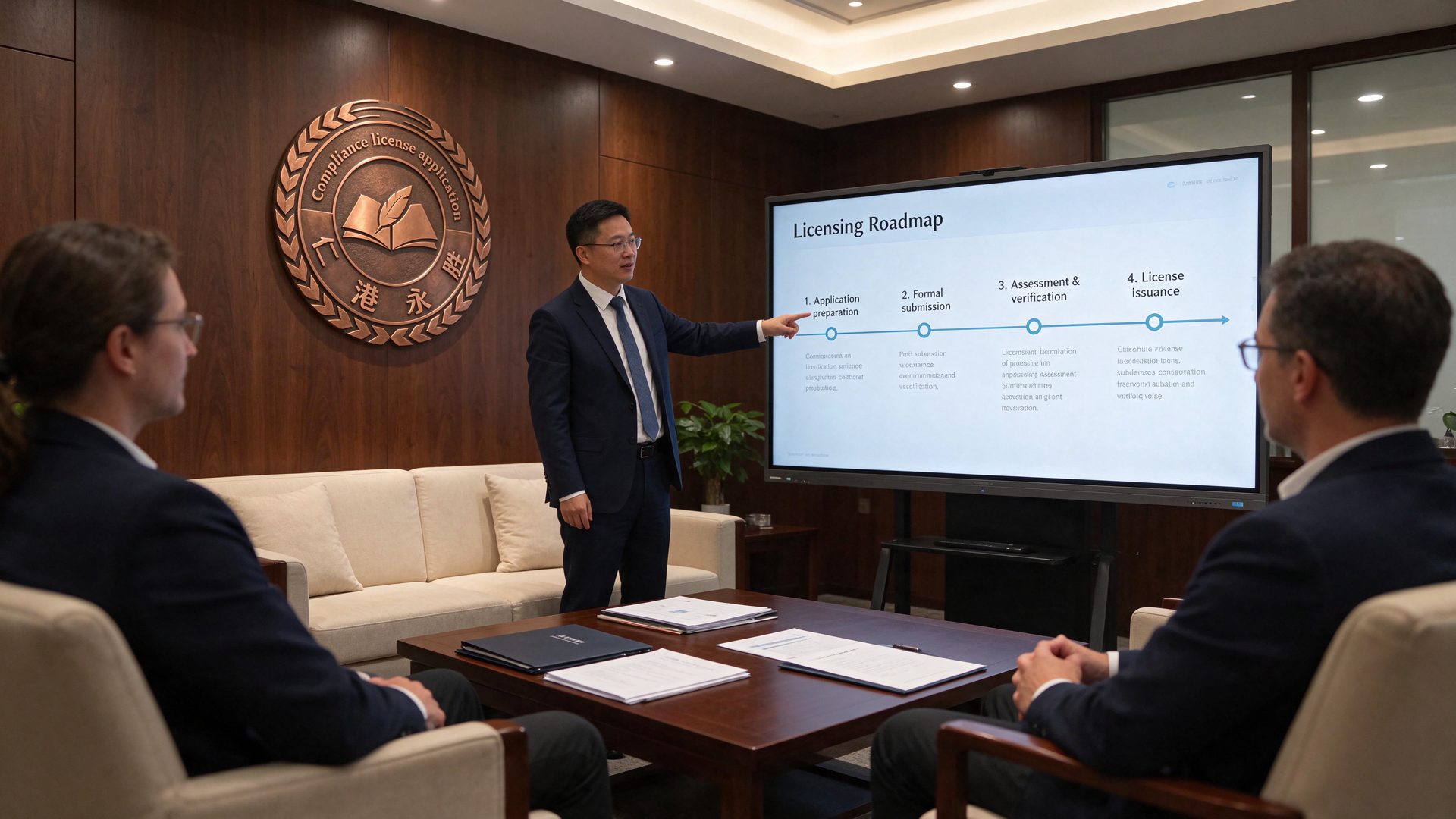
Application Process
01
Define a limited list of permitted activities
Assess deposits, lending, payments, cards, foreign exchange and any other planned services individually against Article 4 of the Law on Banks.
02
Exclude activities that are not applicable
Specify in the business plan and product matrix that investment services, crowdfunding, P2P and other activities outside the scope are not conducted by the specialised bank.
03
Preliminary discussions
Discuss the limited scope of business, capital, personnel, deposit protection and cross-border plans with LB, using the Newcomer Programme if appropriate.
04
Establish the entity and provide capital
Prepare a legal entity, shareholder structure, source of funds and capital of at least €1,000,000 that meet banking law requirements.
05
Complete the documentation
Submit business plan, governance, risk, AML, IT, accounting, office and key personnel documents.
06
Fee Payment and Formal Checks
Pay the €4,157 state fee and submit the application to the LB. The LB usually checks formal completeness within 5 working days.
07
ECB/LB substantive assessment
The LB and ECB assess shareholders, management, capital, business scope, and safety and soundness under the SSM framework.
08
Further information and decision
Respond promptly to requests for supplementary information. A decision is generally made within 6 months once the application is complete, and no later than 12 months from the initial application.
09
Launch after licensing
Once systems, reporting, deposit insurance, staffing and operational requirements are in place, commence operations on a limited basis.
Important considerations
The most common procedural risk for a specialised bank is a mismatch between the scope of business described at the application stage and the products launched. Any new service should first undergo legal classification and regulatory engagement. Do not use marketing terminology to circumvent the boundaries of the licence.
09

Timeline and key milestones

Timeline & Milestones
StageExpected timeframeOverview
Finalising the scope of businessPreliminary stageComplete the permitted/prohibited services matrix first
Formal checkUsually 5 working daysLB's check that the documents are complete does not constitute substantive approval
Substantive reviewWithin 6 months after the application is completeLB and the ECB assess the full set of banking requirements
Further informationApplicable period recalculated following further informationIncomplete information may affect timelines and resources
Final statutory limitNo more than 12 months from the initial applicationSpecific procedure subject to the regulatory notice
Licence preparationAccording to the business launch planComplete systems, reporting, insurance and organisational requirements
Key specialised bank milestones

In principle, the review period for a specialised bank is the same as for a full bank. The lower capital threshold does not turn the application into a registration process taking just a few weeks. The business plan, shareholders, management, risk controls and IT must still meet bank authorisation standards.

Overview
If the applicant plans to provide investment services, crowdfunding or P2P lending in the future, it should compare at an early stage the costs and timescales of converting to a full banking licence, establishing a separate regulated entity or adopting another compliant partnership model.
10

Acquisitions and Material Changes

Acquisition & Material Changes

A specialised bank licence is also attached to the licensed legal entity and cannot be sold separately. When acquiring an authorised specialised bank, the buyer should first confirm that the limited scope of business fits its plans, then review the shareholding, capital, deposits, loan portfolio, regulatory history and risk of products exceeding the permitted scope.

  • Prior notification and the applicable regulatory consent are generally required to acquire, increase or reduce a qualifying holding
  • Check the eligibility of the buyer and its control chain, UBOs, source of funds and acquisition financing
  • Changes to directors, executive officers, supervisory board members and key function holders must be notified in advance or receive non-objection under the applicable rules
  • Before proposing new investment, crowdfunding, P2P or commodity-related activities, first determine whether they fall outside the limited list permitted for specialised banks
  • After completion, CRR/CRD, liquidity, deposit guarantee, AML and reporting obligations must continue to be met.
Do not value solely on the basis of the difference in capital requirements
The €4m capital difference between a specialised bank and a full bank cannot be equated directly with acquisition value. The real risks often lie in the scope of business, legacy customers, loan quality, liquidity, IT and regulatory remediation requirements.
11

Ongoing maintenance and compliance

Ongoing Compliance & Maintenance

Ongoing supervision of a specialised bank is in principle the same as for an ordinary bank, although its permitted range of financial services is narrower. It must maintain capital, liquidity, risk management, AML/CTF, internal controls, audit, customer protection and regulatory reporting on an ongoing basis.

  • Ongoing compliance with CRR/CRD capital adequacy ratios, capital buffers, LCR and NSFR
  • Monitor products, customers, transactions and marketing materials against the limited list of permitted activities
  • Maintain deposit insurance arrangements and fulfil depositor information disclosure obligations
  • Manage credit, liquidity, interest rate, concentration, operational and ICT risks
  • Support recovery and resolution planning, MREL, ECB/LB inspections and on-site supervision
  • Follow the required procedures promptly for material changes to shareholders, management, articles of association, business activities and outsourcing
Important considerations
If a specialised bank conducts business in practice beyond the limited list in the Law on Banks, it may face supervisory remediation, business restrictions, penalties or even risks to its licence. Ongoing compliance should include regular reviews of business boundaries.
12

Application status

Application Availability

Applications for a specialised bank are currently open, but this is a banking category subject to intensive scrutiny and substantial substance requirements. The Bank of Lithuania's preliminary engagement channels can help applicants confirm the classification of their services; the Newcomer Programme is only a communication tool and does not constitute a promise of a licence or approval.

  • Suitable for models that require deposits and bank lending but not investment services, crowdfunding or P2P
  • Not suitable for: business models centred on securities brokerage, investment management, crowdfunding, P2P or commodities
  • Can compare: full-service banks, Full EMI, PI or partnerships with existing licensed institutions
  • New products: confirm before launch whether they remain within the limited list permitted for specialised banks
Practical recommendations
Drew recommends viewing a specialised bank as "banking capabilities plus a limited menu", rather than a "full-service bank with low capital". First, identify the corresponding legal permissions for each source of revenue planned over the next three years, then decide whether to pursue the €1,000,000 specialised banking route.
Tang Shangyong (Drew), Business Manager
Drew's Note Drew's Note
Drew's Note: A specialised bank's advantage is its lower capital threshold; the challenge is to define its business boundaries narrowly and clearly. LB has made clear that investment services, crowdfunding and P2P platforms fall outside its remit; non-directly related activities such as commodities trading cannot be brought within scope through branding. Before applying, carry out a three-way boundary check of the product matrix, system permissions and marketing materials. This matters far more than simply preparing evidence of capital.
Tang Shangyong (Drew) · Business Manager, Rengangyongsheng (Hong Kong) Limited
FAQ

Frequently Asked Questions About This Licence

Frequently Asked Questions
Q01Can a specialised bank accept public deposits and grant loans?+
Yes, provided the activities fall within the scope permitted by banking law and the institution continues to meet banking requirements for capital, liquidity, risk, governance and deposit insurance. The key difference between a specialised bank and an EMI is that, as a credit institution, the former can conduct the relevant deposit-taking and lending activities.
Q02Can a specialised bank provide investment services?+
No. The LB's public FAQ expressly states that specialised banks may not provide investment services or operate crowdfunding or P2P lending platforms. If you plan to provide securities, investment or platform services, separately assess the full banking or specialist authorisation route.
Q03Can a specialised bank trade in commodities?+
Commodity trading should not automatically be treated as a permitted banking activity. The Banking Law allows only a limited list of activities; entities other than banks may carry out only activities necessary for, ancillary to or directly related to financial services. The specific commodity structure and purpose of the transaction should be verified case by case under the law in force.
Q04Can a specialised bank obtain a licence with just €1,000,000?+
€1,000,000 is the minimum initial capital, not a guarantee of authorisation. The ECB/LB will also scrutinise shareholders, management, business scope, risk management, AML, IT, actual operations and financial sustainability. The actual capital requirement may exceed the statutory minimum.
Tang Shangyong (Drew)This article is by Rengangyongsheng (Hong Kong) Limited Prepared by, and explained by Tang Shangyong (Drew) Professional guidance from a Business Manager· Information updated: November 2026

Enquire about Specialised Bank

Book a Free Assessment
Tell us about your business model, target markets and shareholders. Drew's team will advise whether a new application or acquisition is more suitable, how to structure your capital and staffing, and the expected timeframe and budget.
RGYS advisory meeting
RGYS
Tell us about your project
Tell us about your project · Free Assessment
Success is displayed only after receipt has been confirmed by the service provider; if email is temporarily unavailable, please contact us via WhatsApp.