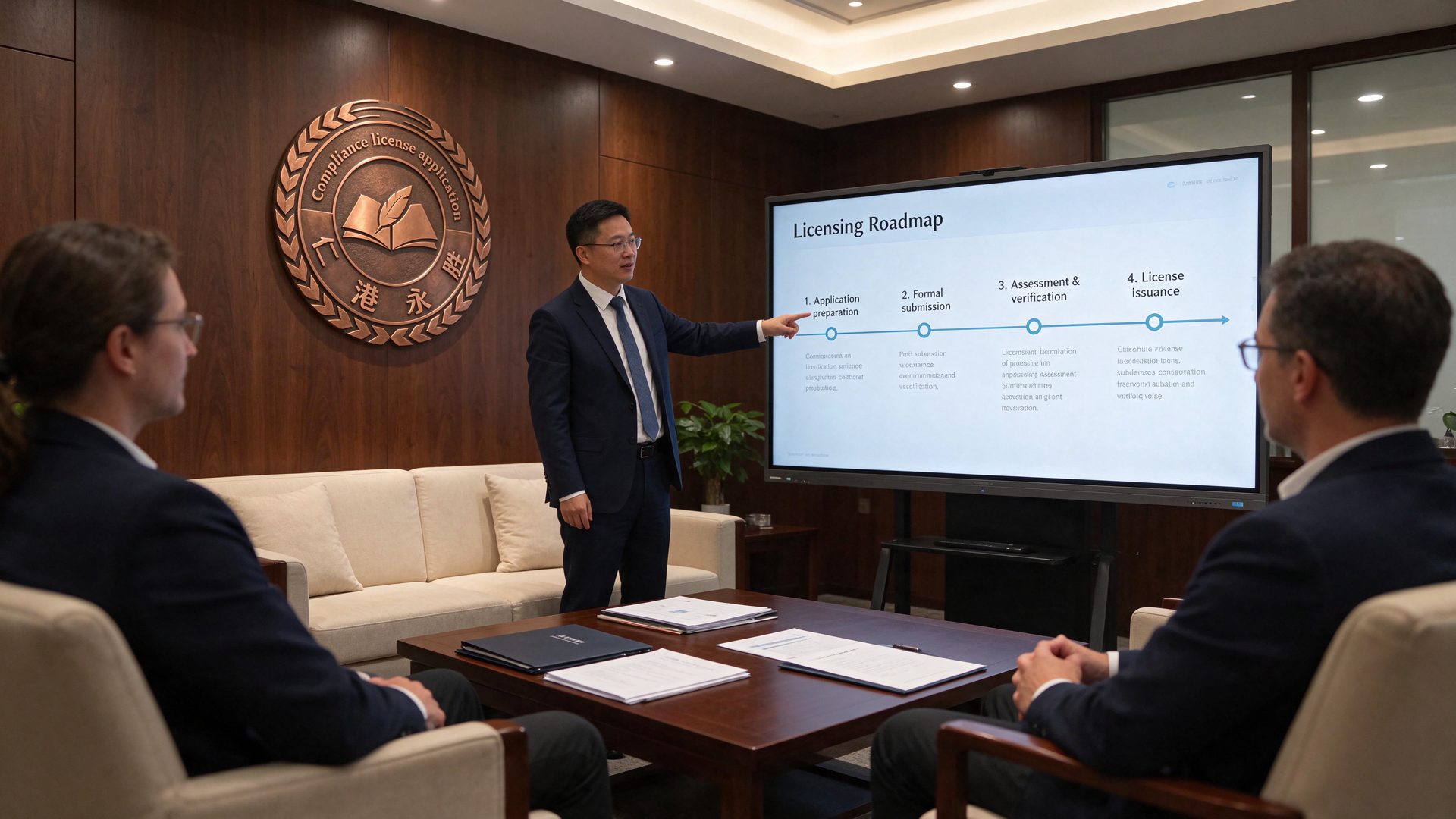
Keywords · KEYWORDSAISPAccount information servicesOpen bankingPSD2PIIPayment Authorisation in Lithuania
Account information service provider authorisation (AISP)
LT-09 · Payments and electronic money

Account information service provider authorisation (AISP)

Account Information Service Provider Authorisation

An open banking payment authorisation for account information services only, with no handling of client funds.

Open for new applicationsLicensing authority: Bank of Lithuania (LB)
Fixed minimum initial capital
No standard threshold
Professional Indemnity Insurance
PII is mandatory
Statutory review period
3 months
State fee
€693
Legal Basis · LEGAL BASIS
  • The Law on Payment Institutions and the Law on Payments
  • PSD2 rules on account information services and related Lithuanian implementing provisions
  • EBA regulatory guidelines on professional indemnity insurance or equivalent guarantees
Key Summary · AT A GLANCE
Capital: An AIS-only payment institution authorisation generally has no uniform minimum initial capital requirement, but professional indemnity insurance (PII) must be in place, with the cover calculated in accordance with EBA guidance and the applicable methodology.
Time: The review period for complete documentation is 3 months; document deficiencies, requests for additional information and technical security issues may affect the actual completion time.
State fee: State fee €693 (subject to the latest LB/VMI charges at the time of submission)
EU Passporting: Can apply to provide cross-border EEA services under the applicable PI/AIS passporting procedure; notification must be completed and host Member State requirements must be met.
01

Scope of permissions and business boundaries

Permitted Activities & Boundaries

An AISP provides services that aggregate, categorise, display or analyse information from one or more of a customer's payment accounts. In principle, an AISP does not hold customer funds or initiate payment transactions, and should not present account information access as payment account management or fund transfer services.

Permitted activitiesTypical ContentKey boundaries
Account aggregationAggregate account information from different payment service providers with the customer's consentValid consent must be obtained and access permissions must be observed
Information AnalysisBalances, transaction classifications, cash flow or financial positionMust not exceed what is necessary for the data and authorised purpose
Data InterfacesAccess through secure interfaces provided by banks/payment service providersMust not initiate payments or control funds on behalf of a PISP
An AISP does not handle client funds
If the product initiates payments, collects funds or controls payment instructions on behalf of clients, assess whether a PISP or another PI service is involved. An AISP licence cannot cover activities involving funds.

02

Applicable scenarios and advantages

Use Cases & Advantages

An AISP is suited to open banking aggregation, cash flow analysis, financial management and information services supporting credit decisions. It can focus on secure data access, customer consent, interface stability and privacy protection without taking on payment settlement responsibilities involving the holding of customer funds.

  • Focuses on account information services, with no core business involving the transfer of client funds
  • The capital structure is usually relatively light, but PII and security controls are particularly important.
  • Build products around APIs, consent management, data quality and analytics capabilities
  • Can assess cross-border EEA open banking services under the applicable procedure
Overview
An AISP typically connects to the secure interfaces of account servicing payment service providers. This does not automatically confer eligibility to participate in CENTROlink settlement; if the product includes payment initiation, the scope of the licence should be designed separately.
03

Application and eligibility requirements

Eligibility & Entry Conditions

The applicant needs to demonstrate that data access, customer consent, identity verification, withdrawal of permissions, interface security, incident response and complaint handling are workable. The absence of a uniform minimum initial capital requirement does not mean there are no financial safeguards: PII, technology investment and the capacity to operate on an ongoing basis remain key admission criteria.

  • Clearly state that only AIS is provided, with no holding of funds or initiation of payments.
  • Establish processes for customer consent, identity verification, the scope of permissions and withdrawal.
  • Put in place professional indemnity insurance (PII) that meets the standards set out in the EBA Guidelines
  • Complete the API security, encryption, access control and logging design
  • Prepare AML, data protection, complaints and business continuity arrangements
Important considerations
PII cover must not be estimated based on experience alone. It should be calculated using the relevant indicators under the EBA guidelines and LB/applicable regulatory requirements, and reassessed when the policy is renewed.
04

Shareholders, directors and compliance staff

Shareholders, Directors & Key Persons

An AISP's management team should have expertise in payment compliance, information security, data governance and API operations. Although it does not handle customer funds, shareholders, UBOs, directors, senior managers and key function holders must still pass fit-and-proper and reputation checks.

RoleCapabilities to demonstrateOngoing requirements
Director/Responsible PersonGovernance, risk management and resource allocation for payment businessNotify LB of material changes in accordance with the applicable procedures
Compliance/AMLCustomer risk, sanctions, complaints and regulatory reportingIndependent reporting and retention of monitoring records
Security/technologyAPIs, encryption, access control, incident response and disaster recoveryRegularly test and manage suppliers
Data OwnerConsent management, data minimisation, accuracy and privacyHandle access, withdrawal and complaint requests
05

Capital and financial requirements

Capital & Financial Requirements
ProjectsRequirementsOverview
Fixed initial capitalNo standard minimum capital thresholdThe ability to operate sustainably and withstand risk must still be demonstrated
Professional Indemnity InsurancePII is mandatoryCalculate the limits in accordance with EBA guidelines and applicable indicators
Customer fundsIn principle, does not hold client fundsIf the business involves control of funds, the licensing position must be reassessed.
Ongoing financesMaintain insurance, technical and operational resourcesInadequate or lapsed insurance can affect compliance status
Capital
No standard minimum initial capital, but this does not mean there are no financial capacity requirements
PII
Professional indemnity insurance must be calculated using the relevant method under the EBA Guidelines
Role of funds
Does not hold client funds or execute payment transactions
Key security considerations
Consent, API, identity verification, access control, logs and incident response
Insurance and capital are not interchangeable
An AISP's PII provides professional indemnity cover; it is not initial capital or protection for customer funds. If the business model changes, the insurance cover, capital and scope of the licence should all be reassessed.
06

Office address and substantive operations

Office & Local Substance

The local substance requirements for an AISP focus on data and technology operations: who manages interfaces, approves access rights, responds to security incidents and handles customer complaints, and whether the LB can obtain logs, risk assessments and evidence of controls in a timely manner.

  • Appoint a security and data governance officer whose responsibilities can be reviewed by supervisors
  • Maintain records of API availability, errors, access and client authorisations
  • Establish effective management, compliance and complaints-handling capabilities in Lithuania
  • Conduct due diligence on cloud services, interface providers and security service providers.
  • Conduct regular penetration, disaster recovery, access control and incident response testing
07

Required information and documents

Required Documents
  • AISP licence application form and service boundary description
  • Open banking products, customer journeys and revenue models
  • Process flow for account information access, aggregation, display and exit
  • Documents relating to shareholders, UBOs, sources of funds and the control chain
  • Information on directors, executive officers and key function holders
  • Organisational structure, governance, responsibilities and delegation matrix
  • Explanation of Operating Funds and Ongoing Financial Capacity
  • Professional indemnity insurance (PII) policy or quotation and calculation workings
  • Customer consent, identity verification, withdrawal and access management framework
  • API, encryption, access controls, keys and logging arrangements
  • AML/KYC, sanctions, fraud and risk assessment documents
  • Data protection, data minimisation, retention and deletion policies
  • Outsourcing, cloud services, business continuity and disaster recovery documentation
  • Complaints, major incidents, audit and regulatory reporting policies
Document categoryAISP: Key Checks
Licence boundariesDoes it consistently avoid holding funds or initiating payments?
Consent and PrivacyWhether consent is explicit, withdrawable, traceable and used on a data-minimisation basis
Security and PIIWhether interface security, incident response and professional indemnity insurance are adequate
Operational SubstanceWhether management, technical, compliance and supplier oversight arrangements are genuinely workable
08

Application and process

Application Process
01
1. Confirm the product boundaries
Confirm that the activity is limited to account information services, excluding payment initiation, holding funds and operating accounts.
02
2. PII and risk assessment
Calculate professional indemnity insurance in accordance with EBA guidelines and applicable indicators, and establish a security risk model.
03
3. Entity and Personnel Preparation
Prepare information on the shareholding structure, UBOs, directors, compliance, AML, data and technology officers.
04
4. Consent and API Set-up
Complete the design for customer consent, identity verification, withdrawal, interface security, logs and incident response.
05
5. Submit the application
Submit the authorisation application, PII, business plan and state fee, and undergo a formal completeness check.
06
6. Substantive assessment and requests for additional information
Respond to the LB's questions concerning data boundaries, security, governance, insurance and the business model.
07
7. Go-live testing after licensing
Complete permissions, availability, complaints and security testing before connecting to the account service provider's interface.
08
8. Passporting and ongoing monitoring
If cross-border activity is required, complete the separate passporting notification and maintain PII, consent and security controls on an ongoing basis.
Overview
The statutory review period is 3 months, but API security, insurance calculations, data protection and cross-border interface arrangements may require additional preparation time.
09

Timeline and key milestones

Timeline & Milestones
StageExpected timeframeOverview
Product and boundary designApproximately 1–3 weeksConfirm that the activity is limited to AIS, with customer consent, data and interface models in place
PII and security preparationBased on project complexityComplete documentation covering insurance, APIs, data protection, AML and incident response
Formal completeness checkPost-application entry checksA basic check that the documentation is complete does not constitute a licensing decision
Substantive review3 months after receipt of complete documentationLB assesses governance, insurance, technology, risk and operational feasibility
Further information and decisionDepends on the issueFurther information may affect the timeframe; confirm the final scope of services
Interface integration and cross-border launchTo be arranged separately after licensingComplete account servicing provider onboarding, testing and passporting notifications

AISP projects typically treat PII, consent management, API connectivity and data protection as critical-path items. Even if customer funds are not involved, licence preparation should not be reduced to an insurance policy and an aggregation interface.

10

Acquisitions and Material Changes

Acquisition & Material Changes

An AISP licence is held by the licensed legal entity and cannot be sold separately from the company. In an acquisition, confirm the target's AIS boundaries, whether its PII remains valid and whether customer consent and data processing records can be transferred. Complete changes to qualifying holdings, UBOs, directors and key technology or compliance personnel in accordance with the applicable procedures.

  1. Verify the licensing decision, AIS-only scope, cross-border notifications and status of interface partnerships.
  2. Review professional indemnity insurance policies, claims, renewals, calculation workpapers and liability exclusions
  3. Identify changes to the buyer's qualifying holdings, control and UBOs, and submit a prior notification
  4. Check customer consent, data retention, complaints, security incidents and regulatory remediation
  5. Assess whether directors, senior officers, the MLRO, data and technology personnel need to be replaced
  6. After completion, recheck API keys, supplier contracts, customer notifications and passporting arrangements.
Important considerations
Acquiring an AISP does not automatically confer PISP, payment account or money remittance permissions; any product expansion requires a fresh service classification and licensing assessment.
11

Ongoing maintenance and compliance

Ongoing Compliance & Maintenance

Ongoing AISP compliance centres on customer consent, data minimisation, API security, PII, complaints and incident management. The LB will also consider whether the institution continues not to hold customer funds and whether third-party interfaces and cloud services are properly controlled.

  • Ongoing maintenance of effective and adequate PII that provides cover for claims
  • Record client consent, withdrawal, re-authorisation and scope of access
  • Monitor API availability, unusual access, fraud and data breaches
  • Regularly test access controls, keys, encryption, logs and disaster recovery
  • Update AML/KYC, complaints, supplier and incident response procedures
  • Complete business, risk, audit and internal control reporting as required by the LB
Background to Regulatory Inspections
The Bank of Lithuania's (LB) 2025 supervisory priorities for the EMI/PI sector include AML/KYC, fraud risk, own funds, safeguarding of client funds and internal audit controls; AISP applicants should also prepare API, data and PII evidence in particular.
12

Application status

Application Availability

AISP applications are currently available. Lithuania does not have a form of account information registration that is outside the PI framework and entirely exempt from payment regulation; institutions providing AIS only must still apply for the relevant payment institution licence and meet requirements for PII, management, IT and risk.

  • New application: open, but the product must be strictly limited to AIS
  • Newcomer Programme: can be used for preliminary discussions about open banking models
  • Cross-border services: AIS passporting notifications and receiving-country requirements can be assessed
  • PISP expansion: payment initiation authorisation and PII require separate assessment
  • Interface access: subject to separate requirements set by the account service provider and secure interface conditions
Overview
PII calculations, state fees, technical standards and passporting documents should be reviewed against the rules in force at the time of submission, as applicable to LB and EBA. Website figures are not a substitute for an individual insurance assessment.
Tang Shangyong (Drew), Business Manager
Drew's Note Drew's Note
Drew's Note: AISP is not an open banking pass that makes things simple just because no capital is required. The issues most likely to attract scrutiny are customer consent, API permissions, data minimisation, information security, PII limits and responsibility for third-party interfaces. As soon as a product starts initiating payments or controlling funds, the boundary between AISP and PISP should be reviewed immediately.
Tang Shangyong (Drew) · Business Manager, Rengangyongsheng (Hong Kong) Limited
FAQ

Frequently Asked Questions About This Licence

Frequently Asked Questions
Q01How much initial capital does an AISP need?+
Account information services only are generally not subject to a uniform minimum initial capital requirement. However, applicants must still demonstrate operational capability and financial sustainability, and must maintain professional indemnity insurance calculated in accordance with EBA guidelines and applicable indicators.
Q02Can an AISP initiate payments on behalf of customers?+
No. An AISP's core function is to access and consolidate account information with the customer's consent. It should not hold funds or initiate payment transactions. If the product includes payment instructions, assess whether a PISP licence and the relevant insurance and security controls are required.
Q03Does an AISP have to connect to CENTROlink?+
CENTROlink should not be treated as an automatic or mandatory settlement channel for an AISP. AISPs generally obtain information through the secure interfaces of account servicing payment service providers. Confirm the specific interfaces, authentication and cross-border arrangements with the relevant institutions.
Q04How is an AISP's PII cover determined?+
Calculate this in accordance with the EBA guidelines on professional indemnity insurance or equivalent guarantees and the applicable indicators. Review it periodically in light of the number of clients, scope of access, revenue and risks; do not simply apply fixed figures used for other licences.
Tang Shangyong (Drew)This article is by Rengangyongsheng (Hong Kong) Limited Prepared by, and explained by Tang Shangyong (Drew) Professional guidance from a Business Manager· Information updated: November 2026

Enquire about AISP

Book a Free Assessment
Tell us about your business model, target markets and shareholders. Drew's team will advise whether a new application or acquisition is more suitable, how to structure your capital and staffing, and the expected timeframe and budget.
RGYS advisory meeting
RGYS
Tell us about your project
Tell us about your project · Free Assessment
Success is displayed only after receipt has been confirmed by the service provider; if email is temporarily unavailable, please contact us via WhatsApp.