Keywords · KEYWORDSLithuanian Money Remittance LicenceMoney RemittancePI-06Cross-border remittancesAML/CFT€20,000
Money Remittance Payment Institution Licence
LT-11 · Payments and electronic money

Money Remittance Payment Institution Licence

Lithuania · EU Financial Licensing

A dedicated PI route for remittance and cross-border remittance services only, with minimum capital of €20,000.

Open for new applicationsLicensing authority: Bank of Lithuania (LB)Prioritisation of market entry
Minimum initial capital
€20,000
Corresponding service
PI-06 Remittance
Review benchmark
Usually 3 months
Recommended priority
4/5
Legal Basis · LEGAL BASIS
  • The Law on Payment Institutions and the Law on Payments
  • PSD2 provisions on money remittance services
  • The Law on the Prevention of Money Laundering and Terrorist Financing and AML/CFT requirements for cross-border remittances
Key Summary · AT A GLANCE
Capital: The minimum initial capital for providing remittance services only is €20,000; ongoing own funds are still calculated in accordance with the applicable payment institution method and LB rules.
Time: Processed under the Full PI licensing procedure; complete applications are generally assessed against a 3-month review period. Requests for additional information may affect the timeframe.
State fee: Plan for the applicable Full PI licence state fee of €898 and verify the latest charges with LB/VMI before submission.
EU Passporting: Can apply to provide cross-border EEA remittance services under the applicable PI/PSD2 passporting procedure; notification must be completed and host Member State requirements must be met.
01

Scope of permissions and business boundaries

Permitted Activities & Boundaries

Money Remittance is a specialised route within Full PI covering only PI-06 remittance services. It can be used for local and cross-border money transfers for individuals or businesses. It does not automatically cover payment accounts, card issuance, acquiring, PIS, AIS or electronic money issuance.

ActivitiesScope that may be plannedContent not included
PI-06 RemittanceReceive funds and transfer the corresponding amount to the payee or another payment service providerDoes not automatically include payment accounts, cards or wallets
Cross-border remittancesProvide services according to the target country, agents and settlement chainDoes not exempt the firm from AML/CFT, sanctions or customer funds requirements
Channels and AgentsAgent, partner bank and payment system arrangements may be assessedAn agent does not replace the responsibilities of the licensed institution
Remittances are not ordinary commercial payments
If the business regularly receives, transfers or pays funds on behalf of third parties, payment services should generally be classified first. A licence assessment should not be avoided merely by describing the activity as foreign trade, technical services or agency services.

02

Applicable scenarios and advantages

Use Cases & Advantages

This route is suitable for teams with a clear business model limited to remittance and cross-border transfers, without payment account or card services. €20,000 is the minimum initial capital for the relevant service category, while cross-border AML, agent oversight, sanctions screening and transaction monitoring will be key areas of focus for the project.

  • Enter the PI-06 money remittance service with €20,000 in initial capital
  • Focuses on cross-border transfers, settlement and building an agent network
  • Can apply for an EEA passport for remittance services under the applicable procedure
  • Access to eligible payment infrastructure and partner institutions may be assessed
Overview
CENTROlink, commercial banks, agents and collection channels are all subject to separate admission requirements; a remittance PI licence does not in itself guarantee a settlement account, a banking partnership or a customer network in any country.
03

Application and eligibility requirements

Eligibility & Entry Conditions

The applicant should set out in full its remittance customers, countries, currencies, sources of funds, recipients, agents, settlement accounts and refund procedures. Cross-border operations in particular require an explanation of high-risk countries, sanctions, cash channels, agent oversight and mechanisms for escalating suspicious transactions.

  • Demonstrate that the source of the €20,000 initial capital is clear and that the capital has been paid in
  • Explains the scope of PI-06 without including account, acquiring or electronic money activities.
  • Establish rules for customer due diligence, sanctions screening and transaction monitoring.
  • Complete the risk assessment for agents, partner banks, settlement and refunds
  • Design AML/CFT, fraud, complaints and major incident reporting procedures
Important considerations
The countries, channels and customer types involved in actual remittance operations affect the risk rating. Cross-border AML cannot be described using a single generic template; each corridor and agent must be assessed individually.
04

Shareholders, directors and compliance staff

Shareholders, Directors & Key Persons

Directors and administrative managers must understand remittances, cross-border AML/CFT, sanctions and agent controls. Compliance, AML, risk, operations, settlement and technology responsibilities should be clearly segregated, with escalation pathways for high-risk transactions, agent anomalies and customer complaints.

RoleMatters to ConsiderOngoing requirements
Shareholders / UBOControl chain, source of funds and reputationChanges to qualifying holdings handled in advance under the applicable procedures
Director/Responsible PersonRemittance governance, country risk and resource allocationChanges to personnel usually require notification or non-objection
MLRO / Compliance / RiskCustomer due diligence, sanctions, suspicious transactions and agent oversightMaintain records of independent reporting and investigations.
Operations/settlementPayment flows, refunds, reconciliation and exception handlingManage channel and agent risks daily
05

Capital and financial requirements

Capital & Financial Requirements
ProjectsRequirementsOverview
Initial capital€20,000Capital requirements for a Full PI providing money remittance services only
Ongoing own fundsDepending on PI Method A/B/C or the applicable LB rulesCalculated on an ongoing basis by reference to transaction volumes, income and risk
Customer fundsImplement safeguarding arrangements under the Law on PaymentsSegregation, reconciliation, settlement and refunds must all be evidenced
Remittance costsPII, AML, agents and settlement resourcesNot a substitute for the initial capital of €20,000
Minimum initial capital
€20,000
Licensing services
PI-06 Money Remittance
Ongoing finances
Ongoing compliance with requirements for own funds, liquidity, safeguarding of client funds and reporting
Key risks
Cross-border AML/CFT, sanctions, agents, settlement and fraud
Remittance capital is not the same as a corridor budget
€20,000 relates only to the statutory initial capital tier. Separate budgets are needed for agent due diligence, sanctions tools, transaction monitoring, bank settlement, refunds, audits and customer support.
06

Office address and substantive operations

Office & Local Substance

Remittance institutions need a local substance capable of continuously reviewing transactions and agents. Application documents should specify who approves high-risk customers and countries, who investigates suspicious transactions, who manages settlement discrepancies, and who activates contingency arrangements if an agent or bank is disrupted.

  • Appoint local AML, compliance and operations officers, and designate a person responsible for management
  • Maintain data classified by country, channel, agent and client type
  • Establish transaction monitoring, sanctions screening and suspicious transaction investigation capabilities
  • Conduct ongoing due diligence on agents, banks, cash channels and settlement providers.
  • Testing refunds, exceptions, channel outages and business continuity plans
07

Required information and documents

Required Documents
  • PI-06 remittance authorisation application and service boundaries
  • Remittance products, country corridors, currencies and customer models
  • Flowchart of fund flows, settlement, refunds and reconciliation
  • Documents relating to shareholders, UBOs, sources of funds and the control chain
  • Information on directors, executive officers and the MLRO/compliance function
  • Articles of association, organisational structure and delegation of authority matrix
  • Evidence that the €20,000 capital is in place and proof of source of funds
  • Ongoing own funds, liquidity and financial forecasts
  • AML/CFT risk assessment, customer due diligence and sanctions policies
  • Transaction monitoring, fraud detection and suspicious transaction escalation procedures
  • Due diligence and contract templates for agents, banks, settlement providers and outsourcers
  • Policies on safeguarding customer funds, refunds and complaint handling
  • IT security, logging, data protection, continuity and disaster recovery plans
  • Systems for audit, regulatory submissions, material events and training records
Information groupKey areas of scrutiny for cross-border remittances
Countries and customersCorridor risks, customer types, sanctions and high-risk factors
Agents and settlementDue diligence, authorisation, monitoring, reconciliation, refunds and exit arrangements
AML/CFTTransaction monitoring, suspicious transactions, sanctions hits and investigation evidence
Operational ContinuityChannel outages, fund discrepancies, complaints and customer notifications
08

Application and process

Application Process
01
1. Design the remittance corridors
Determine the country, currency, customers, agents, settlement and PI-06 business perimeter.
02
2. AML/CFT risk assessment
Establish a risk assessment, sanctions and monitoring framework by country, channel, customer and agent.
03
3. Entity and Personnel Preparation
Prepare information on €20,000 in capital, shareholders, UBO, directors, MLRO and the operations team.
04
4. Agent and Settlement Set-up
Complete arrangements for agents, banks, settlement, refunds, reconciliation and business continuity.
05
5. Submit under the PI procedure
Submit the Full PI remittance application, state fee and supporting documents.
06
6. LB review and requests for additional information
Respond to enquiries about customer funds, AML, sanctions, agents, personnel and technology.
07
7. Post-licence operational testing
Complete transaction monitoring, agent training, refunds, reconciliation and testing of high-risk scenarios.
08
8. Passporting and ongoing supervision
If cross-border activity is required, notify the relevant authorities in accordance with the procedure and continuously monitor corridors, agents and sanctions risks.
Overview
A PI licence application for remittance services is typically subject to a three-month review, but the agent network, cross-border corridors and complexity of AML documentation can significantly affect preparation and follow-up information requests.
09

Timeline and key milestones

Timeline & Milestones
StageExpected timeframeKey Deliverables
Corridor and product designApproximately 1–3 weeksCountries, customers, currencies, agents, settlement and the scope of PI-06
AML and operational readinessDepending on complexity.Risk assessment, sanctions, monitoring, refunds, reconciliation and continuity
Formal completeness checkPost-application entry checksConfirmation that the documents are substantially complete does not mean approval has been granted.
PI substantive reviewUsually 3 months after receipt of complete documentationLB assesses capital, personnel, AML, agents and technology
Further information and decisionDepends on the issueCross-border countries and agent-related issues may require additional rounds of communication
Launch / passportingTo be arranged separately after licensingAgent training, testing, notification and channel onboarding

We recommend validating controls first through one or two low-risk remittance corridors, then expanding to more countries and agents. Each additional high-risk region or cash agent should be accompanied by an updated risk assessment, monitoring rules and management reporting.

10

Acquisitions and Material Changes

Acquisition & Material Changes

A remittance licence cannot be bought or sold separately from the licensed legal entity. In an acquisition, key areas to review include the PI-06 scope, cross-border notifications, agent network, settlement accounts, AML investigations and sanctions incidents. Changes to qualifying holdings, beneficial owners, directors and the MLRO/key personnel must be completed under the applicable procedures.

  1. Confirm that the target entity's licence remains valid and that its remittance permissions cover the corridors envisaged for acquisition.
  2. Review the history of agents, banking, settlement, refunds and customer complaints
  3. Identify changes to the buyer's qualifying holdings, control and source of funds, and submit a prior notification
  4. Check AML/CFT, sanctions matches, suspicious transactions and records of regulatory remediation.
  5. Assess changes to directors, the chief administrative officer, MLRO, compliance and settlement personnel
  6. After completion, reassess corridor risks, agent due diligence, permissions and customer notifications.
Important considerations
Acquiring a company with a remittance licence does not automatically confer payment account, acquiring, PIS, AIS or electronic money permissions; product expansion requires fresh classification and an application.
11

Ongoing maintenance and compliance

Ongoing Compliance & Maintenance

Key ongoing compliance priorities for remittance institutions include cross-border AML/CFT, sanctions screening, agent oversight, client funds reconciliation, fraud monitoring and suspicious transaction reporting. LB's EMI/PI sector inspections also focus on own funds, internal audit, client funds and risk controls.

  • Ongoing updates to country, customer, agent and channel risk assessments
  • Monitor transactions, sanctions matches, suspicious patterns and agent anomalies
  • Complete customer funds, settlement, refunds and agent reconciliations
  • Regularly test AML, fraud, incident, complaints and continuity procedures
  • Maintain records of staff training, audits, outsourcing and supplier oversight
  • Submit financial, business, AML, audit and control reports as required by the LB
2025 regulatory signals
The LB reported 15 targeted inspections, 19 sanctions and 91 improvement notices in 2025. AML/KYC, fraud, client funds, own funds and internal audit controls remain ongoing priorities, and remittance institutions should prepare evidence reflecting high-frequency transaction risks.
12

Application status

Application Availability

Only money remittance PI applications are currently open. This is suitable for applicants with clearly defined business boundaries who are willing to establish cross-border AML/CFT and agent controls; the Newcomer Programme can be used to discuss corridors and business models before submitting a formal application.

  • New application: open; prepare under PI-06 and the €20,000 tier
  • Cross-border passporting: can be assessed, but requires notification in each country and ongoing compliance
  • Agent network: each agent must undergo due diligence, be covered by a contract and be subject to ongoing monitoring
  • Expanded services: payment accounts, acquiring or PIS require reclassification
  • Acquiring an Existing Entity: Focus on AML, Sanctions, Agents and Regulatory Remediation
Overview
State fees, cross-border notifications, agent requirements and AML standards are subject to the latest rules of LB, EBA and the relevant countries; this page does not constitute approval for any specific remittance corridor.
Tang Shangyong (Drew), Business Manager
Drew's Note Drew's Note
Drew's Note: A remittance licence may appear to require only €20,000 in capital, but the real challenges lie in cross-border AML, sanctions, agents and settlement. Before applying, it is best to map the customer, funds, agent and refund flows for each corridor, then test your monitoring rules against real-world scenarios. The more corridors you operate, the higher your ongoing compliance costs; do not focus only on the initial capital requirement.
Tang Shangyong (Drew) · Business Manager, Rengangyongsheng (Hong Kong) Limited
FAQ

Frequently Asked Questions About This Licence

Frequently Asked Questions
Q01How much capital is required for Money Remittance?+
The minimum initial capital for a Full PI providing PI-06 remittance services only is €20,000. This amount does not cover ongoing own funds, safeguarding of client funds, agents, banking, AML, monitoring, audit or operating costs.
Q02What services can a remittance licence provide?+
This dedicated route is in principle limited to PI-06 remittance, including the corresponding cross-border money transfers. Payment accounts, card issuing/acquiring, PIS, AIS or electronic money issuance should not be undertaken together without approval.
Q03Why is AML emphasised in remittance business?+
Cross-border remittances involve customers, agents, sanctions and funds corridors across multiple countries. Regulators focus on customer due diligence, transaction monitoring, suspicious transaction reporting, agent oversight, refunds and record-keeping. Standard trade payment procedures are not a substitute.
Q04Can a remittance PI connect directly to CENTROlink?+
Access cannot be obtained automatically. Institutions must separately meet the admission requirements of CENTROlink or other settlement, banking and partner providers, and continually demonstrate effective controls over client funds, risks and technology.
Tang Shangyong (Drew)This article is by Rengangyongsheng (Hong Kong) Limited Prepared by, and explained by Tang Shangyong (Drew) Professional guidance from a Business Manager· Information updated: November 2026

Enquire about Money Remittance

Book a Free Assessment
Tell us about your business model, target markets and shareholders. Drew's team will advise whether a new application or acquisition is more suitable, how to structure your capital and staffing, and the expected timeframe and budget.
RGYS advisory meeting
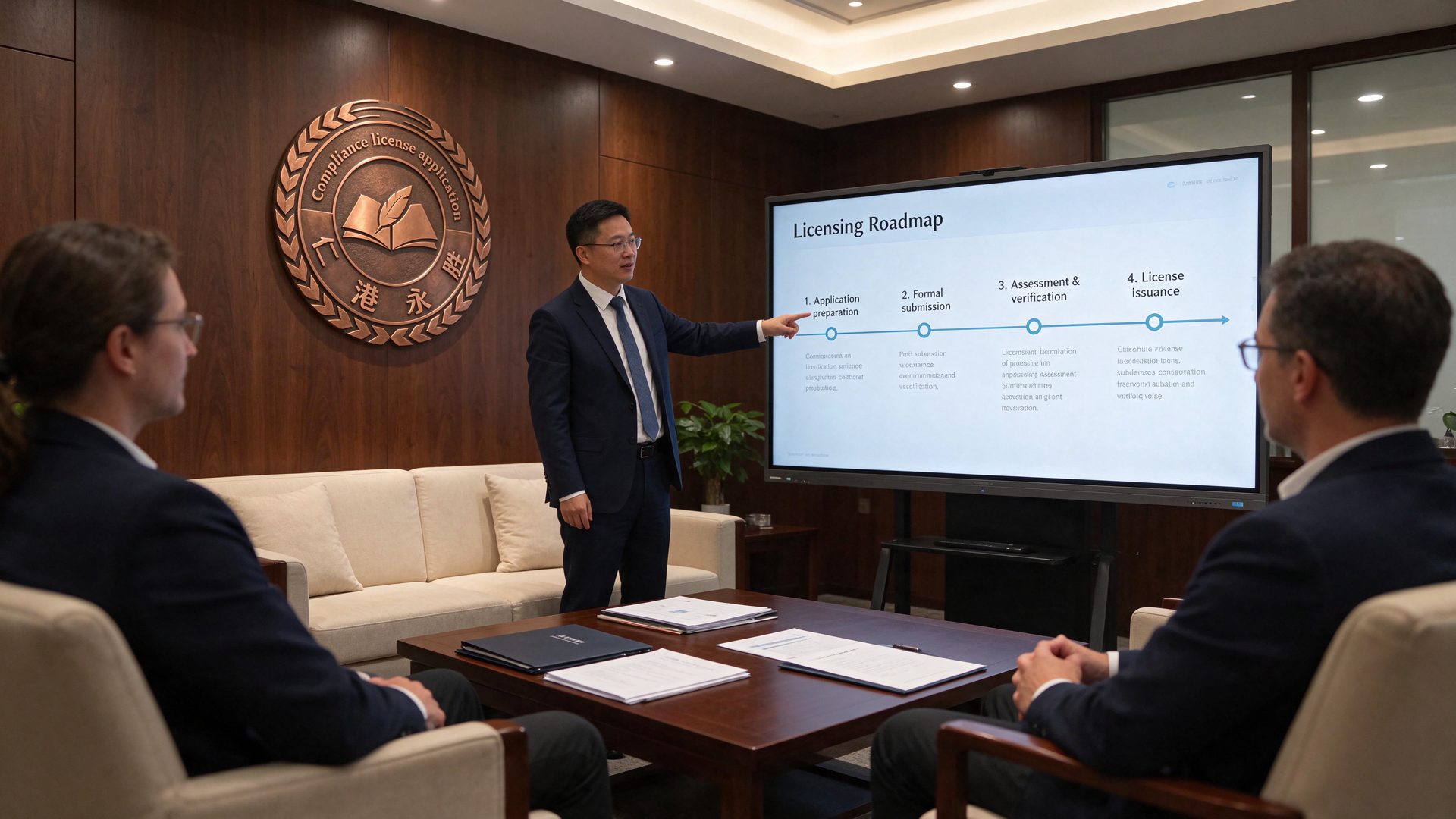
RGYS
Tell us about your project
Tell us about your project · Free Assessment
Success is displayed only after receipt has been confirmed by the service provider; if email is temporarily unavailable, please contact us via WhatsApp.