Keywords · KEYWORDSLithuanian Non-Life Insurance LicenceNon-Life InsuranceSolvency IIMotor insuranceLiability insuranceMCR
Non-life Insurance Company Licence
LT-54 · Insurance and Pensions

Non-life Insurance Company Licence

Non-Life Insurance Undertaking

Covers the authorisation of Lithuanian insurers in non-life classes such as property, liability, motor, credit and assistance insurance, and the Solvency II supervisory framework.

Available on application · Category and capital requirements must be justified on a case-by-case basisLicensing authority: Bank of Lithuania (LB)Prioritisation of market entry
Share capital
€1,000,000 paid-up in cash
MCR absolute minimum
€2,700,000 or €4,000,000
Statutory review period
6 months
State fee
€2,904
Legal Basis · LEGAL BASIS
  • Lithuanian Law on Insurance
  • Solvency II Directive 2009/138/EC
  • Commission Delegated Regulation (EU) 2015/35 and applicable implementing technical standards
  • Lithuanian Law on Companies and Law on the Prevention of Money Laundering and Terrorist Financing
Key Summary · AT A GLANCE
Capital: LB's insurance company authorisation guide states that registered capital must be at least €1,000,000 and shares must be fully paid up in cash. Ongoing capital requirements cannot be planned solely by reference to this figure: Article 129 of Solvency II sets the absolute floor for the non-life MCR at €2,700,000 in most cases; where all or some of the risks in Classes 10 to 15 of Annex I are underwritten, the MCR must be at least €4,000,000. The SCR must also be covered.
Time: The statutory decision period is 6 months from submission of a complete application; LB first conducts a completeness check taking approximately 5 working days. After supplementary information is submitted, the period is recalculated from the date the required documents and information are received. Concerns about an unlawful source of funds may suspend the period.
State fee: The state fee for an insurance company licence is €2,904. It should be paid into the account designated by STI before the application is submitted, and proof of payment should be provided; the annual supervisory fee should be confirmed separately in accordance with the latest LB requirements.
EU Passporting: Lithuanian non-life insurance authorisation allows entry into the EEA market within the approved scope of business through the Solvency II passporting mechanism. However, motor third-party liability insurance, consumer protection, claims representatives and host-state rules on the general good must still be addressed in each country.
01

Scope of permissions and business boundaries

Permitted Activities & Boundaries

A non-life insurance company underwrites risks other than life, including property, liability, health, transport, credit and assistance. The scope of authorisation must align with the business plan, reserving methodology, reinsurance arrangements, claims-handling capability and capital model; a broad label cannot be used to cover categories that have not been approved.

CategoryEnglish nameChinese scope
1AccidentAccident Insurance
2SicknessSickness and health insurance
3Land VehiclesLand motor vehicle insurance
4Railway Rolling StockRailway Vehicle Insurance
5AircraftAircraft insurance
6ShipsMarine insurance
7Goods in TransitCargo Transport Insurance
8Fire and Natural ForcesFire and Natural Disaster Insurance
9Other Damage to PropertyOther Property Damage Insurance
10Motor Vehicle LiabilityMotor third-party liability insurance
11Aircraft LiabilityAviation liability insurance
12Liability for ShipsMarine liability insurance
13General LiabilityGeneral liability insurance
14CreditCredit Insurance
15SuretyshipMaintain insurance cover.
16Miscellaneous Financial LossOther Financial Loss Insurance
17Legal ExpensesLegal expenses insurance
18AssistanceAssistance insurance
Non-life risk classes are listed in Part A of Annex I to Solvency II.

02

Applicable scenarios and advantages

Use Cases & Advantages

A non-life insurance licence is suitable for building a product portfolio around clearly defined risk classes, such as property, motor, liability, transport or commercial risk cover. When selecting classes, consider MCR tiers, claims networks, reinsurance and the cost of cross-border services together.

Product coverage
Combine property, liability, transport, credit and assistance business across the 18 approved classes
Capital Can Be Planned
Determine the MCR and SCR models based on whether Classes 10 to 15 are involved and the actual risk profile
EEA Passporting
Can expand cross-border services under the Solvency II notification mechanism
Business can be structured in tiers
Apply first for a clearly defined category, then seek an extension based on reserves, claims-handling and capital capacity
03

Application and eligibility requirements

Eligibility & Entry Conditions

The applicant must demonstrate that it is prepared not merely to register a company, but to carry out full insurance operations, including underwriting, pricing, reserving, claims handling and consumer protection. LB will assess the risk categories and method of operation alongside the applicant's capital, governance and experience.

  • Specify the non-life insurance classes for which you are applying, your target customers, distribution channels, geographical scope and projected premiums.
  • Submit the underwriting policy, pricing methodology, claims handling procedures, technical provisions, reinsurance and catastrophe risk arrangements.
  • Demonstrate that capital has been fully paid up in cash, that its source is lawful and that it is commensurate with shareholders' financial capacity and the scale of the business.
  • Establish systems for compliance, risk, actuarial services, internal audit, AML/CTF, IT security, business continuity and complaints management.
  • Explains how product governance, fair sales and claims services cover different Member States and consumer types.
04

Shareholders, directors and compliance staff

Shareholders, Directors & Key Persons

Staffing for key non-life insurance roles should reflect underwriting and claims risks, rather than copying a life insurance or banking template. LB separately assesses the competence and independence of directors, senior executives and key functions such as actuarial, risk, compliance, internal audit and claims.

  • Submit fitness and propriety questionnaires, CVs, qualifications, experience and reputation materials for members of the management body and key function holders.
  • Disclose holders of approximately 10% of the capital or voting rights, or those able to exert significant influence, and the UBO.
  • Establish a pre-transaction approval and change-of-shareholder control checklist for subsequent qualifying holding increases, such as 20%, 30% and 50%.
  • Ensure that underwriting, claims, actuarial, risk and compliance functions have clear mandates, contingency arrangements and controls for conflicts of interest.
  • When proposing a change of director or key function holder, first notify LB or obtain its non-objection in accordance with the applicable procedures.
05

Capital and financial requirements

Capital & Financial Requirements
Capital ItemsVerify figures or rulesApplicable notes
Share capitalAt least €1,000,000, fully paid up in cashEstablishment threshold in LB's insurance company authorisation guide
General non-life MCR€2,700,000Does not concern the absolute minimum under Article 129 where the relevant risks in categories 10 to 15 are not involved.
MCR for Classes 10–15 risksNot less than €4,000,000For example, motor third-party liability, aviation liability, maritime liability, general liability, credit and suretyship
SCR and own fundsCalculated according to risk and maintained on an ongoing basisRisks relating to reserves, premiums, catastrophe, market, credit, operations and reinsurance must be covered
MCR tiers are not quotations for all products and cannot replace product-by-product actuarial and prudential capital calculations.
Category and capital
Choosing classes 10 to 15 directly affects the assessment of the absolute minimum MCR, but actual capital requirements are usually also affected by the SCR, business growth, catastrophe exposure, reinsurance quality and any capital add-ons imposed by LB.
06

Office address and substantive operations

Office & Local Substance

A non-life insurance company needs effective local underwriting, claims-handling and risk-management substance. If its business relies on outsourced claims networks or cross-border service providers, it should demonstrate that management can monitor service quality, data and consumer outcomes.

  • Maintain a registered office in Lithuania, regulatory contacts and the ability to retain insurance and claims records.
  • Underwriting, reinsurance, investment and risk decisions are made by management locally or within an organisation that can be effectively supervised by the LB.
  • Assign claims, actuarial, risk, compliance, internal audit, AML, IT and business continuity responsibilities, with cover in place.
  • Conduct due diligence, manage contracts and audits, and maintain exit arrangements for claims handling, customer service, cloud services, data processing and other critical outsourcing.
07

Required information and documents

Required Documents

Organise the evidence by application category, covering risk, products, capital and operations. In particular, clearly set out liability risks and claims representative arrangements for classes 10 to 15.

  • Insurance company authorisation application form and proof of legal entity registration
  • Articles of association, instrument of incorporation and shareholding structure
  • List of proposed non-life insurance classes and products to be underwritten
  • Business plan, market analysis, and description of customers and distribution channels
  • Underwriting guidelines, pricing models and risk acceptance authority
  • Claims policy, claims network and service standards
  • Technical documents for calculating technical provisions, SCR, MCR and own funds
  • Evidence of share capital paid up in cash, organisational expenses and source of funds
  • Information on shareholders, controllers, participating undertakings, UBOs and close links
  • Documents concerning the Board of Directors, Supervisory Board, administrative manager and key function holders
  • Reinsurance plan, reinsurance contract framework and concentration analysis
  • Investment policies, asset-liability management and liquidity plans
  • Risk Management, Compliance, Internal Audit, Actuarial and Product Governance Policies
  • AML/CTF, sanctions screening, customer identification and fraud risk controls
  • IT security, data protection, business continuity and disaster recovery plans
  • EEA claims representative details applicable to Class 10 motor third-party liability and other relevant business
  • Proof of payment of the €2,904 state fee
08

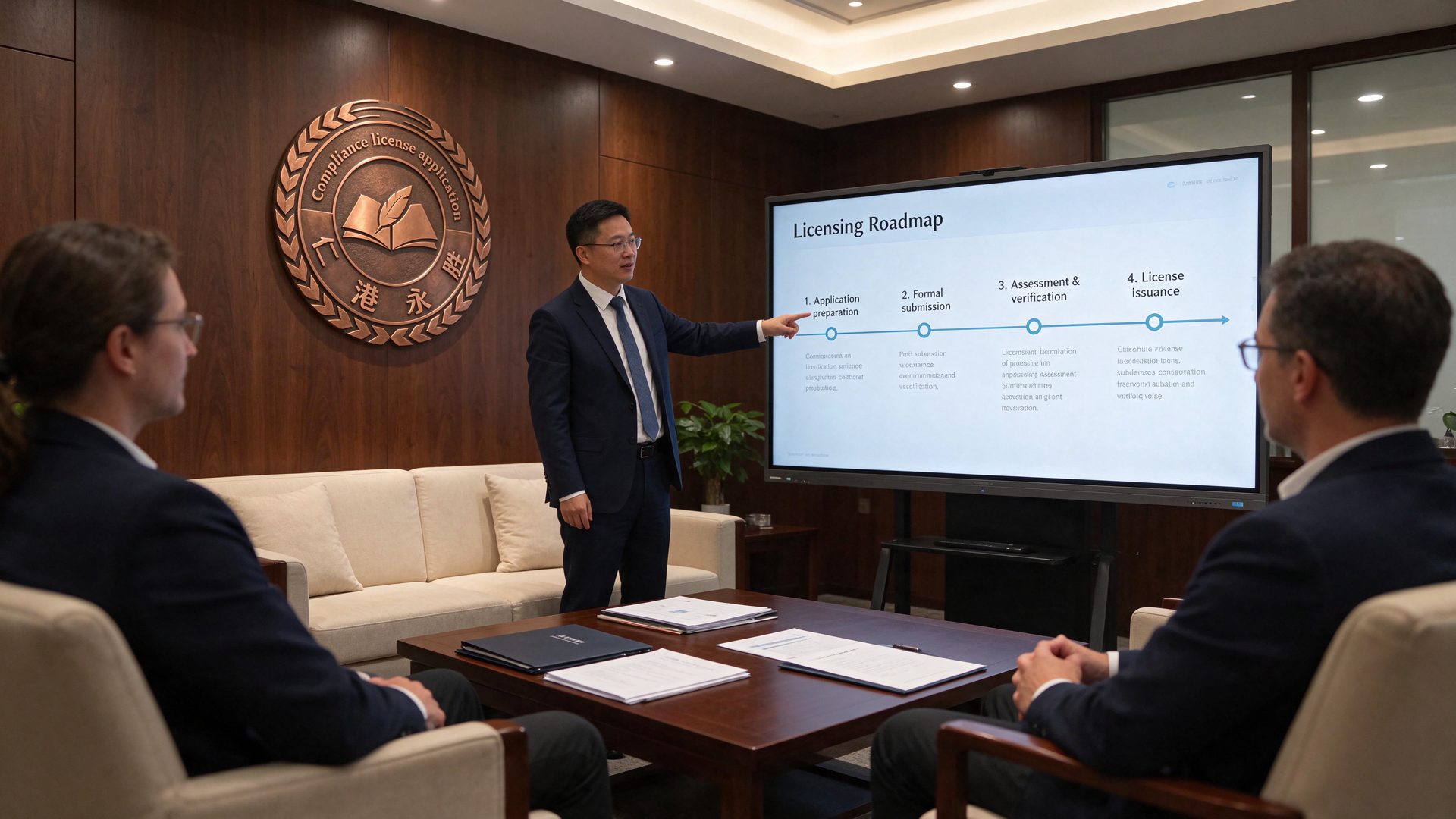
Application and process

Application Process
01
Determine the category and model
Decide first on the 18 classes of risk, territories, products and claims model to be covered, and whether Classes 10 to 15 are involved.
02
Pre-application meeting
Explain the category, capital model, shareholders and key function arrangements to LB, and confirm the application checklist and regulatory focus areas.
03
Complete local preparations
Establish arrangements for the entity, offices, underwriting and claims systems, personnel and outsourcing management.
04
Submit the complete application
Pay the €2,904 state fee and submit the business plan, capital, shareholder, governance and risk documents.
05
Formal check
The Bank of Lithuania (LB) usually checks within approximately 5 working days whether the documents are complete before proceeding to substantive assessment.
06
Further information and review
Respond to the LB's questions about classes, technical provisions, reinsurance, management, IT, consumer protection and sources of funds.
07
Authorisation and passport
After the decision, complete registration, operational launch and any required EEA cross-border notifications for the approved categories.
Important considerations
The non-life product classes, capital and claims-handling capacity must be aligned. Applying for overly broad classes first and relying on supplementary documents to explain them usually increases review complexity and the risk of inconsistencies in the business plan.
09

Timeline and key milestones

Timeline & Milestones
MilestonesBasis for the timelineKey Work
Pre-applicationAs arranged for the projectDetermine the scope of the 18 classes, capital model, reinsurance and local substance
Formal completeness checkApproximately 5 working daysLB confirms whether the necessary documents have been submitted
Review of complete application documents6-month statutory decision periodCalculated from receipt of all required documents and information
Supplementary-document stageRecalculate or extend the timeframe following requests for additional informationCapital, provisions, liability risks and personnel information often require clarification
Launch and ExpansionSubject to conditions after authorisationComplete system testing, reporting, claims handling and cross-border notifications
The statutory timeframe does not mean that the project is guaranteed to be approved.
Practical recommendations
For motor third-party liability or other Class 10–15 business, prepare evidence on claims representatives, liability risks, reinsurance and the MCR at an early stage to avoid changing the scope of the application later.
10

Acquisitions and Material Changes

Acquisition & Material Changes

A non-life insurance licence is likewise attached to a licensed insurance legal entity and cannot be transferred as a standalone asset. Before acquiring shares or control, regulatory due diligence should cover policy liabilities, technical provisions, reinsurance, outstanding claims, complaints and capital shortfalls. Qualifying holdings and management changes should also be addressed in advance.

  • Review each authorised non-life class, policy portfolio, technical provisions, outstanding claims, reinsurance and material risk concentrations.
  • Before acquiring or increasing a qualifying holding, notify the LB and await approval or confirmation of no objection; use 10%, 20%, 30%, 50% and significant influence as transaction control points.
  • Check the buyer's source of funds, UBO, sanctions exposure, close links and group regulatory arrangements; do not rely on post-completion notification as a substitute for prior procedures.
  • New directors, chief executives, actuaries and heads of risk, compliance or internal audit should submit suitability information under the applicable procedure and obtain any required non-objection.
  • After completion, promptly update the business plan, capital model, governance, outsourcing, claims representatives and EEA passporting notifications.
11

Ongoing maintenance and compliance

Ongoing Compliance & Maintenance

Non-life insurance companies must continuously manage frequently changing premium, claims, catastrophe and reinsurance risks. Under Solvency II, LB's supervision focuses on capital quality, technical provisions, risk management, investments and fair treatment of consumers.

  • Regularly calculate the SCR, MCR, own funds, technical provisions and reinsurance recoverables.
  • Implement ORSA, stress testing, catastrophe exposure, liability risk, liquidity and asset-liability management monitoring.
  • Maintain records of underwriting authority, claims quality, product governance, complaints and sales conduct.
  • Submit regulatory returns, financial information, solvency and financial condition disclosures, and audit materials in accordance with applicable rules.
  • Notify or obtain approval for material outsourcing, expansion into new business categories, changes to capital or control structures, and changes to key personnel.
12

Application status

Application Availability

The authorisation process for non-life insurance companies is currently open to new applications, and the LB also encourages applicants to discuss their proposed classes of business and documentation before applying. The Newcomer Programme or pre-application discussions do not replace authorisation, and in particular do not replace the Solvency II review of capital, technical provisions and governance.

Current status
Available on application for a new entity or the authorisation of an eligible existing legal entity
Key Application Considerations
First pin down the 18 classes of risk, scope of cover, claims-handling capacity and reinsurance arrangements.
Capital Reminder
Share capital of €1m is not equivalent to MCR; the absolute minimum MCR for Classes 10 to 15 is €4m
Pre-application engagement
We recommend clarifying the scope of the application through a pre-application meeting with LB or the Newcomer Programme
Tang Shangyong (Drew), Business Manager
Drew's Note Drew's Note
Drew's Note: For non-life insurance projects, do not start with "which products can we sell?" Instead, work backwards from the risk classes and their capital implications. Classes 10 to 15 raise the absolute minimum MCR to €4,000,000; motor and liability insurance also involve claims representatives, reinsurance and cross-border consumer rules. The more classes involved, the greater the substance required in reserves, systems and compliance.
Tang Shangyong (Drew) · Business Manager, Rengangyongsheng (Hong Kong) Limited
FAQ

Frequently Asked Questions About This Licence

Frequently Asked Questions
Q01Does a non-life insurance company need only €1,000,000 in registered capital?+
No. The €1,000,000 specified in LB guidance is the minimum share capital. Solvency II also requires ongoing coverage of the SCR and MCR. For general non-life insurance, the absolute minimum MCR is €2,700,000, rising to at least €4,000,000 for risks in classes 10 to 15.
Q02What business can a non-life insurance licence cover?+
Solvency II Annex I, Part A lists 18 classes, ranging from accident, sickness, motor and property to liability, credit, suretyship, legal expenses and assistance. Applicants may underwrite only within the scope of their authorisation; adding classes generally requires an application to extend it.
Q03From when does the six-month period for an application for a non-life insurance licence begin?+
LB's statutory decision period runs from the point at which the application and all necessary documents and information have been received. The formal check usually takes around 5 working days; if LB requests further documents, the period will be recalculated from, or otherwise affected by, the receipt of the necessary supplementary information.
Q04What should you check most carefully when acquiring a non-life insurer?+
Check the licence category, technical provisions, outstanding claims, reinsurance, SCR/MCR, complaints, regulatory measures and key outsourcing arrangements. Transactions involving shares or a change of control also require prior procedures for qualifying holdings and assessment of the fitness and propriety of directors and key function holders.
Tang Shangyong (Drew)This article is by Rengangyongsheng (Hong Kong) Limited Prepared by, and explained by Tang Shangyong (Drew) Professional guidance from a Business Manager· Information updated: November 2026

Enquire about Non-Life Insurer

Book a Free Assessment
Tell us about your business model, target markets and shareholders. Drew's team will advise whether a new application or acquisition is more suitable, how to structure your capital and staffing, and the expected timeframe and budget.
RGYS advisory meeting
RGYS
Tell us about your project
Tell us about your project · Free Assessment
Success is displayed only after receipt has been confirmed by the service provider; if email is temporarily unavailable, please contact us via WhatsApp.