Keywords · KEYWORDSLithuanian Bank BranchesEU passportThird-country bank branchRepresentative officeCRD VIBank notification
Bank Branch and Foreign Bank Representative Office Status (EU Passport / Third-Country Branch / Representative Office)
BRANCH · Banks and Credit Institutions

Bank Branch and Foreign Bank Representative Office Status (EU Passport / Third-Country Branch / Representative Office)

EU Bank Branch, Third-Country Bank Branch and Foreign Bank Representative Office

Covers EEA bank passporting notifications, authorisation of third-country bank branches and foreign bank representative offices; these are not the same as a Lithuanian banking licence.

Notification/authorisation/registration may coexist · Depends on the institution's originLicensing authority: The home-state authority of the EEA parent bank and the Bank of Lithuania (LB); third-country branches are authorised and supervised by the LB under applicable law.
EU/EEA Market Entry Routes
Passporting notification
Third-country branch
LB authorisation route
Representative office permissions
Must not accept deposits
CRD VI trends
Harmonised Authorisation and Reporting
Legal Basis · LEGAL BASIS
  • CRD/SSM Notification Rules for Cross-Border Services and Branches in the EEA
  • Law on Banks of Lithuania and related rules on branches of foreign banks
  • Directive (EU) 2024/1619 (CRD VI): new framework for third-country branches
  • Law on Companies of the Republic of Lithuania and rules on the registration of branches and representative offices
  • Applicable AML/CTF, deposit insurance, consumer protection and banking prudential rules
Key Summary · AT A GLANCE
Capital: There is no uniform Lithuanian minimum capital requirement for EU/EEA branch notifications; prudential requirements for third-country branches are determined by category, risk and Lithuanian transposition rules; representative offices must not accept deposits or conduct banking business, and any capital requirements must be confirmed on a case-by-case basis.
Time: EU/EEA branches generally follow the home-state competent authority notification process; third-country branches must follow the LB authorisation procedure; representative offices follow the relevant registration/approval route. Specific timeframes and fees are subject to current legislation and confirmation by the competent authority.
State fee: There is no single Lithuanian state fee applicable to all three qualifications in this combination. Check the latest fees separately for EU passporting notifications, third-country branch authorisations and representative office registrations.
EU Passporting: An EU/EEA bank may provide services in Lithuania under its home-state authorisation and passporting notification; a third-country bank cannot treat its home-state licence as an EEA passport, and a representative office has no passporting rights to conduct banking business.
01

Scope of permissions and business boundaries

Permitted Activities & Boundaries

A bank branch is not a single licence category. This entry compares three common routes to market: passporting notification by an EEA bank, a branch established in Lithuania by a third-country bank, and a representative office of a foreign bank conducting only liaison and market-representation activities.

TypeEntry MechanismPermitted activitiesRegulatory Priorities
EU/EEA Bank BranchPassporting notification by the home-country competent authorityProvide approved banking services in Lithuania under the parent bank's licenceHome-country prudential supervision; LB is responsible for host-country matters
Third-country bank branchApply to LB and the relevant competent authority for authorisationConduct banking business within the scope of the authorisationLocal authorisation, risk categories, governance, reporting and cooperation with the parent bank's supervisor
Foreign bank representative officeRegistration/approval routeNon-operational activities such as liaison, information and marketingMust not accept deposits, lend or conduct banking services in the name of a representative office
Key differences between the three entry routes
Do not conflate the concepts
A representative office is not a branch, a third-country branch is not an EU passported branch, and an EU bank notification does not amount to obtaining a new Lithuanian domestic banking licence. The institution's identity must be accurately stated to clients and in contracts and marketing materials.

02

Applicable scenarios and advantages

Use Cases & Advantages

A branch model can leverage the parent bank's capital, systems, brand and risk-management framework, avoiding the need to establish a separate Lithuanian subsidiary. A representative office is suitable for preliminary liaison and market research, but not for directly serving deposit and lending customers. The first step is to determine whether the business can actually be conducted by a branch.

  • EU/EEA Branch: Enter Lithuania Using the Home-State Banking Licence and Passporting Mechanism
  • Third-country branch: establishing a directly supervised operational presence in Lithuania
  • Representative office: test the market, establish contacts and build client relationships with limited business permissions
  • Branch model: Reuse the parent bank's technology, risk, compliance and treasury systems, but remain subject to host-state rules
  • Representative office model: start-up costs may be lower, but it cannot replace banking authorisation
Overview
If the aim is to accept deposits from or lend to Lithuanian residents, a representative office is generally unsuitable. If the parent bank is not in the EEA, its licence cannot be used directly for EU passporting.
03

Application and eligibility requirements

Eligibility & Entry Conditions

EU/EEA branches primarily rely on notification by the home-state competent authority and the scope of the parent bank's authorisation. A third-country branch must provide information on the parent bank, business, governance, capital, risk, AML, IT and regulatory cooperation. A representative office must strictly limit its activities to non-operational matters.

  • The parent bank holds a valid licence in its place of registration and is in good regulatory standing
  • Clearly explain the activities, customers, products, personnel and flow of funds in Lithuania
  • Clarify responsibilities, reporting lines, risk transfers and service agreements between the parent bank and its branches
  • A third-country branch can demonstrate that the competent authorities are able to exchange information and cooperate effectively in supervision
  • The representative office undertakes not to accept deposits, grant loans, sign banking service contracts or handle client funds
Important considerations
A branch cannot operate simply by translating the parent bank's website into Chinese. Customer protection, AML, consumer communications, data, complaints and reporting arrangements for activities in Lithuania must be practical and capable of withstanding regulatory inspection.
04

Shareholders, directors and compliance staff

Shareholders, Directors & Key Persons

The branch's practical management and arrangements for its responsible persons depend on the parent bank's country of origin, the branch category, the scale of its business and applicable law. EU/EEA branches must meet the host state's notification and documentation requirements; branches from third countries face more explicit requirements for effective local management, internal controls and regulatory liaison.

Personnel/institutionEU/EEA BranchThird-country branchRepresentative office
Parent bank managementAssume overall responsibility for the parent bankProvide suitability and regulatory informationOversee the representative office
Lithuanian Responsible PersonConfigure according to notification and business requirementsCRD VI is moving towards requiring at least two individuals effectively directing the business; applicability is subject to local transposition.Responsible only for liaison and representative activities
Risk/Compliance/AMLMay be supported by a parent bank, but must remain subject to supervisionLocal controls must be configured according to risk and categoryClient business should not be conducted through a representative office
Regulatory CoordinationJoint communication between the home country and LBLB cooperates with third-country competent authoritiesLiaise in accordance with registration and regulatory requirements
Personnel and lines of responsibility
Overview
The CRD VI requirements for at least two persons effectively directing the business, internal controls and reporting are part of the regulatory trend for third-country branches. As Lithuania's transposition status is still to be monitored, actual appointments and effective dates should be confirmed against the latest local LB rules.
05

Capital and financial requirements

Capital & Financial Requirements
TypeCapital AssessmentPractical considerations
EU/EEA BranchUsually, there is no minimum initial capital requirement equivalent to that for a Lithuanian subsidiary.The parent bank's capital, branch activities and host-country regulatory requirements continue to apply
Third-country branchAs determined by the CRD VI category and local rulesMay involve requirements relating to liquidity, assets, collateral, internal controls and reporting
Representative officeNo capital requirement in the sense applicable to banking businessProof of capital does not mean that a representative office may accept deposits or lend.
Parent bank supportExecutable resource and accountability arrangements must be in placeCannot rely solely on a group undertaking without actual resources at the branch
Capital assessment for branches and representative offices
EU/EEA Branch
Passporting notification; no uniform minimum capital requirement for a Lithuanian subsidiary applies
Third-country branch
Determine according to the authorisation category, risk and national transposition rules
Representative office
Must not conduct banking business; confirm capital requirements on a case-by-case basis
Deposit insurance
Assess by reference to the branch's home institution and the applicable deposit guarantee scheme.
Important considerations
Lithuanian domestic bank capital figures of €1,000,000 or €5,000,000 cannot be applied to every branch. Branch capital, parent-bank support, liquidity and deposit insurance must be assessed in light of the home country, business and authorisation category.
06

Office address and substantive operations

Office & Local Substance

A branch should have a substantive local presence in Lithuania proportionate to its activities, including premises, a responsible person, staff, customer service, records, complaints handling, AML, IT and arrangements for regulatory access. A representative office should also have genuine liaison capabilities, but its activities must remain within the scope permitted for a non-operating office.

  • A branch has an identifiable office in Lithuania and a local point of contact for customers and regulators
  • Document in writing the authorisation, reporting, risk and funds processes between the parent bank and branch
  • Client contracts, disclosures, complaints and language arrangements comply with host-country requirements
  • Regulators must be able to access key systems, outsourcing arrangements, cloud services, data and business continuity arrangements
  • Staff, websites and promotional materials of the representative office do not imply that it can accept deposits or provide loans
Red lines for representative offices
A representative office may conduct market research, make contacts and exchange information, but it may not accept deposits, grant loans, enter into banking service contracts or collect client funds in its own name. Activities that exceed these limits may be treated as unauthorised business.
07

Required information and documents

Required Documents
  • Parent bank business licence, articles of association and evidence of regulatory status
  • Notification by the home-country competent authority or application documents for authorisation of a third-country branch
  • Information on the group structure, parent bank shareholders, UBOs and control chain
  • Business Plan and Three-Year Forecast for a Lithuanian Branch/Representative Office
  • Description of the proposed products, clients, regions and flows of funds
  • Branch statutes, appointment of responsible persons, authorisations and reporting lines
  • Information on the parent bank's capital, liquidity, guarantees and resource support
  • Risk Management, Internal Controls, AML/CTF, KYC and Sanctions Procedures
  • IT architecture, data flows, cybersecurity, DORA and business continuity arrangements
  • Client contracts, disclosures, complaints, consumer protection and language arrangements
  • Outsourcing, group services, audit and access to regulatory information agreements
  • Lithuanian Office, Staffing, Registration, Insurance and Deposit Insurance Information
CategoryKey documents
EU/EEA BranchHome-country notification, the authorised scope of the parent bank, service list and host-country contact details
Third-country branchInformation on the parent bank's supervisory cooperation, risk classification, governance, liquidity and reporting
Representative officeDescription of non-operating activities, contact responsibilities, promotional boundaries and commitments not to conduct prohibited business
Common to all three typesInformation on group structure, responsible persons, AML, IT, premises and customer protection
Additional documents required for the relevant category
Overview
The documentation package for a third-country branch will place increasing emphasis on quantitative and qualitative data at parent-bank level. It is advisable to align the Lithuanian branch with the parent bank's regulatory reporting, risk policies and internal audit materials from the outset.
08

Application and process

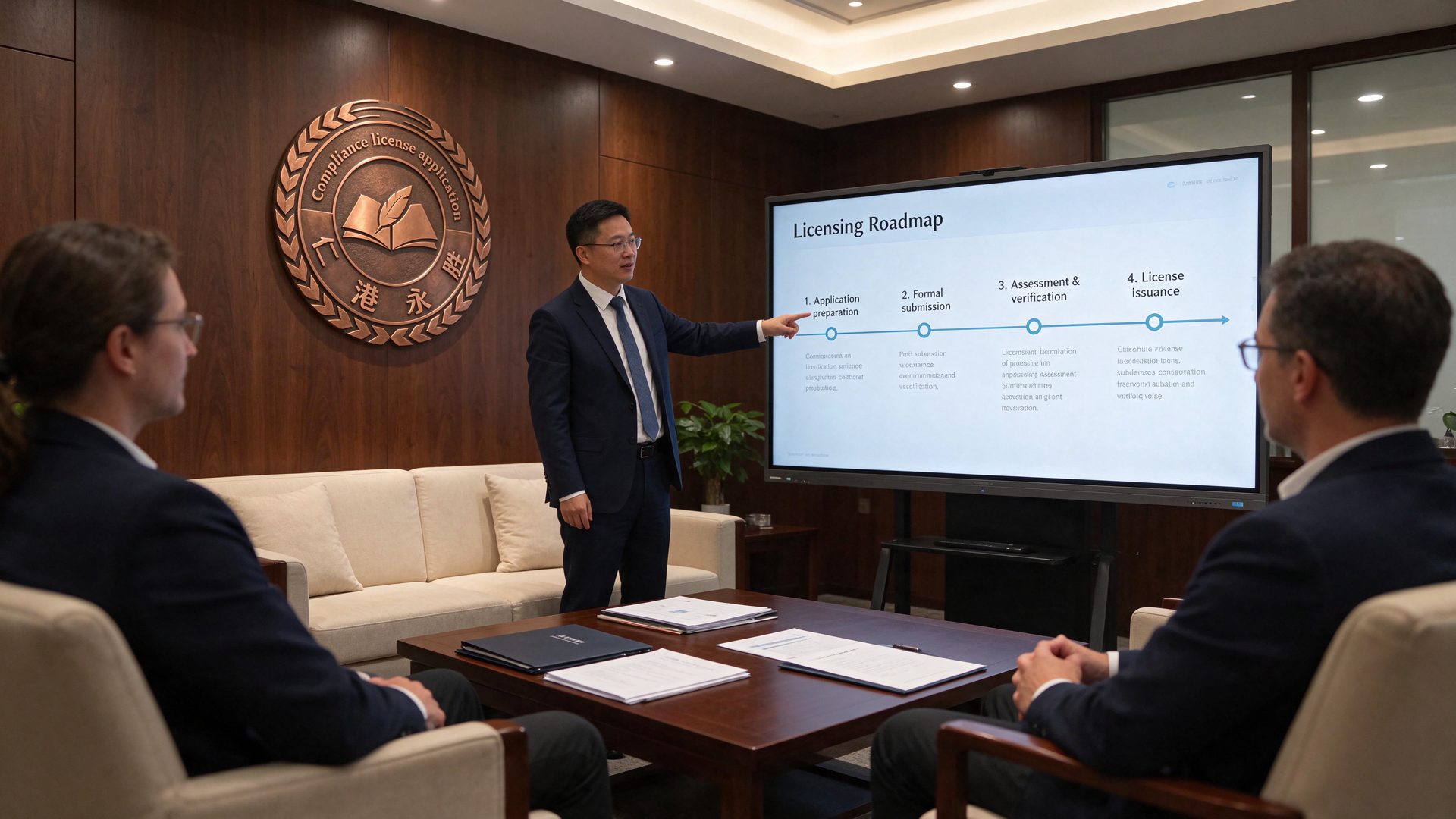
Application Process
01
Determine the source and activity
First confirm whether the parent bank is in the EEA or a third country, then distinguish between an operating branch and a non-operating representative office.
02
Define the business boundaries
List deposit-taking, lending, payment, customer service, marketing and contracting activities, excluding banking business prohibited for representative offices.
03
Communicate with the home-country competent authority
EU/EEA branches should first submit a home-state passporting notification; branches in third countries should put supervisory cooperation arrangements in place with the parent bank's competent authority.
04
Engage with LB at an early stage
Confirm the branch/representative office category, responsible person, capital, deposit guarantee, client protection and local registration requirements.
05
Prepare the application or notification pack
Compile group, business, personnel, risk, AML, IT, office, outsourcing and reporting information.
06
Submit and undergo the review
Submit notifications, authorisation applications or registration documents according to the country of origin and category, and respond to queries from LB and the home-country competent authority.
07
Complete local launch preparations
Complete preparations for the office, responsible persons, systems, contracts, disclosures, complaints and regulatory reporting.
08
Continue to monitor CRD VI
Update governance, classification and reporting arrangements for third-country branches in line with Lithuania's transposition and EBA technical standards.
Overview
The procedures for EU/EEA branches and third-country branches cannot be combined into a single timetable. A representative office must not commence business activities and then wait to obtain branch authorisation retrospectively.
09

Timeline and key milestones

Timeline & Milestones
Type/stageTiming assessmentOverview
EU/EEA Passporting NotificationUnder the home-country notification procedureThe home-country competent authority forwards the information to LB; the actual commencement date is confirmed in accordance with the notification and host-country rules
Third-country branch authorisationIn accordance with the LB's statutory procedureParent bank, supervisory cooperation, governance, risk and business review are required
Representative office registration/approvalIn accordance with the applicable registration routeBanking business should not be conducted through a representative office
CRD VI transpositionTransposition deadline: 2026-01-10The European Commission's page shows that Lithuania remained partially transposed as at 2026-11
Third-country branch reportingThe EBA framework is expected to apply to reporting from 2027-03-31Subject to the final technical standards, Lithuanian transposition and regulatory notifications
Branch project timeline

A public statement by LB in 2019 concerning a branch of an Estonian bank noted that, after the home-state competent authority had forwarded the application, LB undertook to make a decision within two months. This was a case-specific statement at the time and should not be treated as a uniform current timeframe for all EU branches.

CRD VI trend note
CRD VI is moving third-country branches away from the divergent regimes of individual Member States towards a harmonised framework for authorisation, risk classification, at least two effective managers, internal controls, parent undertaking information and supervisory reporting. As Lithuania is still in the transposition process, the latest local implementing text must be checked when applying.
10

Acquisitions and Material Changes

Acquisition & Material Changes

A branch or representative office is not a banking licence that can be sold separately from the parent bank. A transaction usually involves the parent bank's shareholding, group restructuring, branch assets and liabilities, or a change to the registered entity. It is essential to determine first whether notification to or approval from the home-state competent authority, LB, the ECB, the deposit insurance scheme or another competent authority is required.

  • Changes in shareholding control of an EU/EEA parent bank are handled under the home state's qualifying holding and passporting rules
  • A change of control of the third-country parent bank may trigger branch authorisation requirements, supervisory cooperation and reassessment
  • Changes to a branch's responsible person, actual management, key functions and reporting lines must be notified or approved in advance, as required by applicable rules
  • The branch's business scope, registered address, customer contracts, outsourcing, parent-bank support and changes to deposit insurance should be assessed first.
  • A representative office cannot become an operating branch simply by amending its registration; a new authorisation or notification route is usually required
Ask the regulator first about the transaction structure
Even if the buyer obtains control of the parent bank or group, this does not automatically confer the right to continue operating in Lithuania. Before completion, check the parent bank's regulatory status, branch authorisation, classification as a third-country branch and the local implementation of CRD VI.
11

Ongoing maintenance and compliance

Ongoing Compliance & Maintenance

A branch must continuously meet host-state obligations relating to consumer protection, AML/CTF, regulatory reporting, IT security, business continuity and complaint handling, while maintaining channels of communication between the parent bank and LB. A representative office must also monitor its activities continuously to ensure they do not cross the boundary into conducting business.

  • Maintain capital, liquidity and risk information according to the country of origin and branch category
  • Promptly report changes to managers, business, address, control by the parent bank and material outsourcing.
  • Maintain regulatory cooperation and information access between the parent bank and LB/third-country supervisory authorities.
  • Prepare the classification and reporting of third-country branches under CRD VI and its national transposition
  • The representative office periodically reviews its website, contracts, sales activities and client communications to ensure they do not imply that it conducts banking business
  • Maintain policies and procedures for client protection, complaints, data, cybersecurity and business continuity
Overview
Future reporting for a third-country branch will cover both financial and regulatory information at branch level and quantitative and qualitative information at parent-bank level. Data governance and interfaces for reporting to the parent bank should be designed in advance.
12

Application status

Application Availability

EU/EEA bank branches usually operate under a passporting notification mechanism; third-country branches may apply for authorisation under Lithuanian implementing rules; foreign bank representative offices may exist only through a non-operational registration/approval route. None of these is a Lithuanian banking licence that any entity can purchase directly.

  • EU/EEA: Apply to the home-state competent authority, which then notifies LB
  • Third country: centred on LB authorisation, supervisory cooperation with the parent bank and local governance
  • Representative office: only liaison and representative functions are available; deposit-taking, lending and client-fund activities are not permitted
  • CRD VI: Ongoing monitoring of Lithuania's partial transposition, EBA guidelines and 2027 reporting requirements
  • New application: first identify the institution's origin and permitted activities, then choose the notification, authorisation or representative office route
Practical recommendations
Drew's Note: The first step in a branch proposal is not renting an office, but confirming the home country of the parent bank and each activity it intends to carry out. The regulatory frameworks for EEA passporting, third-country branches and representative offices are entirely different. Confusing them often leads to simultaneous errors concerning deposit protection, responsible individuals, customer contracts and launch dates.
Tang Shangyong (Drew), Business Manager
Drew's Note Drew's Note
Drew's Note: Bank branch projects should first be divided into three categories. EEA banks use a home-state passporting notification; third-country banks must contend with local authorisation and the new CRD VI framework; and representative offices may only conduct liaison activities and cannot take deposits or lend. Lithuania is currently still in the process of partially transposing CRD VI, so the requirements for third-country branches concerning personnel, classification and reporting should be checked against the latest local implementing rules.
Tang Shangyong (Drew) · Business Manager, Rengangyongsheng (Hong Kong) Limited
FAQ

Frequently Asked Questions About This Licence

Frequently Asked Questions
Q01Does an EU bank need to reapply for a Lithuanian banking licence to open a branch in Lithuania?+
Usually, this does not involve applying for a new Lithuanian banking licence. Instead, the home-state competent authority notifies LB under the EEA passporting rules. The branch must still comply with applicable host-state requirements on consumer protection, AML, reporting and operations. The actual start date depends on the notification procedure and regulatory engagement.
Q02Can a third-country bank operate in Lithuania directly under its home-country licence?+
A third-country parent bank's licence cannot be treated as an EEA passport. A third-country bank will generally need to apply for branch authorisation under Lithuanian rules and the local implementation of CRD VI, and provide information on the parent bank, regulatory cooperation, governance, risk, liquidity and reporting arrangements.
Q03Can a representative office accept deposits or grant loans?+
No. A representative office may only carry out liaison, market research and other non-commercial activities. It cannot take deposits, grant loans, enter into banking service contracts or handle customer funds. Activities beyond this scope may constitute unauthorised business.
Q04What new trends does CRD VI introduce for third-country branches?+
CRD VI introduces a more harmonised authorisation and supervisory framework, including risk classification, at least two persons effectively directing the business, internal controls, supervisory cooperation, and reporting at branch and parent undertaking level. Lithuania's local transposition is still to be monitored; directive-level developments should not be treated as complete national rules currently in force.
Tang Shangyong (Drew)This article is by Rengangyongsheng (Hong Kong) Limited Prepared by, and explained by Tang Shangyong (Drew) Professional guidance from a Business Manager· Information updated: November 2026

Enquire about Bank Branch

Book a Free Assessment
Tell us about your business model, target markets and shareholders. Drew's team will advise whether a new application or acquisition is more suitable, how to structure your capital and staffing, and the expected timeframe and budget.
RGYS advisory meeting
RGYS
Tell us about your project
Tell us about your project · Free Assessment
Success is displayed only after receipt has been confirmed by the service provider; if email is temporarily unavailable, please contact us via WhatsApp.