Keywords · KEYWORDSLithuanian Full-Service BankFull Bank LicenceECBBank of LithuaniaSSMBanking licence
Full Bank Licence
LT-01 · Banks and credit institutions

Full Bank Licence

Lithuania · EU Financial Licensing

For Lithuanian credit institutions authorised to accept deposits from the public and conduct comprehensive banking business, subject to ECB and LB authorisation review under the SSM.

New application · High-bar scrutinyLicensing authority: The European Central Bank (ECB) and the Bank of Lithuania (LB) cooperate within the SSM framework
Minimum initial capital
€5,000,000
Statutory review period
6/12 months
State fee
€4,157
Regulatory Framework
ECB/LB · SSM
Legal Basis · LEGAL BASIS
  • Law on Banks of Lithuania
  • Law on Financial Institutions of Lithuania
  • CRR (Regulation (EU) No 575/2013, including CRR III amendments)
  • CRD IV, CRD VI and the Single Supervisory Mechanism (SSM) rules
  • The Law on Deposit and Liability to Investors Insurance, BRRD and SRM rules
Key Summary · AT A GLANCE
Capital: Minimum initial capital of €5,000,000; the capital actually required may exceed the statutory minimum, depending on the business model, risks and regulatory assessment.
Time: A complete application is usually decided within 6 months; after supplementary information is submitted, the period is recalculated under the applicable rules, and in any event must not exceed 12 months from the initial application.
State fee: State fee €4,157, payable to VMI; ongoing supervision fees, prudential supervision costs and other statutory fees are determined separately under the applicable rules.
EU Passporting: Once bank authorisation has been obtained and notification, organisational and prudential requirements have been met, apply to provide cross-border services or establish a branch in the EEA under CRD/SSM rules; passporting does not confer an automatic right to operate.
01

Scope of permissions and business boundaries

Permitted Activities & Boundaries

A full-service bank is a Lithuanian credit institution that may, within the scope of its authorisation, accept deposits and other repayable funds from non-professional market participants and provide loans and other financial services. The bank must remain accountable for the risks and liabilities arising from these activities.

  • Deposit-taking, lending and other banking and financial services
  • Payment, account, bank card and currency-related services (subject to applicable law and the scope of authorisation)
  • Apply to provide cross-border services or establish a branch under EEA rules
  • Activities outside banking services are limited to those directly related to, or necessary for, the provision of financial services
It is not a general business licence.
A full-service bank licence does not automatically authorise the provision of securities, insurance, investment management or other services subject to specific legislation. Each service must be checked against the Law on Banks, MiFID, the Law on Payments, insurance legislation and the authorisation decision.

02

Applicable scenarios and advantages

Use Cases & Advantages

A full-service bank licence is suited to groups seeking to operate deposits, credit, payments and a broader range of banking products within a single regulated entity. Its business scope is generally broader than that of a specialised bank, but its capital, governance, risk management and reporting costs are also higher.

DimensionFull-service bankSpecialised bankFull EMI
Accept deposits from the publicYesYes, but subject to the limited list under banking lawNot a bank deposit
General bank lendingYesYesIt is not general authority for a bank to lend.
Investment servicesIn accordance with applicable law and the approved scopeMust not provide investment servicesNo. EMI status alone does not permit the direct provision of
Deposit insuranceApplicableApplicableBank deposit protection does not apply
Cross-border within the EEACan passport under CRD rulesCan passport under applicable banking rulesFull EMI passporting under payment/e-money rules
Comparison of business positioning
Overview
If the core requirement is only to issue electronic money and provide payment services, Full EMI may be the more suitable regulatory route. If the business needs to accept deposits and provide bank lending, compare the permitted activity lists for a full-service bank and a specialised bank rather than comparing capital figures alone.
03

Application and eligibility requirements

Eligibility & Entry Conditions

The applicant should establish a legal entity in Lithuania that meets the requirements of the Law on Banks and demonstrate at the time of submission that it has the foundations for safe, sound and sustainable operations. LB will assess the application as a whole, including the business model, customers and products, sources of funds, ownership structure, governance, risk management and IT security.

  • Transparent and verifiable shareholders, UBOs and sources of funds
  • Executable business plans covering at least three years, financial forecasts and stress scenarios
  • Suitable for governance, internal controls, AML/CTF, accounting and business continuity arrangements commensurate with the scale and risk of a bank
  • Lithuanian local substance sufficient to support effective management, oversight and regulatory communication
  • Meet the basic safety and soundness requirements applicable to a bank upon authorisation from the time of application
Capital is not the only entry threshold
LB has expressly stated that the complexity, scale and risk of a business may lead the regulator to require capital in excess of €5,000,000. The statutory minimum capital must not be treated as an approval budget or as the final capital requirement.
04

Shareholders, directors and compliance staff

Shareholders, Directors & Key Persons

Shareholders and qualifying shareholders must be of good repute, financially sound and have transparent sources of funds. Bank management must have the reputation, qualifications, experience and sufficient time to fulfil their responsibilities; at least one bank executive must speak Lithuanian.

FunctionsReference configurationKey areas of review
Board of DirectorsAt least 3Collective suitability, independent judgement and risk oversight
Supervisory BoardAt least 3Oversight, committee arrangements and conflicts of interest
Administrative officer and deputy2 peopleActual management and decision-making capability; at least one Lithuanian speaker
Internal Audit, CTO, CLOOne of each as a referenceSegregation of duties, independence and resources
CRO, CFO, Compliance/AMLConfigure according to scaleCannot use nominal part-time appointments to conceal gaps in key functions
Reference organisational model (no legally prescribed headcount)
Overview
LB's model of around 10 people is an indicative minimum organisational model, not a fixed staffing requirement set by law. The scale of the business, its geographical reach, product complexity and outsourcing arrangements may require additional staff; any specific approval or non-objection procedure for heads of key functions should be checked against the latest rules.
05

Capital and financial requirements

Capital & Financial Requirements
ProjectsRequirements or points of attentionPractical guidance
Initial capitalNot less than €5,000,000Funds must be lawfully sourced, traceable and available as capital at the application stage
Adequate capitalOngoing compliance with CRR/CRD capital requirementsIncludes regulatory capital, capital buffers and requirements that may be set by the supervisory authority
LiquidityLCR, NSFR and other prudential requirements applyLiquidity risk management, stress testing and contingency funding plans must be in place
Recovery and ResolutionSubject to the BRRD/SRM, MREL and other frameworksSupport recovery plans, resolution information and minimum requirements for own funds and eligible liabilities
Business expansionRegulatory requirements may increase in line with riskNo. €5m should not be used as the final capital budget for banks of every size.
Overview of capital and prudential requirements
Minimum initial capital
€5,000,000
Ongoing prudence
CRR/CRD, LCR, NSFR, capital buffers, MREL, etc.
Deposit insurance
Eligible bank deposits are covered by Lithuania's deposit and investment insurance system.
State fee
€4,157; this is not the annual supervisory fee
Important considerations
LCR, NSFR, MREL and capital buffers are not requirements that can be met once and then considered satisfied permanently. The balance sheet, liquidity reserves, resolvability and stress scenarios should be incorporated into the three-year financial model.
06

Office address and substantive operations

Office & Local Substance

A bank should have a registered office and genuine operational resources in Lithuania available for supervision, management and key control activities. A registered address alone is not sufficient to demonstrate genuine operational capacity.

  • Office and record-keeping arrangements accessible to LB/ECB
  • Staff, systems, cybersecurity and physical security commensurate with the scale of the business
  • Independent risk, compliance, internal audit and financial control capabilities
  • Practical outsourcing, business continuity, disaster recovery and exit arrangements
  • Supervisability of core systems, critical suppliers and data flows
Outsourcing does not mean transferring responsibility
Some functions may be outsourced where permitted by the rules, but the bank must retain sufficient internal controls, expertise and regulatory access rights, and remains responsible for service-provider risks.
07

Required information and documents

Required Documents
  • Licence application form and applicant's legal entity details
  • Articles of Association, Organisational Chart and Group Structure Chart
  • Three-year business plan, products, customers, geographical scope and exit scenarios
  • Documents evidencing initial capital, source of funds and flow of funds
  • Information on shareholders, UBOs, qualifying holdings and the control chain
  • CVs, reputation and suitability information for the Board of Directors, Supervisory Board and administrative manager
  • Organisational structure, staffing plan and allocation of key functions
  • Risk Management Framework, Risk Appetite, Stress Testing and Risk Policies
  • AML/CTF, KYC, sanctions screening and fraud risk control policies
  • Accounting policies, financial reporting, internal audit, compliance and external audit arrangements
  • IT architecture, information security, data governance, DORA and business continuity plans
  • Documents on premises, insurance, handling of client assets/deposits and complaints procedures
Document groupQuestions to answer
Business PlanWhy the business needs a banking identity and whether its growth assumptions are sustainable
Governance and personnelWho makes the decisions in practice, and are the key functions independent and adequately resourced
Funds and capitalWhere the capital comes from, whether it is traceable and whether it is sufficient to support stress scenarios
Technology and operationsCan the system operate securely, and how will failures, outsourcing and exit be handled?
Prudential and complianceHow to meet CRR/CRD, AML, liquidity and reporting requirements
Key documentation considerations
Overview
The LB may request further information during its assessment. Before formal submission, it is advisable to complete the document index, cross-references and checks of data definitions to avoid inconsistencies between the business plan, financial projections and risk policies.
08

Application and process

Application Process
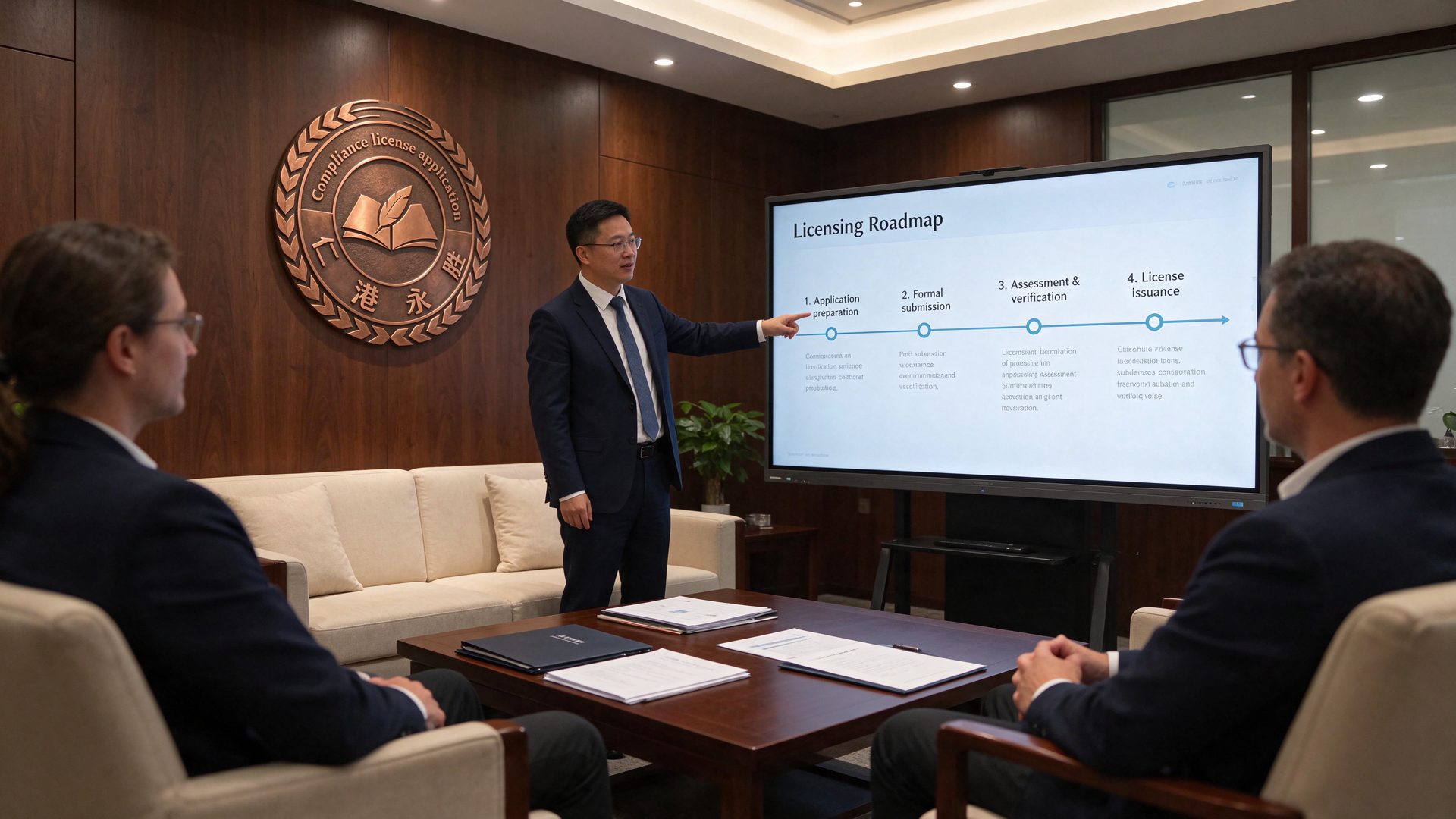
01
Determine the banking model
Clearly define the scope of products, clients, deposits, lending, payment and investment services, and assess whether a full banking licence is genuinely required.
02
Hold preliminary discussions
The business model, risks and scope of materials may be discussed through an LB pre-assessment or the Newcomer Programme.
03
Establish and inject capital
Establish an entity compliant with banking law and verify shareholders, UBOs, source of funds and capital arrangements exceeding €5,000,000.
04
Complete the application pack
Integrate the business plan, governance, staffing, risk, AML, IT, premises, accounting and financial documents.
05
Pay the state fee
Pay the €4,157 state fee to the VMI under the current rules and retain proof of payment.
06
Submit to LB
Submit a banking licence application to LB; LB usually checks formal completeness within 5 working days.
07
Joint ECB/LB assessment
LB and the ECB assess the business model, shareholders, management, capital, risks and operational capabilities under the SSM framework.
08
Further information and response
Submit supplementary information promptly as required, and update affected business plans and forecasts at the same time.
09
Obtain a decision and commence operations
After obtaining a licence, complete the systems, staffing, reporting, deposit insurance and pre-opening requirements before commencing the approved activities.
Overview
The statutory timeframe is the regulatory decision period, not a commitment to a commercial launch date. System testing, reporting registration, contracts, audits, deposit insurance and other operational conditions may still need to be completed before operations begin.
09

Timeline and key milestones

Timeline & Milestones
StageExpected timeframeOverview
Preliminary discussions and finalising the proposed solutionSubject to the projectThe earlier you confirm the business boundaries, the fewer follow-up documents are likely to be required
Formal completeness checkUsually 5 working daysA preliminary check of whether the documents are complete only
Substantive reviewWithin 6 months after the application is completeThe ECB and LB jointly assess the application and may raise questions over several rounds
Recalculation following supplementary documentsApplicable period restarts following further informationMissing documents can affect timelines and the allocation of overall resources
Final limitNo more than 12 months from the initial applicationDoes not mean that every application will use the full period
Preparation after licensingIn accordance with the launch planMeet reporting, systems, staffing and ongoing compliance requirements
Statutory and practical milestones

A full bank project should treat regulatory review, capitalisation, appointments, technology implementation, deposit insurance and commercial launch as separate milestones. Simply interpreting six months as the time needed to obtain a licence and begin operations risks underestimating the preparatory work involved.

Important considerations
Further information, changes to the shareholder structure, material business adjustments or regulatory issues may all affect the actual progress. The specific rules for when the period starts and any circumstances in which it may be suspended are governed by the procedural notice from the LB/ECB and applicable law.
10

Acquisitions and Material Changes

Acquisition & Material Changes

A banking licence cannot be bought or sold separately from the licensed legal entity. An acquisition typically involves acquiring shares in, or control of, a licensed bank. Before the transaction, the scope of the licence, capital shortfalls, regulatory sanctions, the status of deposits and MREL, IT outsourcing and historical compliance issues must be reviewed.

  • In principle, prior notification to and consent from the applicable regulator are required to acquire, increase or reduce a qualifying holding
  • Verify direct and indirect shareholdings, voting rights, control chain, source of funds and acquisition financing
  • Changes to directors, supervisory board members, executive officers and key function holders must be notified in advance or receive non-objection under the applicable rules
  • Changes to the articles of association, registered office, scope of business, control, material outsourcing or business plan may trigger approval or notification requirements
  • Completion of the transaction does not replace the ongoing obligation to meet CRR/CRD, AML, governance and reporting requirements
Assess the regulatory route first
Acquiring a licensed company does not automatically mean that its business can be changed or its management replaced immediately. It is advisable to engage with the LB/ECB before signing binding transaction documents and to make regulatory consent a condition to completion.
11

Ongoing maintenance and compliance

Ongoing Compliance & Maintenance

After licensing, ongoing requirements apply for capital, liquidity, governance, risk management, AML/CTF, accounting, audit, IT security and regulatory reporting. Banks must also maintain recovery plans, resolution information and customer complaint-handling arrangements.

  • Ongoing compliance with CRR/CRD capital adequacy ratios, capital buffers, LCR and NSFR
  • Manage credit, market, operational, liquidity, concentration and climate-related risks
  • Pay deposit insurance-related contributions and cooperate with depositor information disclosure requirements in accordance with applicable rules
  • Maintain MREL, resolvability, recovery plans and related reporting to the SRB/LB/ECB
  • Manage ICT risk, major incidents, outsourcing and business continuity in accordance with DORA and regulatory requirements
  • Promptly report material changes, changes of control, management changes and significant risk events.
Overview
The LB may impose additional capital or governance requirements based on the bank's size, risk profile and regulatory assessment. The ongoing compliance budget should be adjusted dynamically to reflect assets, customers, products and group structure.
12

Application status

Application Availability

In principle, new applications for a full-service bank licence may currently be submitted, but this is a highly prudentially regulated category. The LB encourages applicants to engage early before submitting a formal application. The Newcomer Programme or a preliminary assessment may help clarify requirements, but does not constitute authorisation, a commitment or an exemption.

  • New application: open, but should be based on a complete banking business model and genuine organisational capacity
  • Preliminary discussions: the business scope, capital, shareholders, governance and application documents can be discussed
  • Regulatory assessment: the ECB/LB will assess each case in light of its circumstances and group structure; marketing claims are no substitute for regulatory scrutiny
  • Alternative route: where conducting payment or electronic money business only, compare Full EMI/PI options rather than applying for a banking status unnecessarily
Practical recommendations
Before deciding whether to apply, first break down the plans for deposits, lending, payments, investments and cross-border activity into a business matrix, then use that matrix to determine the scope of the licence and the capital model. This is generally more robust than setting up a company first and drafting the business plan afterwards.
Tang Shangyong (Drew), Business Manager
Drew's Note Drew's Note
Drew's Note: The key to establishing a full-service bank is not simply placing €5,000,000 in an account, but demonstrating that this capital can support genuine business activity, stress scenarios and ongoing operations. Before applying, incorporate the source of deposits, lending policy, liquidity reserves, MREL, key personnel and IT controls into a single auditable operating model. This helps avoid inconsistencies between the licence application and the launch plan.
Tang Shangyong (Drew) · Business Manager, Rengangyongsheng (Hong Kong) Limited
FAQ

Frequently Asked Questions About This Licence

Frequently Asked Questions
Q01Is the minimum capital for a full-service bank fixed at just €5,000,000?+
€5,000,000 is the statutory minimum initial capital for an ordinary bank. LB assesses actual requirements in light of the business scale, products, risks and group structure, and may require higher capital as well as ongoing compliance with CRR/CRD, capital buffers, LCR, NSFR and MREL requirements.
Q02Is a Full Bank Licence Issued by the Bank of Lithuania (LB) or the ECB?+
An application is generally submitted to LB, which assesses it jointly with the ECB under the SSM framework. The final decision is made by the authority with the applicable competence; this should not be understood as approval by LB alone or as an application submitted only to the ECB.
Q03How many bank employees are required at a minimum?+
The Bank of Lithuania (LB) website lists a reference organisational model of approximately 10 people, covering roles such as the board, supervisory board, administrative head, internal audit, CTO and CLO. This is not a legally fixed headcount. The actual staffing structure should reflect the firm's size, complexity, geographical reach, outsourcing arrangements and the independence of key functions.
Q04Can the shareholders and management be changed immediately after acquiring a licensed bank?+
No. An acquisition of a bank's shares is subject to prior scrutiny of qualifying holdings. Changes to directors, senior management and key function holders may also require prior notification, consent or non-objection. A licence cannot be traded separately from the legal entity, and regulatory conditions should be included in the closing arrangements.
Tang Shangyong (Drew)This article is by Rengangyongsheng (Hong Kong) Limited Prepared by, and explained by Tang Shangyong (Drew) Professional guidance from a Business Manager· Information updated: November 2026

Enquire about Full Bank

Book a Free Assessment
Tell us about your business model, target markets and shareholders. Drew's team will advise whether a new application or acquisition is more suitable, how to structure your capital and staffing, and the expected timeframe and budget.
RGYS advisory meeting
RGYS
Tell us about your project
Tell us about your project · Free Assessment
Success is displayed only after receipt has been confirmed by the service provider; if email is temporarily unavailable, please contact us via WhatsApp.