Keywords · KEYWORDSFund depositaryFund DepositaryUCITSAIFSafekeeping of assetsCash monitoringLithuania LB
Fund Depositary Eligibility
LT-44 · Securities Investment and Market Infrastructure

Fund Depositary Eligibility

Fund Depositary

Safekeeping of assets, cash monitoring and oversight of management for funds such as UCITS and AIFs.

A new application or expansion by an existing institution may be assessedLicensing authority: Bank of Lithuania
Usually the entity
Credit institution or investment firm
Scope of Services
Safekeeping, cash monitoring and supervision.
Minimum capital
Confirm according to the institution and fund type
Regulatory Authority
Bank of Lithuania
Legal Basis · LEGAL BASIS
  • Law on Collective Investment Undertakings and Lithuanian UCITS implementing rules
  • UCITS Directive 2009/65/EC and related depositary, custody and investor protection requirements
  • AIFMD (Directive 2011/61/EU) and the Lithuanian Law on Managers of Alternative Collective Investment Undertakings
  • Applicable to credit institutions, investment firms, funds, AML/CTF, audit and data security rules
Key Summary · AT A GLANCE
Capital: Usually provided by credit institutions or eligible investment firms, subject to the institution's own prudential capital regime; no separate, uniform minimum capital applicable to all fund depositaries has been verified for this purpose
Time: Confirm on a case-by-case basis according to the institution's status, fund type, asset class and the specific route applicable with LB
State fee: Subject to the latest Bank of Lithuania state fees and applicable institutional supervisory fee arrangements
EU Passporting: Cross-border depositary services depend on the institution's passporting rights, fund type, custody network and host-country fund regulations
01

Scope of permissions and business boundaries

Permitted Activities & Boundaries

Fund Depositary is a depositary authorisation for funds, providing UCITS, AIFs or other regulated funds with asset safekeeping, cash flow monitoring, verification of asset ownership, valuation and oversight of the manager. Such institutions are typically credit institutions or qualifying investment firms. The specific eligibility requirements depend on the type of fund, its legal form and the applicable fund legislation.

Depositary responsibilitiesKey content
Safekeeping of assetsSafekeep financial instruments, or verify ownership of other assets and retain records.
Cash-flow monitoringMonitor fund cash flows, account opening, subscription and redemption payments, and the movement of funds
Oversight responsibilitiesOversee compliance in relation to issuance, redemption, valuation, income distribution and manager instructions
Responsibilities and reportingDischarge statutory duties to the fund and investors, and handle errors, losses and regulatory reporting
Scope of responsibilities
Fund depositary services are not ordinary accounting or administrative outsourcing. The depositary must remain independent, maintain appropriate controls and demonstrate effective oversight, and assume responsibilities under the UCITS or AIFM framework.

02

Applicable scenarios and advantages

Use Cases & Advantages

Obtaining depositary authorisation for funds can provide local and cross-border fund managers with regulated asset custody, cash monitoring and oversight infrastructure. It is an important service component for UCITS, AIFs and other collective investment structures.

  • Credit institutions or eligible investment firms may act as depositaries once they meet the statutory requirements.
  • Able to integrate custody, cash monitoring, asset verification and manager oversight into a professional operating framework.
  • Helps fund managers establish credible processes for investor protection, valuation verification and asset segregation.
  • Where fund regulations and cross-border arrangements permit, services may be provided to other EEA funds or managers.
Applicable scenarios
The commercial value of depositary authorisation depends on asset classes, fund types, cross-border networks, sub-custody arrangements and capacity to assume liability; it should not be valued solely as ordinary custody account business.
03

Application and eligibility requirements

Eligibility & Entry Conditions

An institution applying to provide, or taking on, fund depositary services must demonstrate that its legal identity, prudential standing, asset safekeeping and oversight systems, conflicts-of-interest controls, sub-custody network and staff experience are appropriate for the fund type. UCITS and AIFs are subject to different rules, which must be confirmed separately.

  • Clearly specify whether the services cover UCITS, AIFs, informed investor funds or other fund structures, and identify the types of fund assets.
  • Explains procedures for safeguarding financial instruments, verifying ownership of other assets, monitoring cash and overseeing valuations.
  • Establish policies on independence, conflicts of interest, sub-custodian due diligence and asset segregation.
  • Establish risk controls and compensation procedures for errors, losses, fraud, cyberattacks and sub-custodian defaults.
  • Demonstrate that operational interfaces with the manager, fund, auditor, valuation provider, broker and settlement institution are in place.
Verify on a case-by-case basis
The official information reviewed for this entry did not confirm a single minimum capital requirement, state fee or review period applicable to all fund depositaries. Confirm the specific requirements with LB according to the institution's qualification and the type of fund.
04

Shareholders, directors and compliance staff

Shareholders, Directors & Key Persons

A depositary should have senior management and key function holders with expertise in fund law, asset safekeeping, settlement, valuation, cash monitoring, risk, compliance and operations. For cross-border assets and complex investment instruments, it should demonstrate that its team can manage time zones, markets and sub-custody risks.

  • Directors and administrative managers should have experience in credit institutions, investment firms or fund services.
  • Appoint individuals responsible for depositary operations, safekeeping of assets, cash monitoring, compliance, risk, internal audit and information security.
  • Establish mechanisms for independence, conflicts of interest and escalation between the manager and depositary teams.
  • Changes to directors, key functions, qualifying holdings and sub-custody controls must be notified under the applicable procedure.
Staffing
Fund depositaries typically bear significant operational and asset-related responsibilities. They cannot rely on a single responsible person or sub-custodian alone; key functions must have sufficient redundancy and contingency arrangements.
05

Capital and financial requirements

Capital & Financial Requirements
Financial and prudential mattersRequirements
Institution eligibilityUsually provided by credit institutions or eligible investment firms, subject to their own prudential capital regime
Uniform Minimum Capital for Fund DepositariesNo single figure applicable to all fund depositaries was verified in this review; refer to the latest Bank of Lithuania (LB) requirements
Ongoing resourcesCover custody of assets, cash monitoring, systems, personnel, audit, insurance and orderly wind-down
Client and fund assetsImplement segregation, record-keeping and verification in accordance with fund legislation, asset classes and custody arrangements.
Fund Depositary Capital and Financial Requirements
Usually eligible
Only a credit institution or eligible investment firm, not an ordinary UAB, may act directly as such.
Capital Assessment
To be confirmed on a case-by-case basis, taking account of the institution's own prudential framework, fund type, assets and operational risks
State fee
Subject to the latest Bank of Lithuania state fees and applicable institutional supervisory fee arrangements
Financial boundaries
Fund depositary services should not be conflated with general fund administration, accounting or securities custody. The depositary's independence, asset liability and oversight duties should be reflected in the capital, insurance and risk budgets.
06

Office address and substantive operations

Office & Local Substance

A depositary must maintain local management and operational capabilities that are subject to regulatory oversight and audit and can operate on a sustainable basis. Core safekeeping, cash monitoring, supervisory judgement and decisions on significant events must not be left entirely to uncontrolled external providers.

  • Provide practical office arrangements for the depositary team, operational controls, fund documentation and regulatory contact.
  • Establish systems for custody accounts, asset records, cash reconciliation, valuation oversight and escalation of anomalies.
  • Conduct ongoing due diligence on global sub-custodians, brokers, settlement institutions, banks and technology providers.
  • Conduct exercises covering business continuity, cyber security, market closure, sub-custodian failure and asset discrepancies.
Operational Substance
A registered office address and a bank account with a partner bank are not sufficient to demonstrate substantive custody arrangements. LB will assess whether asset records can be verified promptly, whether supervisory judgement is independent, and whether anomalies can be escalated.
07

Required information and documents

Required Documents
  • Applicant entity's registration, articles of association, shareholder and UBO information
  • Credit Institution or Investment Firm Licensing and Prudential Supervision Information
  • Proposed fund types, asset classes and geographical scope
  • Templates for depositary agreements with fund managers, funds and investors
  • Safekeeping, asset verification and ownership record policies.
  • Cash-flow monitoring, account opening and bank reconciliation procedures
  • Policies for supervising issuance, redemption, valuation, income distribution and manager instructions
  • List of sub-custodians, settlement providers, brokers and banking networks
  • Sub-custody due diligence, contracts, liability and asset segregation arrangements
  • Conflicts of interest, independence and related-party transaction policies
  • Procedures for handling errors, losses, fraud, cyber incidents and claims
  • CVs of directors, depositary leads, and compliance, risk and operations personnel
  • IT, data security, record-keeping and business continuity plan
  • Capital, liquidity, insurance and stress-testing information
  • AML/CTF, sanctions, customer identification and regulatory reporting arrangements
  • Arrangements for audits, valuation firms, complaints and investor communications
Depth of documentation
UCITS, AIF and other fund structures have different documentation requirements. Appendices should be completed individually in line with the fund legislation, asset classes, cross-border custody chain and management agreement.
08

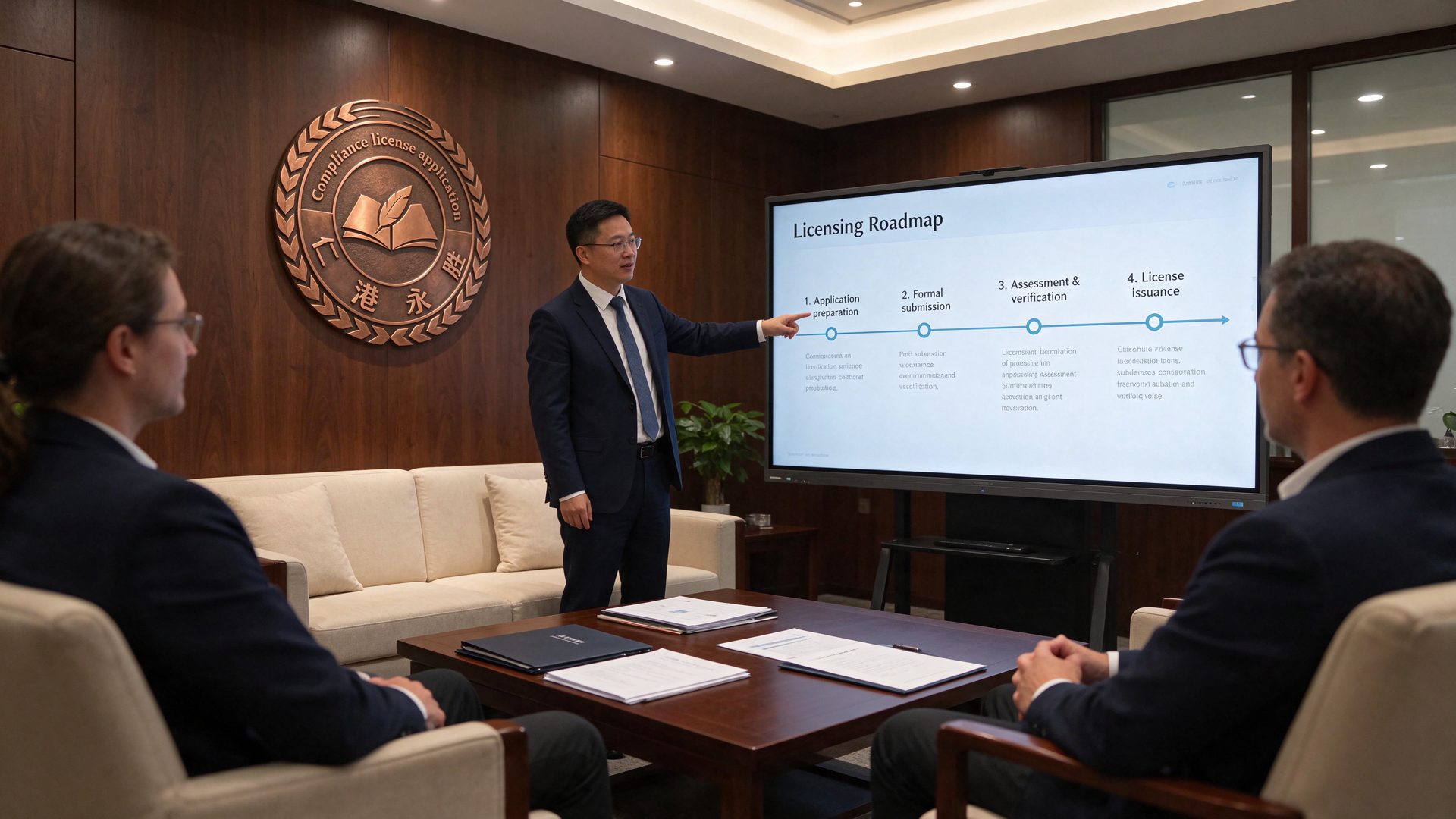
Application and process

Application Process
01
1. Confirm the institution and fund type
Confirm whether the applicant is a credit institution or an eligible investment firm, and distinguish between fund frameworks such as UCITS and AIFs.
02
2. Clarify depositary responsibilities
Clearly define the boundaries for asset custody, ownership verification, cash monitoring, valuation oversight, distribution of returns and reporting.
03
3. Design the Custody Network
Complete due diligence on banks, brokers, settlement institutions, sub-custodians and technology providers.
04
4. Establish Governance and Controls
Implement policies and procedures for independence, conflicts of interest, errors, losses, asset segregation, risk and business continuity.
05
5. Pre-application discussions and submission of materials
Complex assets and institutional eligibility may be discussed through the LB Newcomer Programme, followed by submission of the applicable application or eligibility materials.
06
6. Substantive regulatory review
Respond to questions about institutional eligibility, personnel, systems, sub-custody, fund agreements and investor protection.
07
7. Signing the agreement and conducting go-live testing
Complete account, data, reconciliation, valuation, cash monitoring, exception and reporting tests before onboarding the fund.
Processing time
The specific application route and statutory review period for fund depositary services vary according to the institution's status and the type of fund. We have not verified a single fixed timeframe and make no commitments such as six months.
09

Timeline and key milestones

Timeline & Milestones
StageExpected timeframeOverview
Confirmation of institution and fund scope2–6 weeksConfirm credit institution/investment firm status, UCITS/AIF, assets and geographical scope
Framework and custody network design2–4 monthsComplete the agreements, sub-custodian due diligence, asset records, cash monitoring and system design
Application or qualification assessmentSubject to LB's latest processNo uniform statutory review period was verified in this review
Interface and go-live testing4–12 weeksTesting accounts, data, reconciliation, valuation, reporting and exception handling
Ongoing receipt and reviewOngoing after launchSupervise on an ongoing basis in accordance with the requirements for the fund, assets, sub-custody and investors.
Fund Depositary Preparation and Launch Milestones
Timing notes
Depositary onboarding is typically contingent on the fund's establishment, the manager, auditor, valuation arrangements and sub-custody agreements. Regulatory review should be planned alongside systems and contractual preparations.
10

Acquisitions and Material Changes

Acquisition & Material Changes

An acquirer of a fund depositary must acquire an entity with the relevant legal status and regulatory qualifications. Depositary status, client asset relationships or fund contracts cannot be bought and sold separately from the legal entity. Before the transaction, review the assets, funds, sub-custody arrangements, liabilities, claims and regulatory history.

  • Confirm whether the target institution is a credit institution or an investment firm, and whether its authorisation and prudential scope cover the proposed fund depositary services.
  • Changes to qualifying holdings, control and significant influence usually require prior regulatory consent or completion of the applicable notification.
  • Changes to directors, executive officers, the depositary lead, compliance, risk and key functions must be handled in accordance with the procedure.
  • Review change-of-control, transfer of custody, termination and investor notification provisions in the fund manager's and fund's agreements.
  • Make LB approval, sub-custodian network stability, customer migration, liability for errors and continuous insurance cover conditions of completion.
Conditions Precedent to Acquisition
A depositary's value lies to a considerable extent in its systems, personnel, sub-custody network and responsibility records; key controls must not be changed or assets transferred after an acquisition without prior assessment.
11

Ongoing maintenance and compliance

Ongoing Compliance & Maintenance
  • Ongoing performance of asset custody, ownership verification, cash flow monitoring, valuation and oversight of the manager.
  • Regularly reconcile fund assets, bank cash, transaction, settlement and sub-custody records, and promptly resolve discrepancies
  • Ongoing assessment of risks relating to sub-custodians, banks, brokers, technology providers and cross-border markets.
  • Maintain procedures for errors, losses, fraud, cyber incidents, complaints, claims and regulatory reporting.
  • Address changes to the fund manager, directors, qualifying holdings, key personnel, asset scope and custody network promptly.
Ongoing mattersKey areas for review
AssetsEnsure there are no material gaps in safekeeping, ownership verification, segregation, records and reconciliation.
CashFund accounts, subscription and redemption proceeds, cash flows and unusual payments can be traced
OversightValuations, issuance and redemption, distributions and manager instructions reviewed under fund law
Networks and SystemsSub-custody, IT, disaster recovery, data security and recoverability of major incidents
Ongoing compliance
A depositary's ongoing responsibilities are not extinguished by outsourcing sub-custody. It should retain evidence of due diligence, oversight, reconciliations and remediation, and escalate significant issues in a timely manner under fund law.
12

Application status

Application Availability

Fund depositary eligibility is a specialist business subject to restrictions based on the institution's status and the type of fund. In principle, a new application or an extension of services by an existing credit institution or investment firm may be assessed, but this should not be treated as an ordinary standalone light-touch licence.

  • Before a formal application or business expansion, use the LB Newcomer Programme to discuss fund types, asset classes and custody networks.
  • New entrants should first confirm whether they qualify as a credit institution or an eligible investment firm, and whether they have the corresponding prudential capacity.
  • Acquisition of an existing deposit-taking entity may be assessed, but qualifying holdings, management, fund agreements, sub-custody and liability must be subject to due diligence.
  • Cross-border funds and assets require separate checks against UCITS, AIFMD, local custody, investor protection and data rules.
Drew's Note
An open assessment does not mean ordinary securities custody can be presented as fund depositary services. Drew recommends first checking the institution's eligibility, the fund's legal framework and sub-custodian responsibilities, then deciding whether to establish a new entity, expand or acquire.
Tang Shangyong (Drew), Business Manager
Drew's Note Drew's Note
Drew's Note: Fund depositary services are not the same as ordinary securities custody or outsourced fund administration. First confirm whether the institution itself qualifies as a credit institution or eligible investment firm, then allocate responsibilities in line with UCITS, AIF, asset classes and the sub-custody network. In an acquisition, focus on asset reconciliation, sub-custody responsibilities, fund agreements and regulatory history, not just the name of the licence.
Tang Shangyong (Drew) · Business Manager, Rengangyongsheng (Hong Kong) Limited
FAQ

Frequently Asked Questions About This Licence

Frequently Asked Questions
Q01Can an ordinary UAB apply directly to become a fund depositary?+
Usually, an ordinary UAB cannot act as a fund depositary solely by virtue of its legal form. Depositaries are generally credit institutions or eligible investment firms and must meet the relevant fund-law, prudential, independence, asset safekeeping and oversight requirements. Eligibility should be confirmed with LB for the relevant fund type.
Q02What Are the Main Responsibilities of a Fund Depositary?+
Key responsibilities include safekeeping financial instruments, verifying ownership of other assets, monitoring fund cash flows, and overseeing issues and redemptions, valuation, income distribution and compliance with the manager's instructions. Specific processes and responsibilities vary depending on whether the fund is a UCITS or AIF and on the asset class.
Q03Is There a Uniform Minimum Capital Requirement for Fund Depositary Services?+
The official review did not identify a single standalone minimum capital requirement applicable to all fund depositaries. Requirements should generally be assessed case by case under LB's latest requirements, taking into account the prudential capital of the credit institution or investment firm, fund size, asset classes, sub-custody risks, systems and liability arrangements.
Tang Shangyong (Drew)This article is by Rengangyongsheng (Hong Kong) Limited Prepared by, and explained by Tang Shangyong (Drew) Professional guidance from a Business Manager· Information updated: November 2026

Enquire about Fund Depositary

Book a Free Assessment
Tell us about your business model, target markets and shareholders. Drew's team will advise whether a new application or acquisition is more suitable, how to structure your capital and staffing, and the expected timeframe and budget.
RGYS advisory meeting
RGYS
Tell us about your project
Tell us about your project · Free Assessment
Success is displayed only after receipt has been confirmed by the service provider; if email is temporarily unavailable, please contact us via WhatsApp.