Keywords · KEYWORDSLithuanian Restricted PIRestricted PI€3,000,000Payment institutionLocal paymentsRemittances
Restricted Payment Institution Licence (Restricted PI)
LT-08 · Payments and electronic money

Restricted Payment Institution Licence (Restricted PI)

Restricted Payment Institution Licence

Restricted PI licence for small-scale domestic payment services in Lithuania.

Available on application · Restricted business activities and scaleLicensing authority: Bank of Lithuania (LB)
Fixed minimum initial capital
None
Monthly transaction volume limit
€3,000,000
Review process
Approximately 2 months
Territory of operations
Lithuania only
Legal Basis · LEGAL BASIS
  • Law on Payment Institutions
  • The Law on Payments and rules applicable to limited-scope payment institutions
  • Law on the Prevention of Money Laundering and Terrorist Financing
Key Summary · AT A GLANCE
Capital: No standard minimum initial capital requirement for a full PI; the average monthly payment transaction volume is capped at €3,000,000. This is a transaction-volume limit, not a capital requirement.
Time: The restricted application route indicated in LB guidance takes approximately 2 months; following a request for further information, the timeframe is recalculated or extended in accordance with the applicable rules.
State fee: State fee €682 (subject to the latest LB/VMI charges at the time of submission)
EU Passporting: Valid only in Lithuania; restricted PI authorisation cannot be relied upon directly to provide EEA passporting services.
01

Scope of permissions and business boundaries

Permitted Activities & Boundaries

A Restricted PI may provide payment services only within the scope of the authorisation decision and restricted business plan, and is subject to a limit on average monthly payment transaction volume. It is not suitable as a low-cost alternative for providing cross-border payments throughout Europe, nor can it issue electronic money or accept bank deposits.

ScopeRestricted PI rulesPractical implications
TerritoryLithuania onlyDoes not directly confer the right to operate under an EEA passport.
Trading volumeAverage monthly payment transaction volume no more than €3,000,000Establish transaction-volume monitoring and alerts
ServicesLimited to approved restricted payment servicesDo not present a restricted licence as a Full PI
A transaction volume cap is not a safeguard for funds
€3,000,000 is a size limit, not share capital, a safeguard for client funds or ongoing own funds. Each flow of funds must still be managed and reconciled in accordance with the applicable rules.

02

Applicable scenarios and advantages

Use Cases & Advantages

A Restricted PI may suit a payment business that has confirmed it will serve only local customers in Lithuania and keep transaction volumes within manageable limits. It allows a team to develop payment operations, AML, reconciliation and complaint-handling capabilities within a narrower business scope, but does not remove regulatory requirements.

  • No uniform minimum initial capital threshold for Full PI
  • Suitable for local pilots, closed-loop payment scenarios or small-scale business
  • Establish transaction monitoring and safeguarding arrangements around the services actually authorised
  • Build an operational and compliance track record for a future Full PI application
Overview
If the business plan includes cross-border passporting, rapid transaction growth or complex acquiring, compare the upfront investment in a Full PI with the subsequent migration costs again before applying for a restricted licence.
03

Application and eligibility requirements

Eligibility & Entry Conditions

The applicant should document restricted payment services, customers, transaction volumes, settlement routes and safeguarding arrangements in a verifiable model. The absence of a fixed minimum capital requirement does not mean that operational resources are unnecessary: LB will still assess governance, sources of funds, risk, AML/KYC, technology and local supervisory access.

  • Confirm assumptions regarding local operations and average monthly transaction volumes
  • Establish daily, monthly and stress monitoring of the €3,000,000 limit
  • Explains the segregation of client funds, reconciliations, refunds and exception handling.
  • Complete fitness and propriety documentation for shareholders, UBOs, management and key personnel
  • Establish AML/KYC, fraud, complaints, IT and business continuity controls
Important considerations
Restrictions on transaction volumes, geography and services for a Restricted PI should be built into product, sales and customer contract review controls; they should not be left to compliance staff to check manually at the end of each month.
04

Shareholders, directors and compliance staff

Shareholders, Directors & Key Persons

Directors, executive officers, shareholders and UBOs must be fit and proper and able to undergo LB scrutiny. AML, compliance, risk, operations and IT leads should be appointed in line with the scale of the business. The key is to ensure that responsibilities are substantive, reporting lines are clear, and cover is available during absences.

RoleApplication documentsOngoing management
Shareholders / UBOControl chain, source of funds, reputation and shareholding percentageChanges to qualifying holdings or control handled in advance
Director/Responsible PersonCV, experience, time commitment and division of responsibilitiesNotify LB or obtain its non-objection before making changes
AML/compliance/operations/technologyRole description, resources and cover arrangementsOngoing training, independent reporting and control testing
05

Capital and financial requirements

Capital & Financial Requirements
ProjectsApplicable requirementsPractical controls
Fixed initial capitalNo standard minimum amountDemonstrate that operating funds and their source are clear
Transaction volume capAverage monthly amount no more than €3,000,000Monitor in real time/periodically using a consistent basis
Customer fundsSafeguarding or applicable protection arrangementsSegregation, reconciliation, refunds and escalation of incidents
Ongoing financesIn accordance with the restricted PI rules and LB requirements."No minimum capital" is not a substitute for a financial model.
Capital Threshold
No fixed minimum initial capital requirement
Scale restrictions
Average monthly payment transaction volume cap of €3,000,000
Passporting
A restricted PI is not eligible to operate through direct passporting
Monitoring priorities
Transaction volume, client funds, liquidity, AML and fraud risks
Build scale limits into the system.
We recommend reflecting the €3,000,000 limit in client onboarding, product limits, transaction monitoring, management reports and the mechanism for upgrading to a Full PI, rather than relying solely on manual checks after the event.
06

Office address and substantive operations

Office & Local Substance

The local substance of a Restricted PI should focus on payment operations and regulatory accessibility. Applicants need to explain who is responsible for transaction monitoring, customer support, reconciliation, refunds, AML incidents and system failures, rather than simply providing a Lithuanian correspondence address.

  • Arrange management, operational and compliance resources able to engage with and be inspected by the LB.
  • Maintain records of payments, settlements, refunds and client complaints
  • Establish alerts for transaction volumes, customer concentration and unusual transactions.
  • Monitor outsourced IT, cloud services and KYC providers
  • Regularly test business continuity, backups and security
07

Required information and documents

Required Documents
  • Restricted PI application form and description of permitted activities
  • Local Business Plan, Client Base and Transaction Volume Forecasts
  • Calculation, monitoring and early-warning arrangements for the €3,000,000 limit
  • Payment, settlement, refund and client money flowcharts
  • Documents relating to shareholders, UBOs, sources of funds and the control chain
  • Fitness and propriety information for directors, executive officers and key roles
  • Articles of association, organisational structure and delegation of authority matrix
  • Operating Funds, Liquidity and Client Funds Safeguarding Arrangements
  • AML/KYC, sanctions, fraud and risk assessment policies
  • Complaints, consumer protection and data processing procedures
  • IT architecture, access controls, logs and information security framework
  • Outsourcing, agents, suppliers, continuity and disaster recovery documentation
  • Accounting, reconciliation, audit and regulatory reporting arrangements
  • Transaction limits, communication and a Full PI upgrade plan as the limit approaches
Information groupKey due diligence
Transaction volume modelBasis, data sources, peaks, stress scenarios and warning thresholds
Control environmentSafeguarding, AML, fraud, complaints and IT security
Local substancePersonnel, responsibilities, offices, records and regulatory contact arrangements
Upgrade arrangementsAction plan for approaching or exceeding the limit and expanding into new territories
08

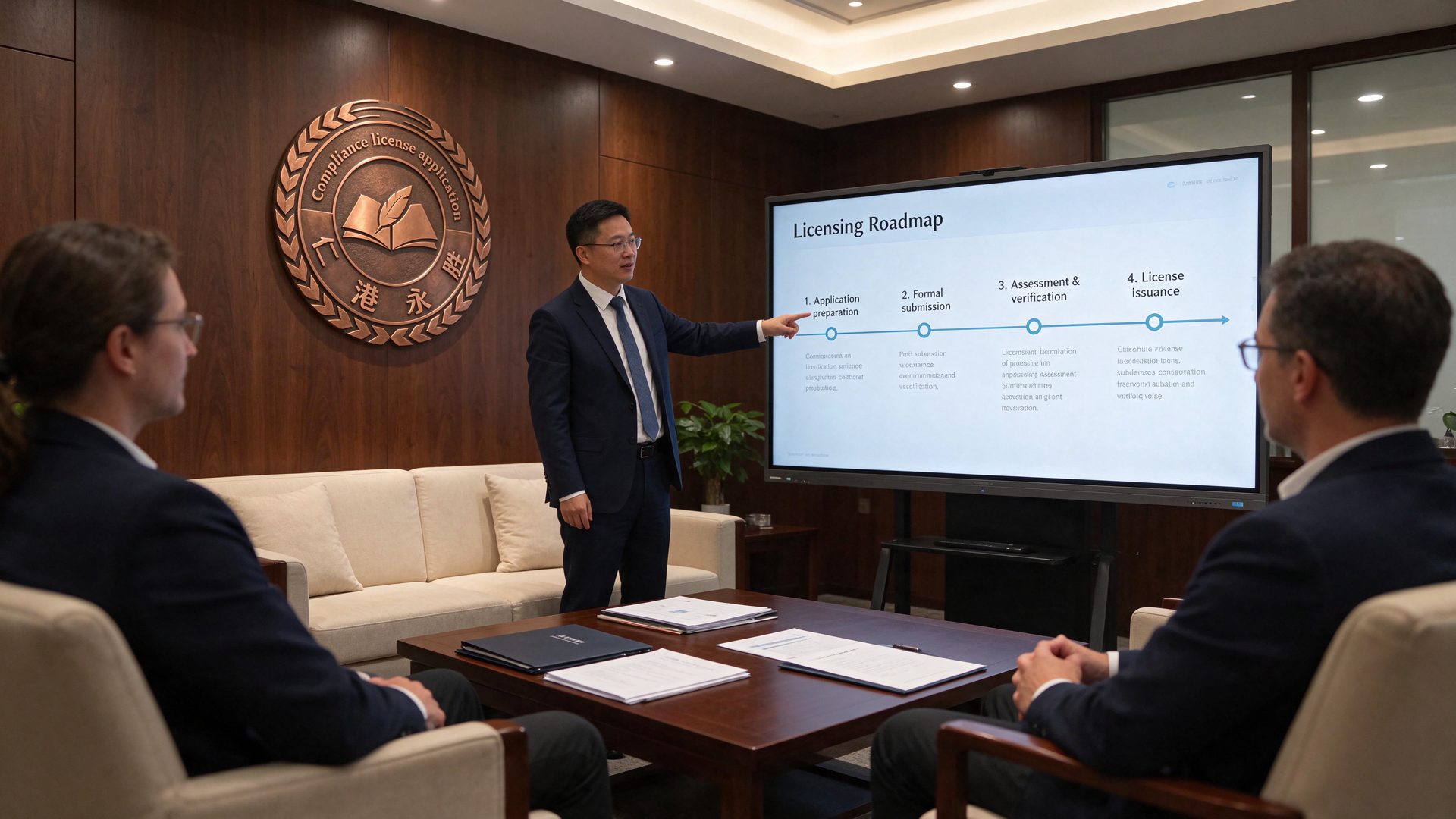
Application and process

Application Process
01
1. Confirm the restricted model
Define the Lithuanian client base, scope of services, transaction volumes and operating assumptions without passporting.
02
2. Pre-application discussions and scope review
Where necessary, introduce the business to LB and confirm whether the restricted route is compatible with the transaction-volume model.
03
3. Entity and Governance Arrangements
Prepare information on shareholders, UBOs, directors, senior managers and key function holders.
04
4. Controls and Monitoring Set-up
Complete policies and procedures for safeguarding, transaction volume alerts, AML, fraud, IT and business continuity.
05
5. Submit the application
Submit the formal application and supporting documents, pay the €682 state fee, and undergo a formal completeness check.
06
6. Review and requests for additional information
Respond to the LB's questions concerning the business, personnel, funds, technology and the boundaries of permitted activities.
07
7. Post-licence testing
Verify licence restrictions, and complete testing of banks, systems, customers and reporting processes.
08
8. Go-live and enhanced monitoring
Ongoing monitoring of the €3,000,000 cap, with an assessment of Full PI or a halt to expansion where necessary.
Overview
Approximately 2 months is the planning benchmark for the restricted-type route; application complexity, requests for further information and unclear business boundaries can all affect the actual completion time.
09

Timeline and key milestones

Timeline & Milestones
StageExpected timeframeOverview
Scope designApproximately 1–2 weeksConfirm the Lithuanian territory, service category, transaction volume and fund flows
Document preparationDepending on complexity.Complete governance, funding, monitoring, AML, IT and continuity documentation
Formal checkPost-application entry checksConfirmation that the documents are broadly complete does not mean approval has been granted.
Restricted reviewApproximately 2-month benchmarkThe Bank of Lithuania (LB) assesses suitability, the business plan and the control environment.
Further information and decisionDepends on the issueSupplementary documents affect the timeframe in accordance with the rules; check the restrictions in the decision
Launch monitoringOngoing after licensingTransaction volume, client funds, complaints and Full PI upgrade alerts

If transaction volumes are expected to approach the limit in the short term, the project plan should also prepare for the capital, team and systems upgrades required for a Full PI, avoiding forced transaction limits or a repeat migration as the client base grows.

10

Acquisitions and Material Changes

Acquisition & Material Changes

A Restricted PI authorisation is tied to the licensed legal entity and cannot be transferred as a standalone asset. When acquiring a company, due diligence should cover transaction volume limits, client funds, remediation records, technology and partner contracts. The regulatory procedures concerning the buyer's qualifying holding, UBO, directors and key personnel should be addressed before completion.

  1. Verify the target entity's valid licence, geographical scope and specific restricted services
  2. Review historical transaction volumes, limit alerts, customer complaints and regulatory communications
  3. Identify whether the buyer will acquire a direct or indirect qualifying holding or bring about a change of control
  4. Notify LB in advance of changes to shareholdings, UBOs, directors and responsible persons
  5. Check whether safeguarding, banking, outsourcing, agent and IT contracts can continue
  6. After completion, update the risk assessment, permissions, customer notifications and Full PI upgrade plan.
Important considerations
Acquiring the company does not change the €3,000,000 scale limit or Lithuanian territorial boundary applicable to a restricted PI; additional services or cross-border operations require a separate assessment for a full licence.
11

Ongoing maintenance and compliance

Ongoing Compliance & Maintenance

Ongoing compliance for a Restricted PI centres on turning transaction-volume and geographic restrictions into enforceable controls, while maintaining safeguarding of customer funds, AML/KYC, fraud, IT, complaints and reporting arrangements. Supervisory reviews examine actual data and evidence of controls, not just policy documents.

  • Monitor transaction volumes, peaks and client concentration daily or at a risk-based frequency
  • Ongoing reconciliation of customer funds, settlement and refund balances
  • Maintain AML/KYC, sanctions, fraud and complaints controls
  • Test system security, backups, disaster recovery and major incident reporting
  • Manage outsourcers, agents, banks and key suppliers
  • Complete financial, business and internal control reporting as required by the LB
Focus of Regulatory Inspections
The LB's 15 targeted inspections, 19 sanctions and 91 improvement notices for EMIs/PIs in 2025 continue to focus on AML/KYC, fraud, client funds, own funds and internal audit controls.
12

Application status

Application Availability

Restricted PI applications are currently available, but this option is suitable only for projects willing to accept the Lithuanian market limitation and the €3,000,000 average monthly transaction volume cap. The Newcomer Programme can be used for preliminary discussions, but does not remove formal authorisation or ongoing supervision requirements.

  • New application: possible, but the business plan should be designed around a restricted scope
  • Passporting: a restricted PI does not directly support EEA passporting operations
  • CENTROlink: Eligibility and access require separate assessment; neither is automatic
  • Scaling up: assess Full PI in advance; do not wait until the limit is exceeded
  • Acquiring an Existing Entity: Check Valid Licences, Restrictions and Regulatory Remediation Status
Overview
State fees, the transaction-volume basis, the treatment of excess volumes and documentation requirements are subject to the latest LB rules; the figures on this page are for preliminary comparison.
Tang Shangyong (Drew), Business Manager
Drew's Note Drew's Note
Drew's Note: The core value of a Restricted PI is its focus, not treating €3,000,000 as a limit that permits unrestricted expansion. Build restrictions on transaction volumes, geography and services into your product rules, customer contracts and monitoring systems. If the customer growth trajectory is already clearly beyond a small-scale local model, compare Full PI directly.
Tang Shangyong (Drew) · Business Manager, Rengangyongsheng (Hong Kong) Limited
FAQ

Frequently Asked Questions About This Licence

Frequently Asked Questions
Q01Is a minimum initial capital required for a Restricted PI?+
A Restricted PI has no uniform minimum initial capital requirement like a Full PI, but it must still demonstrate sufficient operating funds, clear sources of funds, safeguarding of customer funds and the capacity for ongoing risk control. This should not be taken to mean zero investment or no regulation.
Q02Is €3,000,000 the capital limit for a restricted PI?+
No. This is a cap on the average monthly volume of payment transactions, not on share capital, client funds or own funds. Institutions should establish consistent transaction-volume monitoring, alerting and procedures for handling exceedances.
Q03Can a Restricted PI provide services in other EU countries?+
A restricted PI licence cannot be relied on directly for passporting. For cross-border plans, assess a Full PI or other applicable authorisation and verify the notification, capital, governance and host-country requirements with the LB.
Q04Can a Restricted PI issue electronic money?+
No. Payment institution and electronic money institution licences confer different statutory permissions. Where e-money is issued or redeemed, assess the need for an EMI licence and the corresponding safeguarding requirements.
Tang Shangyong (Drew)This article is by Rengangyongsheng (Hong Kong) Limited Prepared by, and explained by Tang Shangyong (Drew) Professional guidance from a Business Manager· Information updated: November 2026

Enquire about Restricted PI

Book a Free Assessment
Tell us about your business model, target markets and shareholders. Drew's team will advise whether a new application or acquisition is more suitable, how to structure your capital and staffing, and the expected timeframe and budget.
RGYS advisory meeting
RGYS
Tell us about your project
Tell us about your project · Free Assessment
Success is displayed only after receipt has been confirmed by the service provider; if email is temporarily unavailable, please contact us via WhatsApp.