Keywords · KEYWORDSLithuanian Reinsurance LicenceReinsurance UndertakingSolvency IIReinsurance capitalSCRMCR
Reinsurance Company Licence
LT-55 · Insurance and Pensions

Reinsurance Company Licence

Reinsurance Undertaking

Lithuanian reinsurance undertaking authorisation covering the transfer of risks from insurance companies, with a focus on capital, the underwriting model, the reinsurance chain and governance.

Available on application · Professional capital and governance reviewLicensing authority: Bank of Lithuania (LB)Prioritisation of market entry
Reinsurance MCR
€3,900,000
Captive reinsurance MCR
€1,300,000
Statutory review period
6 months
State fee
€2,904
Legal Basis · LEGAL BASIS
  • Lithuanian Law on Insurance
  • Solvency II Directive 2009/138/EC
  • Commission Delegated Regulation (EU) 2015/35 and applicable implementing technical standards
  • Lithuanian Law on Companies and Law on the Prevention of Money Laundering and Terrorist Financing
Key Summary · AT A GLANCE
Capital: LB's insurance company authorisation guide sets out authorisation capital, payment in cash, source of funds and governance requirements for insurance or reinsurance applications. The ongoing capital requirements for a reinsurance undertaking cannot be assessed solely by reference to registered capital of €1,000,000. Article 129 of Solvency II sets the absolute floor for the MCR at €3,900,000 for a reinsurance undertaking and €1,300,000 for a captive reinsurance undertaking, and the SCR must also be covered on an ongoing basis.
Time: The statutory decision period is 6 months from submission of a complete application; LB first checks that the documents are complete. After supplementary information is submitted, the period is calculated from the date the required information is received. Concerns about the source of funds may suspend the period.
State fee: The state fee for the authorisation of an insurance or reinsurance undertaking is currently €2,904; proof of payment should be submitted with the application. The applicable annual supervisory fee and fee arrangements for exclusive reinsurance business should be confirmed in accordance with the latest LB rules.
EU Passporting: After obtaining Lithuanian reinsurance authorisation, you may conduct authorised reinsurance business under the EEA supervisory cooperation and notification framework in Solvency II. The specific cross-border underwriting model, place of underwriting and contract law must still be assessed on a case-by-case basis.
01

Scope of permissions and business boundaries

Permitted Activities & Boundaries

A reinsurance company assumes, under contract, risks transferred by insurance undertakings or other reinsurance undertakings. It may conduct life reinsurance, non-life reinsurance, or a combination of both, within the scope of its approval. It is not an ordinary insurance broker or a company providing risk consultancy alone.

  • Accept business ceded by insurers and manage underwriting risk through reinsurance contracts, retrocession and risk diversification.
  • Can cover life, non-life or specialist risk portfolios within the scope of authorisation, but each class must be matched with underwriting, reserving and capital models.
  • Brokers, third-party managers and cloud services may be used, but the reinsurer remains responsible for regulatory compliance, data, capital and contractual performance.
  • Reinsurance authorisation does not automatically grant permission to sell insurance directly to consumers, act as an insurance broker, provide payment services or offer investment services.

02

Applicable scenarios and advantages

Use Cases & Advantages

A reinsurance undertaking is suited to a business model centred on specialist underwriting, geographical diversification and risk transfer. Lithuania's regulatory framework can support an EEA market presence, but applicants must demonstrate genuine underwriting expertise and measurable risk controls.

Risk Acceptance
Capacity, catastrophe-risk and specialist risk-diversification solutions for insurance institutions
Specialised operations
Can build teams around life, property, liability or other approved reinsurance classes
Cross-border arrangements
Can conduct authorised activities under EEA notification and supervisory cooperation arrangements
Group synergies
Operate within a group risk-transfer, capital and retrocession framework while maintaining effective supervisory oversight
03

Application and eligibility requirements

Eligibility & Entry Conditions

A reinsurance application is not primarily about a standalone figure for registered capital, but about demonstrating that the applicant can underwrite, measure, diversify and settle risks under stress scenarios. LB will assess the business plan, capital, contracts, data, management and group structure.

  • Submit a clear reinsurance business plan, classes of business underwritten, sources of ceded business, territories, limits, deductibles and retrocession strategy.
  • Establish controls for actuarial matters, reserves, risk, compliance, internal audit, investment, liquidity and operational risk.
  • Demonstrate that own funds can cover the SCR and MCR and withstand stresses from premium growth, catastrophes and counterparty defaults.
  • Explains close links, related-party transactions and risk concentration involving insurers, brokers, group entities and service providers.
  • Shareholders and management must be of good repute, have reinsurance experience and possess the financial capacity to implement the business plan.
04

Shareholders, directors and compliance staff

Shareholders, Directors & Key Persons

Reinsurance business depends heavily on specialist actuarial, underwriting and counterparty risk expertise. Applicants should make clear to LB who is responsible for risk selection, model validation, reserves, contract wording, claims disputes and retrocession decisions.

  • Submit fitness and propriety information for the board of directors, supervisory board, head of administration, chief underwriter, and those responsible for actuarial matters, risk, compliance, internal audit and AML.
  • Disclose capital or voting rights of approximately 10% or more, significant influence, the control chain and the ultimate beneficial owner.
  • Where a transaction reaches a significant increase in a qualifying holding, the 20%, 30% and 50% thresholds are generally relevant, and the applicable regulatory procedures should be completed before closing.
  • Establish an independent review mechanism that clearly defines model risk, related-party transactions, risk transfer and underwriting authority.
  • Communicate with LB and complete any required notifications or obtain non-objection before replacing a director, administrative manager or key function holder.
05

Capital and financial requirements

Capital & Financial Requirements
ProjectsCurrent verification requirementsOverview
Authorised capitalPrepare in accordance with LB insurance/reinsurance authorisation guidelines and Lithuanian law; shares must be fully paid up in cashThe minimum registered capital must not be used as a substitute for evidence of Solvency II capital
Reinsurance MCR€3,900,000Absolute minimum for a reinsurance undertaking set out in Article 129 of Solvency II
Captive reinsurance MCR€1,300,000Applicable only to undertakings meeting the conditions for captive reinsurance
SCR and own fundsCalculated according to business risks and maintained on an ongoing basisIncludes underwriting, reserving, market, credit, operational and retrocession risks
Reinsurance capital should be supported by actuarial and prudential models; it should not be budgeted on the basis of ordinary UAB capital requirements.
Basis for calculating reinsurance capital
The €1,300,000 requirement for captive reinsurance is not a threshold available to all reinsurance applicants. Before applying, confirm with LB whether the business qualifies as captive reinsurance, whether it serves only affiliated risks and which Lithuanian implementing rules apply.
06

Office address and substantive operations

Office & Local Substance

A reinsurance company needs genuine underwriting substance that can be verified by the regulator and counterparties. A virtual office, complete outsourcing or merely holding group contracts without local risk decision-making capability may not support the safe and sound operation required for authorisation.

  • Maintain the ability to access the registered office address in Lithuania, regulatory records, contracts and risk data.
  • Make underwriting, reserving, retrocession, investment and liquidity decisions within a supervised management framework.
  • Establish underwriting, actuarial, risk, compliance, internal audit, IT security and business continuity functions with reinsurance experience.
  • Establish audit, exit and alternative-provider arrangements for outsourced actuarial services, contract management, data platforms, claims and catastrophe models.
07

Required information and documents

Required Documents

Reinsurance application documents should enable LB to verify whether risk transfer is genuine, capital is sufficient, and the group and outsourcing chain are subject to effective supervision. Contract samples, counterparties and retrocession arrangements must not be described only in general terms.

  • Insurance or reinsurance undertaking authorisation application form
  • Articles of association, formation documents and group structure chart
  • Business plan for life, non-life or composite reinsurance business
  • Explain the sources of ceded business, target markets and underwriting authority.
  • Reinsurance contract templates, terms, limits and concentration policy
  • Retrocession strategy, counterparty standards and credit risk limits
  • SCR, MCR, own funds, technical provisions and stress testing models
  • Evidence of share capital paid up in cash, organisational funding and source of funds
  • Materials relating to shareholders, controllers, participating undertakings, UBOs and close links
  • Suitability documents for the Board of Directors, management and key function holders
  • Actuarial, risk, compliance, internal audit and governance policies
  • Investment, asset-liability management, liquidity and collateral management policies
  • AML/CTF, sanctions and counterparty due diligence procedures
  • IT architecture, data governance, information security and business continuity plan
  • Outsourcing contracts, service provider due diligence and exit plans
  • Applicable audit reports, financial projections and group supervisory information
  • Proof of payment of the €2,904 state fee
08

Application and process

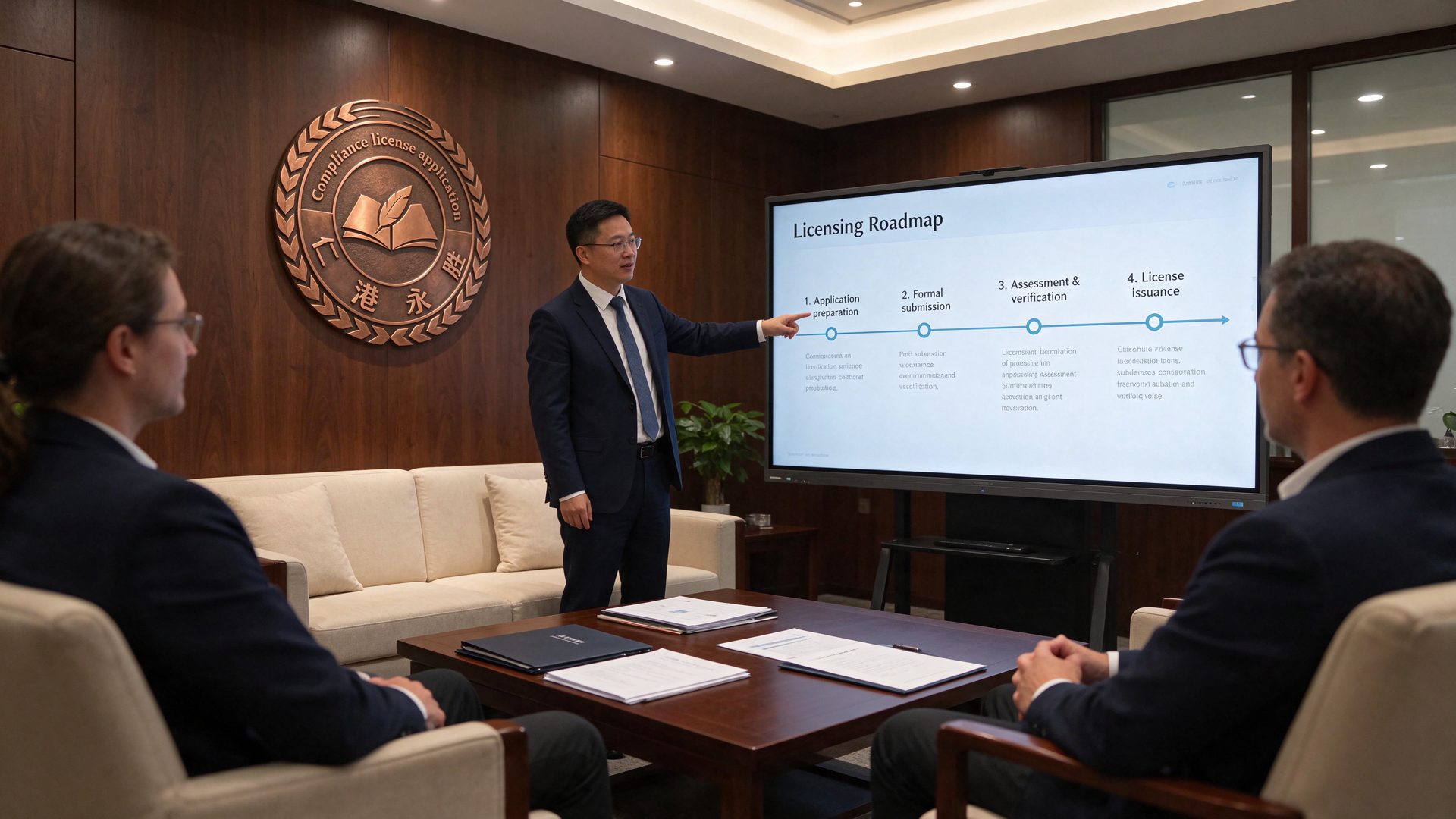
Application Process
01
Define the scope of reinsurance
Determine life, non-life or composite reinsurance, target cedants, regions, risk limits and retrocession.
02
Pre-application communication
Explain the capital model, shareholders and group structure to LB, and confirm the regulatory approach for captive and non-captive insurers.
03
Establish substantive underwriting operations
Implement arrangements for experienced underwriting, actuarial, risk, compliance, internal audit, IT and business continuity functions.
04
Prepare and submit
Pay the €2,904 fee and submit the business plan, contractual framework, capital model, personnel and governance documents.
05
Formal check
LB checks whether the application contains the necessary documents and information; any missing items must be supplied promptly.
06
Substantive assessment
The Bank of Lithuania (LB) assesses risk transfer, technical provisions, capital, counterparties, related-party transactions, outsourcing and the suitability of management.
07
Decision and launch
After receiving the decision, complete registration, reporting, contract implementation and cross-border notifications in accordance with the approval conditions.
Important considerations
The key timing factors in a reinsurance application are usually not document compilation, but whether the capital model, contract evidence, counterparty assumptions and key personnel can withstand scrutiny from LB.
09

Timeline and key milestones

Timeline & Milestones
StageBasis for the timelineKey focus
Pre-application designAs arranged for the projectDetermine the business categories, group structure, capital and contractual model
Formal completeness checkApproximately 5 working days as a guideConfirm whether the application documents are complete
Decision on a complete applicationStatutory period of 6 monthsCalculated once all required documents and information are complete
Further information and clarificationRecalculation or other impact following further informationCommon issues include capital, actuarial matters, retrocession and outsourcing
Go live after authorisationAs determined by the decision and its conditions.Complete reports, systems, contracts and EEA notifications
The project timeline for reinsurance business also depends on the maturity of the contracts, capital arrangements and group approvals.
Practical recommendations
If the applicant intends to operate captive reinsurance, review related-party risks, independent pricing, the substance of risk transfer and the conditions for applying the €1,300,000 MCR as a separate workstream.
10

Acquisitions and Material Changes

Acquisition & Material Changes

A reinsurance licence cannot be acquired separately from the licensed legal entity. Before acquiring shares or control, review the reinsurance contracts, reserves, retrocession, collateral, counterparty default risk and regulatory capital together; qualifying holdings and changes to management must be dealt with in advance under the applicable procedures.

  • Check all cedants, contract terms, risk concentrations, unresolved disputes, reserves, recoveries and retrocession arrangements.
  • Before acquiring or increasing a qualifying holding, submit a notification or application to the LB and await approval or confirmation of no objection; do not treat the share transfer as a purely internal business matter.
  • Check the buyer's UBO, source of funds, group close links, sanctions exposure and cross-border regulatory relationships.
  • Changes to directors, executive officers and key underwriting, actuarial, risk and compliance personnel must follow fitness and propriety and regulatory notification procedures.
  • After completion, update the business plan, capital model, contractual authorities, related-party transactions and regulatory filings.
11

Ongoing maintenance and compliance

Ongoing Compliance & Maintenance

Ongoing compliance for a reinsurance company focuses on promptly reflecting underwriting risks in reserves, capital and counterparty limits. LB assesses its safe and sound operation through reporting, risk analysis, on-site inspections and communications.

  • Ongoing calculation of SCR, MCR, own funds, technical provisions and recoverables from retrocession.
  • Implement ORSA, stress testing, catastrophe and counterparty risk monitoring, and manage assets, liabilities and liquidity.
  • Maintain records of reinsurance contracts, claims, recoveries, collateral, related-party transactions and model changes.
  • Submit regulatory returns, audit materials, and solvency and financial condition disclosures in accordance with applicable rules.
  • Promptly address capital shortfalls, material outsourcing, changes of control, key personnel, business scope and cross-border notifications.
12

Application status

Application Availability

Reinsurance authorisation in Lithuania is currently, in principle, open to new applications, but is a high-threshold, specialised prudential authorisation. Before applying, you can use the LB pre-application dialogue or Newcomer Programme to discuss your business model. This dialogue does not replace formal authorisation and does not confirm the captive MCR or the final scope of the licence.

Current status
Available on application, but genuine reinsurance underwriting capacity and sustainable capital must be demonstrated
Key Application Considerations
Reinsurance classes, cedants, retrocession, actuarial matters, counterparties and group governance.
Capital Reminder
General reinsurance MCR: €3.9m; €1.3m may apply to captives, subject to conditions
Pre-application engagement
We recommend first explaining the nature of the business and the basis for calculating capital to LB, then determining the application route
Tang Shangyong (Drew), Business Manager
Drew's Note Drew's Note
Drew's Note: A reinsurance acquisition should not be assessed solely by looking at the licence status. Review each reinsurance contract, outstanding claim, recovery, retrocession arrangement and counterparty risk in depth. This is particularly important for captive structures: €1,300,000 applies only under specific conditions and should not be treated as the low capital threshold for all reinsurance companies.
Tang Shangyong (Drew) · Business Manager, Rengangyongsheng (Hong Kong) Limited
FAQ

Frequently Asked Questions About This Licence

Frequently Asked Questions
Q01Can a reinsurance company also use €1,000,000 as its entire capital base?+
This should not be understood in that way. The LB authorisation guidelines address paid-up cash authorisation capital, but a reinsurance undertaking must also meet the Solvency II SCR and MCR. Article 129 sets the absolute minimum MCR for general reinsurance at €3,900,000; the lower amount of €1,300,000 may apply only to captive reinsurance.
Q02What are the main differences between a reinsurance licence and an insurance licence?+
A reinsurance company primarily assumes risks transferred by insurance undertakings or other reinsurance undertakings. Its business plan, contracts, counterparties and retrocession arrangements are central; authorisation as a reinsurer does not automatically include permission to sell insurance directly to consumers.
Q03Does acquiring a reinsurance company require a new licence application?+
A licence does not usually become invalid automatically when shares are transferred. However, a change of control or qualifying holding requires prior regulatory procedures, and changes to directors and key function holders must also meet fitness and propriety and notification requirements. The transaction cannot circumvent LB scrutiny.
Q04Does the €1,300,000 captive reinsurance MCR apply automatically?+
Does not apply automatically. First confirm the nature of the undertaking, whether its risks arise mainly from related parties, and the relevant Lithuanian and Solvency II conditions; verify the applicable interpretation with LB. A lower threshold cannot be claimed based solely on the company name.
Tang Shangyong (Drew)This article is by Rengangyongsheng (Hong Kong) Limited Prepared by, and explained by Tang Shangyong (Drew) Professional guidance from a Business Manager· Information updated: November 2026

Enquire about Reinsurer

Book a Free Assessment
Tell us about your business model, target markets and shareholders. Drew's team will advise whether a new application or acquisition is more suitable, how to structure your capital and staffing, and the expected timeframe and budget.
RGYS advisory meeting
RGYS
Tell us about your project
Tell us about your project · Free Assessment
Success is displayed only after receipt has been confirmed by the service provider; if email is temporarily unavailable, please contact us via WhatsApp.